What is it?
It’s an old-school front-drive, manual gearbox hot hatch. A dying breed it might be, but Honda has plenty of history to call on—it’s been building Civic Type Rs for 25 years, but what’s most remarkable is that it has resisted fashion and trends to persevere with a mechanical template that’s unchanged across that whole period. When many around have switched to 4WD or at least adopted twin-clutch gearboxes, Honda has stuck to its guns.
It’s rowed back the styling, though
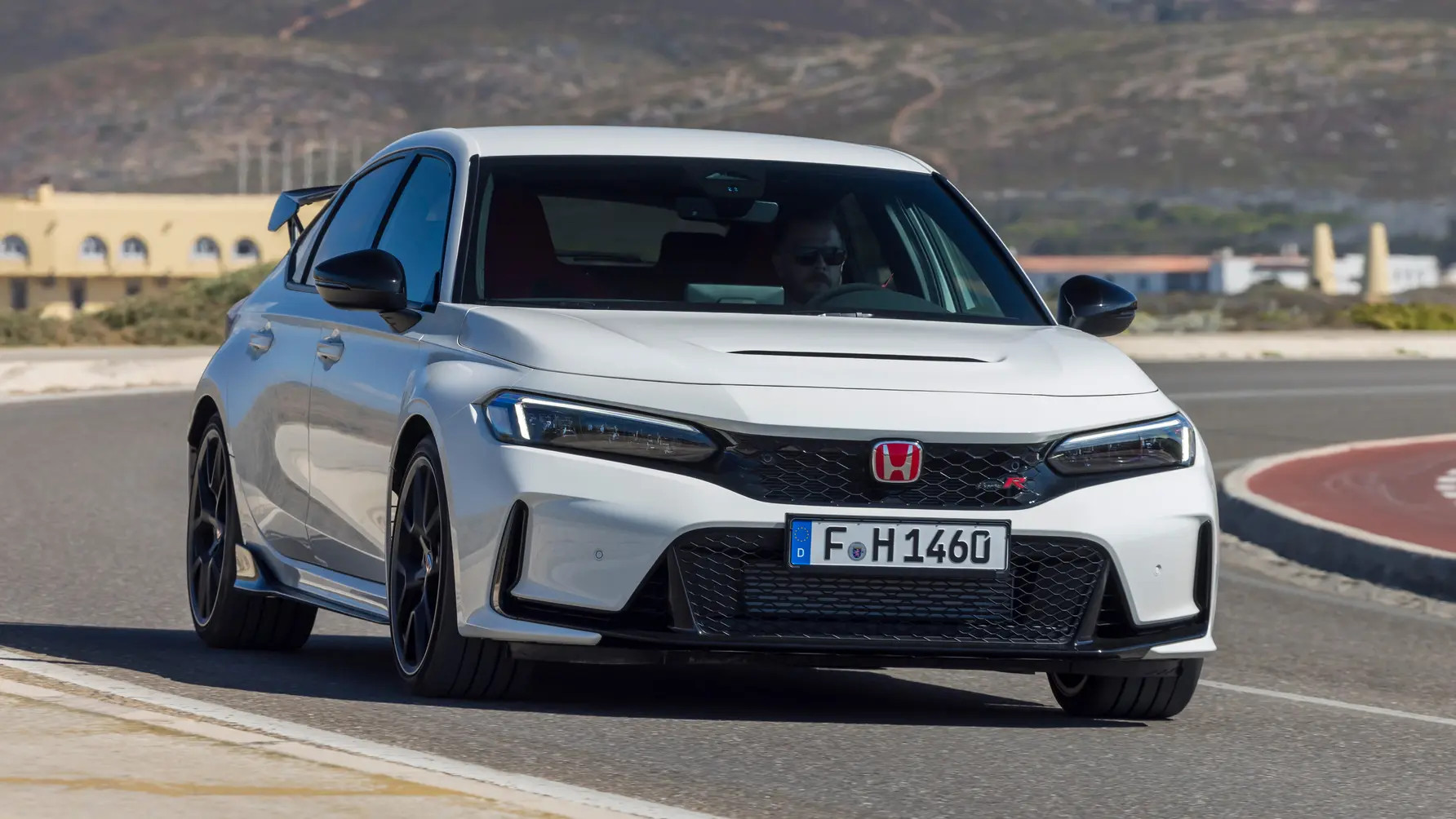
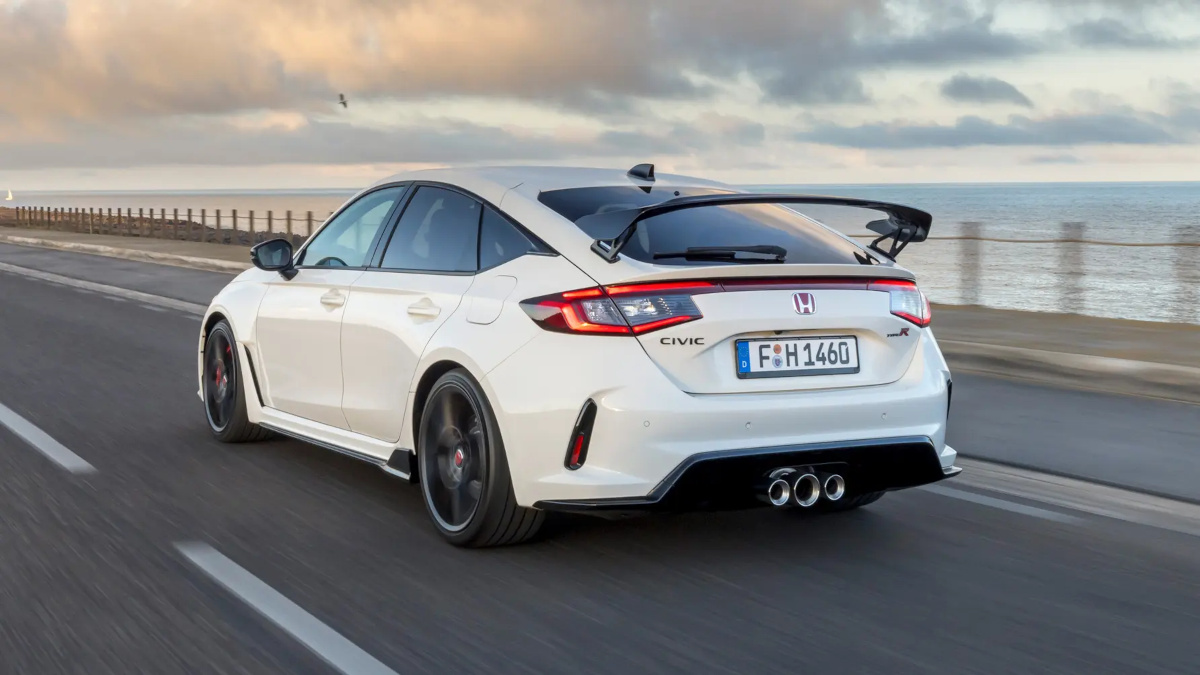
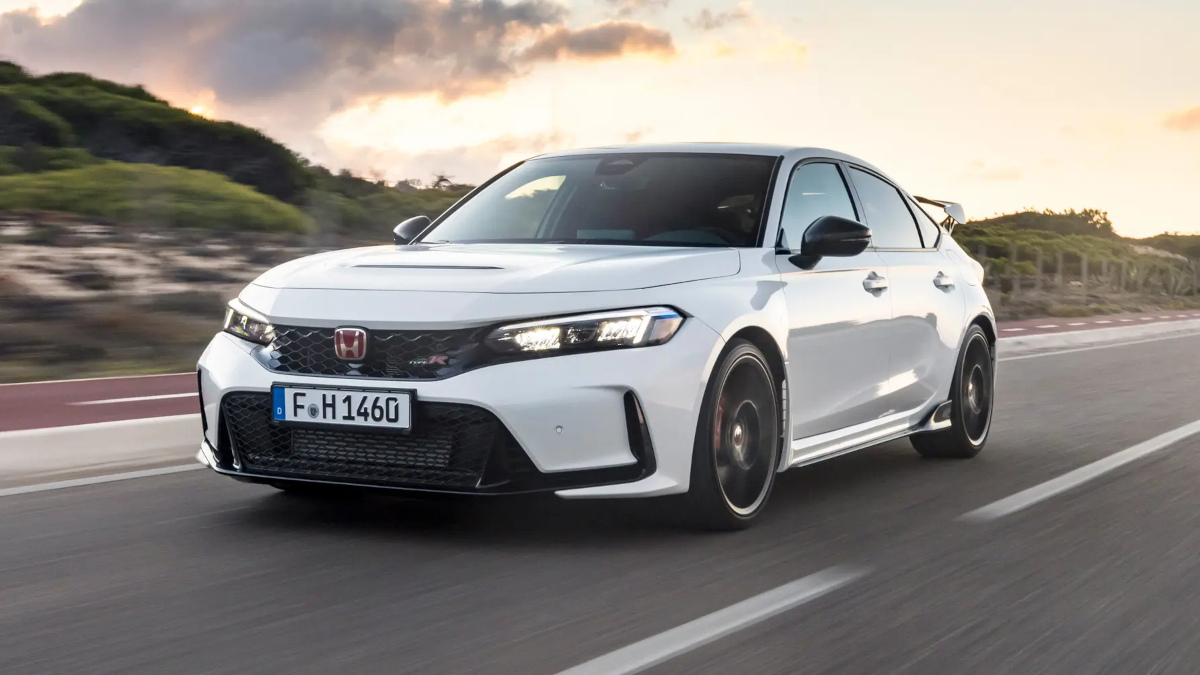
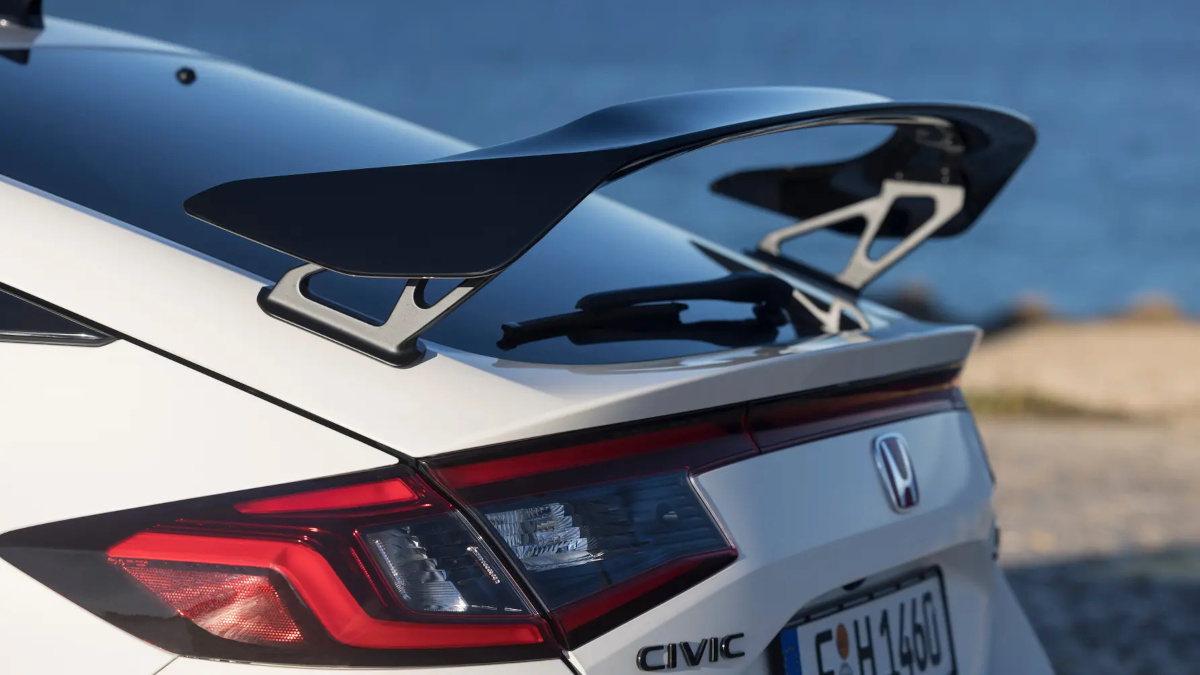
There weren’t many cars that looked more jagged than the FK8 Civic Type R. The styling was the chief reason to give it a swerve. That’s no longer the case. The new one is cleaner and sleeker, less eye-catching and dramatic as well.
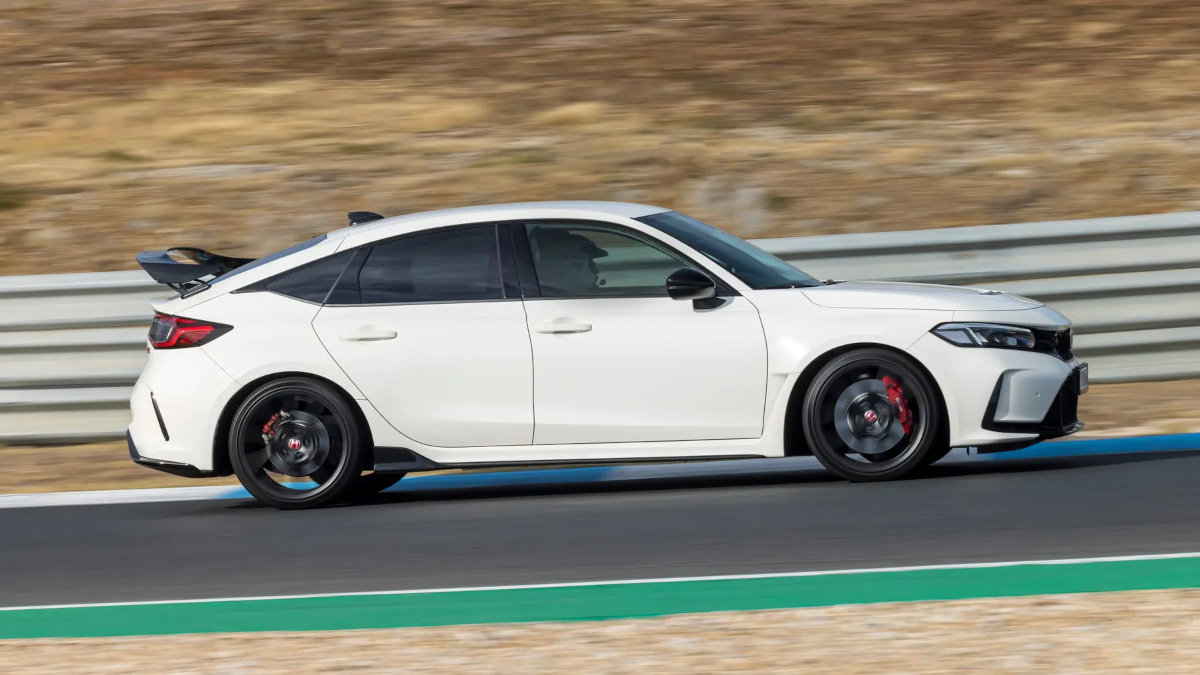
The wheels are smaller, 19-inch ones instead of the 20s, but it still has great stance, sat low over them. And, although Honda won’t talk exact figures, the new FL5 develops more downforce: around 100kg at 200kph.
What’s new besides the look?
Kaizen.
Bless you
No, a Japanese word meaning ‘continuous improvement.’ It’s a national obsession, all Japanese car firms have used the term. What it basically means is that they’ve sweated the details. So we learn that the exhaust flow rate is up 13%, the flywheel is 18% lighter reducing inertia by 25%, the steering column now wears a larger torsion bar reducing deflections by 60%, revised lower suspension arms improve camber rigidity by 16%, rear body rigidity is up 15%, and a switch from steel to aluminum for the hood accounts for a 43% weight saving.
Many per cents
But no fundamental changes: same chassis, same engine, same gearbox, same adaptive suspension with torque steer-reducing Dual Axis struts. The aim is ‘performance-focused upgrades,’ says Honda. So don’t go expecting massage seats and a plethora of hifi speakers in here.
It looks like a big car, though
It’s 4,600mm long and just shy of 1,900mm wide. Which, in case you were wondering, is large. It’s 300mm longer and 100mm wider than a Volkswagen Golf R. Roughly the same size, in fact, as a BMW M3. Enough to have some questioning whether it technically still qualifies as a hot hatch.
Mechanically it does?
Yeah, hot hatches are now the only performance cars that use the front drive, manual gearbox template. They pretty much always were in fact. The only bowing down to technology Honda has done was the adoption of turbocharging for the FK2 generation in 2015.
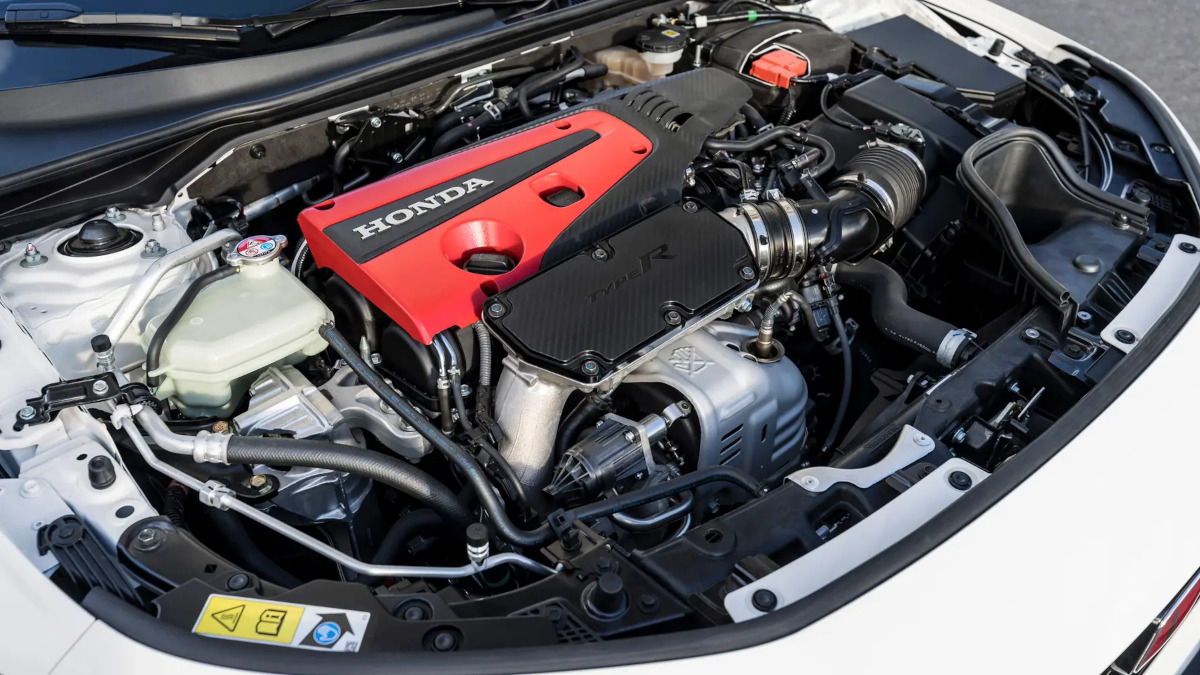
The engine has the same K20 C1 designation as the old car, but now develops 9hp more. The turbo is 3% more efficient thanks to reducing the number of turbine blades and reshaping the rest, so torque stands at 420Nm at 2,200rpm. It’s not the most tuneful engine, but the drivability, the way it pulls so progressively across the range, makes it a great engine to use. Through one of the all-time great gearboxes.
Honda’s not lost its touch then?
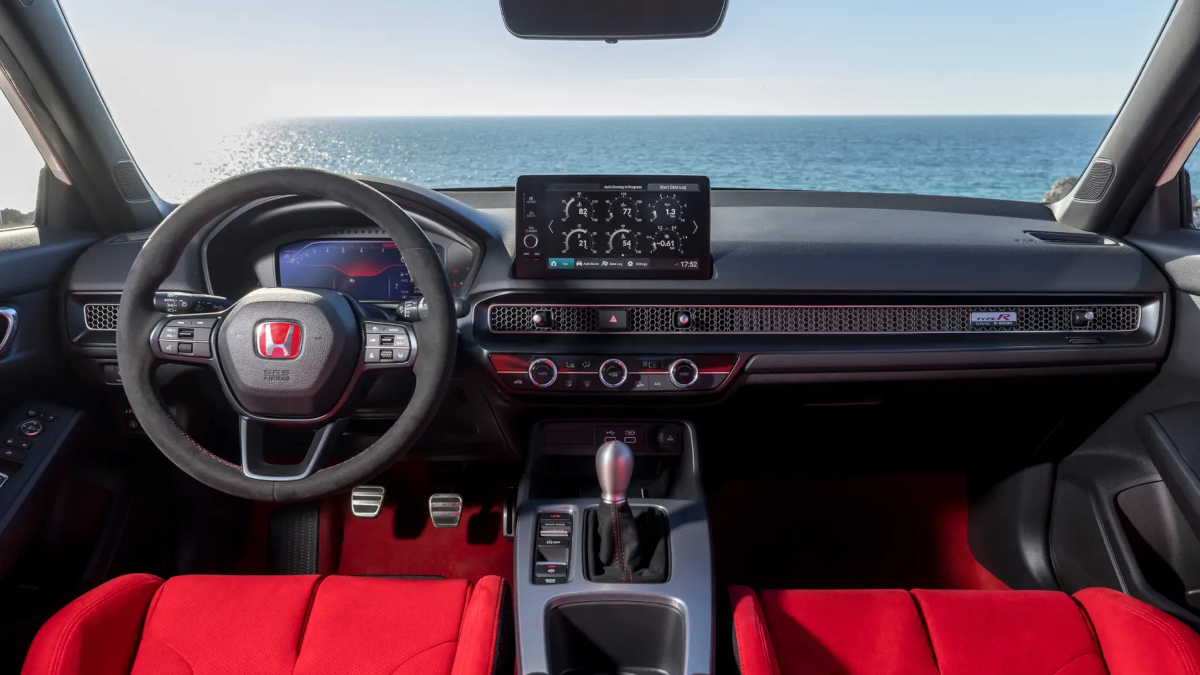
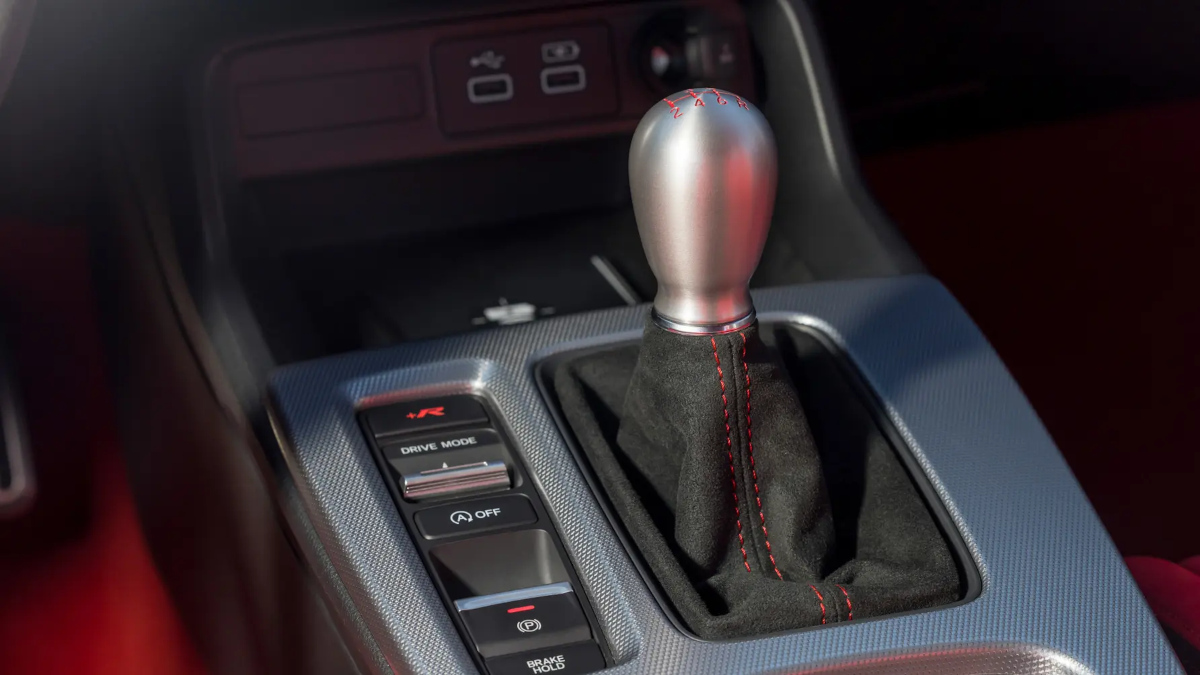
Absolutely not. The shift has been ‘optimized’ by such methods as the adoption of a heavier 230g knob, and the action is absolutely peerless. You don’t have to think about it, even the tricky three-down-to-two dogleg. It’s both flattering and rewarding.
And the same applies to the whole of the chassis. If you care about driving, the purity of it, rather than the excitement, this is the hot hatch to have. A Toyota GR Yaris is more thuggish and charismatic, but this is very sophisticated. The way the steering, differential, and suspension manage the front axle is bewitching. In the dry. In the wet, 324hp through the front wheels soon has everything spinning.
How fast is it?
Provided it’s dry, probably the fastest production front driver around. 5.4 seconds to 100kph is the claim, 275kph flat out. It’s already claimed a lap record at Suzuka and seeing as the last one was the fastest hot hatch around the ‘Ring for a while (7mins 43.8secs), it’s safe to assume the new one will be headed there shortly.
Other features?
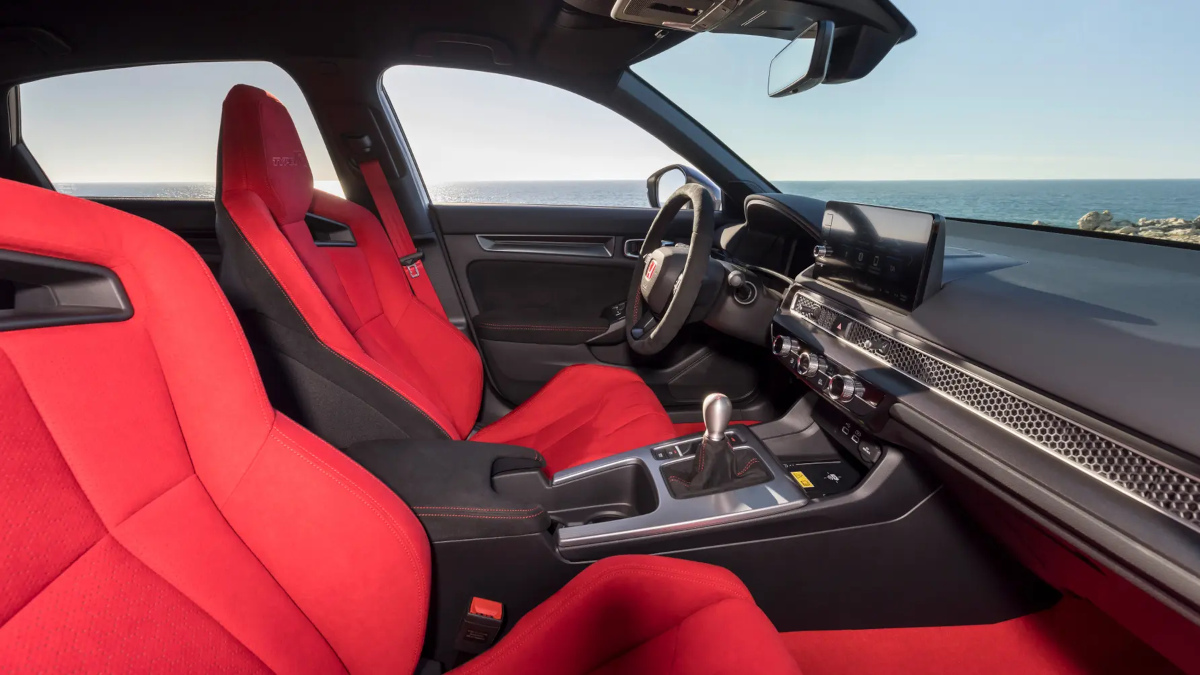
The seats are exceptional—softer than you expect, yet trimmed in a grippy new material and beautifully shaped to fit. And it’s practical. The absence of a fifth seatbelt is infuriating for some, but legroom is good and the trunk is huge. It would’ve been quite something to fluff that given the car’s outward size.
The price increase goes hand in hand with the toned-down looks—it’ll now appeal to more affluent, mature buyers. But it’s a shame for existing Honda fans that it’s become so exclusively priced. Then again, anyone opting for a front-drive, manual hot hatch in this day and age can count themselves a hardcore car fan. You can read much more about that in the Buying section.
Quick history lesson
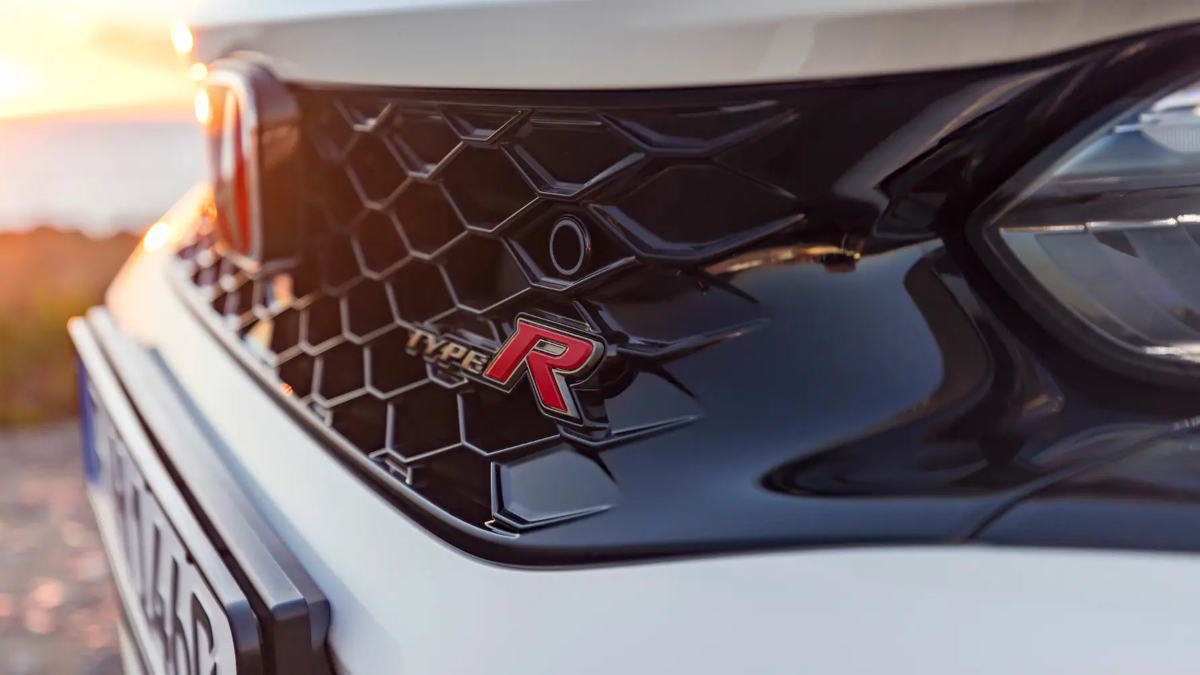
We’re looking at 25 years of the Civic Type R now, going back to the original EK9 in 1997. VTEC valve timing baby. It was the EP3 in 2001 that really got people fired up. The breadvan shape was distinctive, the gearlever on the dash was great, the engine, weight, chassis and package were all bob on. In 2007 the spaceship oddity that was the FN2 arrived, the double wishbone rear suspension switched for a torsion beam, so it lost its playfulness. And the naturally aspirated engine was starting to feel short of puff. That was corrected in 2015 with the first turbocharged Type R, the FK2. Looked like a dog's dinner, but was very effective to drive. The FK8 arrived just two years later, took all of that learning and refined it. Despite the appearance it was all-round more sophisticated. The FL5 has now finessed that even further.
The verdict?
“Can function as your only car, yet is as thrilling to drive as most bespoke sports cars. Stunning to drive. Now overpriced.”
It’s a surprisingly traditional car. When almost everyone else has followed the market and gone for twin-clutch boxes and 4WD, here’s a car that uses the original hot hatch template. And yet as a package, it’s lost none of its appeal or ability to entertain. It’s a sublime car, this. More demanding of you than a Golf GTI or R, but infinitely more rewarding and beguiling. The biggest change may be to the styling and we’re not sure it’ll have the hyped response that made the GR Yaris such a wild hit two years ago, especially when it costs almost £47,000. But what a thing to drive…
OTHER STORIES YOU MIGHT HAVE MISSED:
Size comparo: How big is the all-new Toyota Innova compared to the Geely Okavango?
The new Parklinks Bridge connecting Pasig City, Quezon City has been unveiled
What is it like to drive?
Ultra-polished and precise. There’s the Kaizen hard at work. It’s got incredible breadth because at one end you can hop in the Civic Type R and drive it without effort: the gearchange is light and easy, throttle, clutch, and steering are all undemanding, it’s not rowdy nor hard-edged. It’s as good-natured and even-tempered as a Golf R.
Yet when you up the pace those same facets, while losing none of their silken ease, suddenly become hugely informative and confidence-inspiring. The sense of connection with the car, and the performance it’s capable of, are massive.
It’s not an all-weather sports car, is it?
That’s the one limitation with front-drive. Chris Harris drove it at a dry Dunsfold track for the TV show and was staggered by its grip and traction. But in the wet, it’s not going to see which way a Golf R went. Wet weather grip from the Michelin tires is decent, but you have to modulate it very carefully—get on the power and as soon as the front wheels start to spin, the turbo’s torque will spike the revs and the traction will cut in. Getting the power down in the wet is a challenge. Honda hasn’t overcome the laws of physics.
But even so, it’s great fun managing the car in these conditions because there’s so much communication through it. The throttle is very precise for a turbo car, so you can sense when you’re on the cusp of wheelspin, and the chassis is so neatly balanced. You’d imagine understeer would be the name of the game, but actually the new Civic has a very mobile rear axle. Lift off mid-corner and the nose will tuck tighter, and the tail starts to arc. In the wet, traction off at Estoril racetrack in Portugal, it could reach quite dramatic angles.
The last one suffered from road roar. And this?
It’s hard to be definitive until we drive the car on Britain’s broken blacktop, but first impressions suggest there’s a lot less background drone and rumble from the latest Civic. As far as everyday drivability goes, that was probably the last generation’s Achilles heel. This one, as you’d expect from the more mature looks, seems more refined at speed.
Equally, the ride isn’t harsh. It’s short travel, but the way the suspension moves, feels soft in the first inch of travel, then progressively ramps up the resistance depending on the impact, is uncanny. It’s clearly expensively damped. Over cobbles it felt smooth and absorbent, yet on track body control was tight and roll contained. Adaptive dampers clearly help here, but the sheer fluency of the Civic is perhaps its most impressive aspect.
Is it aggressive?
Not exactly, It’s not in the mold of the tempestuous hardnut that is the Toyota GR Yaris—in fact, if anything it’s less focused than the last Type R, and more forgiving than Hyundai’s i30N. But it’s not soft, lacking in feedback or response (quite the opposite), what it comes down to is sophistication.
It takes all the good bits of a front-drive, manual gearbox hot hatch, maximizes the reward and minimizes the concern. It’s very predictable and approachable, not least because it does exactly what you want, when you want. And in the dry, that differential, coupled with the new, wider Michelin tires, gives the Type R an immensely tenacious and dextrous front end.
How they’ve got the differential, steering, chassis and front Dual Axis suspension to talk so clearly and harmoniously to each other is remarkable.
On the inside?
For the driver, easily the best driving environment available in any hot hatch. It’s all about the touchpoints. The seats, as we’ve already mentioned, are spectacular, the steering wheel is a delight to hold and operate, so too the shift knob and all the pedals. The brakes come in for special praise here.
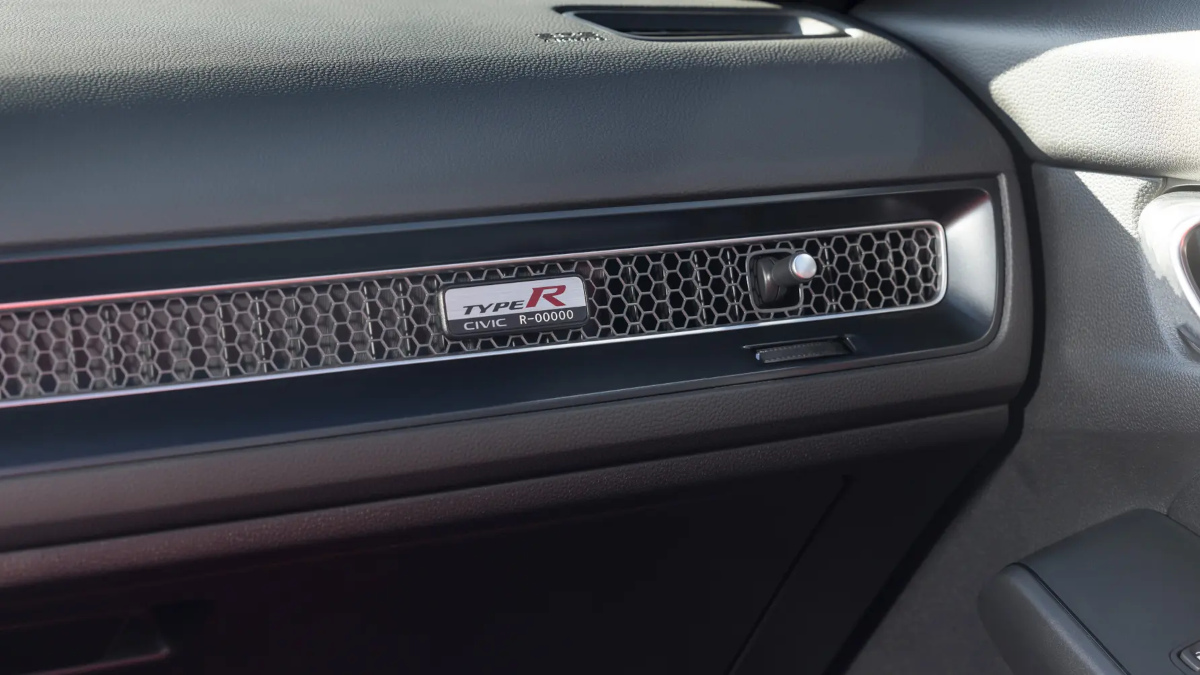
It’s a cleaner layout than the last one, with neatly integrated vents hidden behind the mesh panel that runs the width of the dashboard. A rocker switch on the console allows you to choose modes (Comfort, Sport, Individual) and a button in front gives access to the full house +R mode. You can disable the rev matching if you plunge into the menu system, and Individual mode allows you to cherry-pick your preferred settings for the steering, throttle, engine noise, suspension, traction control, and more.
What about all the screens?
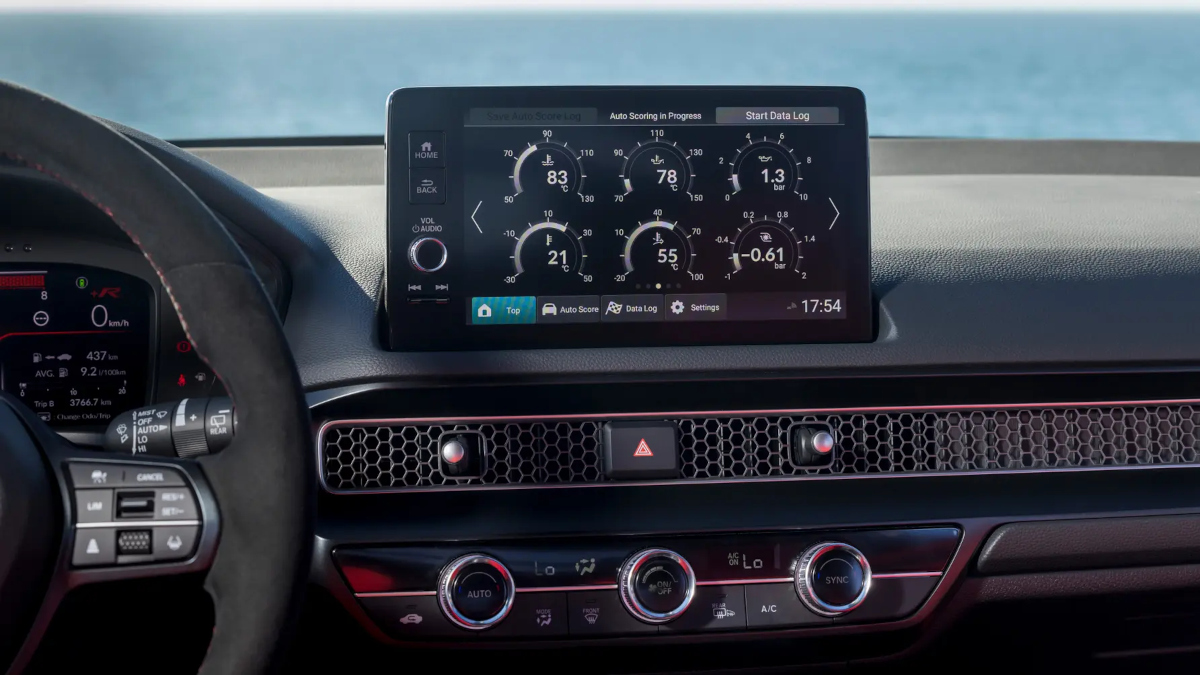
Get Apple CarPlay or Android Auto running as soon as you can. It’s not that the screens are particularly tricky to use, but that the graphics feel dated. There’s plenty of information, especially driving data for when you’re on track in the LogR screens, but we’ve seen much better-presented setups.
The biggest disappointment is the shift-up lights—they are in the right place, but they look like something from a primary school project.
Build quality?
It’s a Honda, what do you think? Don’t expect top-notch materials, but do expect them to have been assembled beautifully with minimal panel gaps.
How do passengers fare?
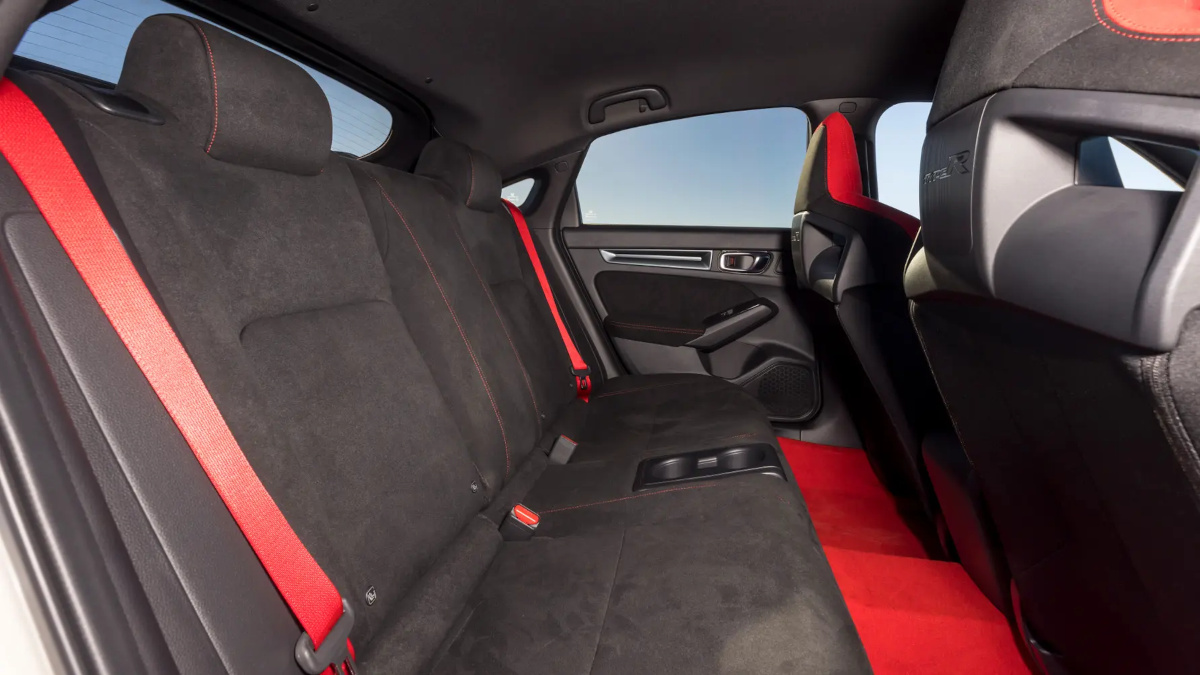
Pretty well as long as there are only two of them. The back seats do feel a bit basic, there’s no flip-down armrest, and the plastic moulded cupholders are crudely inserted between the two seats. When you’re paying this much money, that ought to have been done better.
You can’t complain about the space though, especially the generous legroom, and the boot is a decent 470 liters that expands to 1,212 liters s with the rear seats folded. If you’re a family buyer with two kids, this will do holiday duty as well as, if not better than, many crossovers.
More photos of the 2023 Honda Civic Type R
NOTE: This article first appeared on TopGear.com. Minor edits have been made.