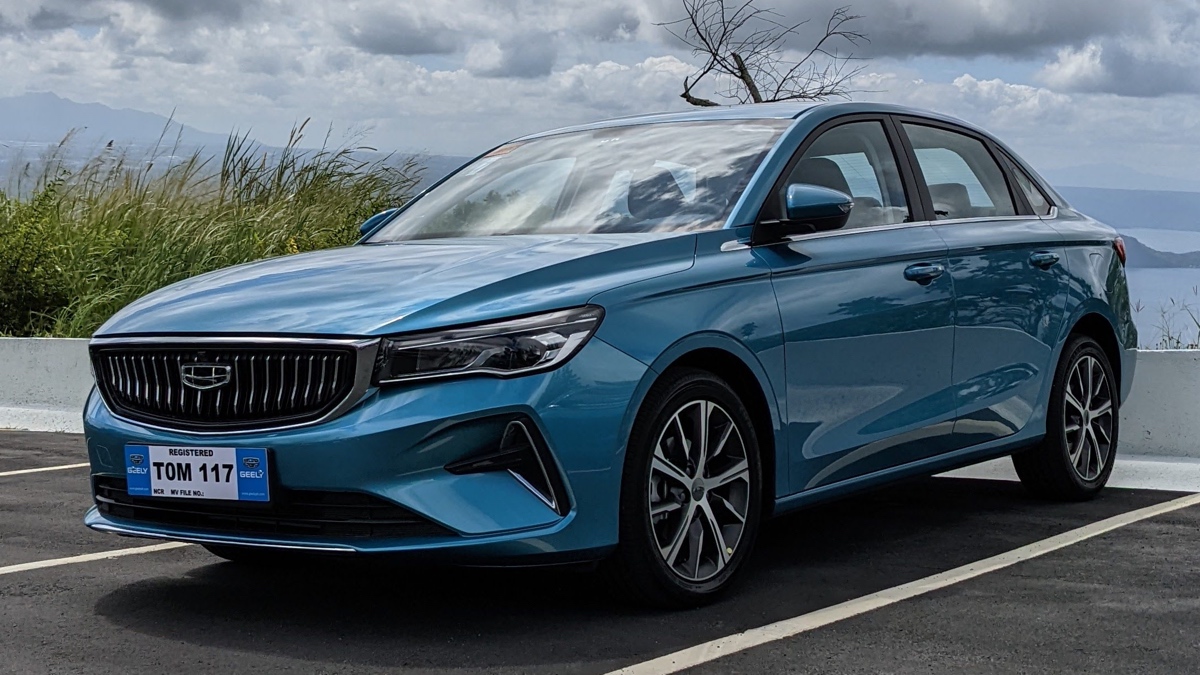
The gossip gears of the motoring industry are always churning, but for the past two weeks, they’ve been spinning faster. The lubricant for the rumor mill were two viral cases of disgruntled Geely customers.
The first case, an owner of the massively popular Coolray crossover, detailed how waiting for a fuel pump replacement that was supposed to take one to two months became a five-month wait. It was going to take longer had he not made a surprise inspection at the dealer. What he allegedly found was any new car owner’s nightmare: His crossover was deteriorating while exposed under the hot sun, and he said leftover food and drinks were found inside.
The other incident involved a Geely Emgrand. A supposedly brand-new unit had defects and evidence that suggested it was a secondhand car. It was almost too bad to be true.
OTHER STORIES YOU MIGHT HAVE MISSED:
LTO says it will grant a one-year validity extension for expiring driver’s licenses
Cyclist on gun-toting ex-cop in viral road rage video: “Napatawad ko na po siya”
At the start of this month, Geely Philippines finally addressed the customer concerns that have been spreading in group chats the past two weeks. In a letter posted on its Facebook page, Geely acknowledged that “there were lapses” and apologized for the incidents. It reiterated its dedication to customer satisfaction.
But the first version of the statement had an error. They posted an email address for customer complaints without a ‘.com’, before publishing ‘customer.care@geelyph.com’ in a corrected version. There was something almost poetic about it.
So how did the situation escalate? And what does it mean for Geely Philippines, as well as other Chinese brands?
Car complaints have been around almost as long as social media itself. But these viral incidents started a wildfire, with other Geely owners commiserating with the original complainants. For months, we’ve been seeing some unverified photos of units awaiting parts in dealers.
Personally, I’ve seen two Geely Coolrays with major physical damage—the kind that usually grounds a vehicle—still being driven around the metro. Logic points to one conclusion: no parts available.
We are not new to Chinese car brands. The first wave arrived about a dozen years ago. I recall Chery, Great Wall Motors, and Geely landed in the market and readily lent out their vehicles for evaluation. I will spare you the amusing details of those early reviews. But suffice to say the Japanese—and Korean—carmakers didn’t lose any sleep at the time. They might have even slept better. Over time the first wave of Chinese marques became dormant as they regrouped and found new brand stewards.
But in 2018 and 2019, two brands finally established a beachhead: MG and Geely. MG was acquired by The Covenant Car Company (TCCCI), the capable people behind Chevrolet and Volvo; Geely was under Japanese corporation Sojitz, which was fresh from its separation from Mitsubishi.
OTHER STORIES YOU MIGHT HAVE MISSED:
It appears the Hyundai Stargazer X and Custo will be launched in PH next month
The Ferrari Purosangue is officially in the Philippines—and it starts at P46-M
At the time, both brands had compelling product offerings, beautiful models that evoked strong European looks. MG leaned heavily on its British origins, and Geely’s relationship with Volvo was starting to bear fruit. They also reaped the advantage of having access to China’s capability to mass-produce advanced tech. Buyers were dazzled with big touchscreens, digital gauges, and external cameras.
Sales grew steadily, and these two Chinese brands started cracking the top 10 monthly sales rankings. It might be worth mentioning that during this period, in the middle of the pandemic, Hyundai was inactive, as it was going through a transition from having a distributor to taking the reins of its own brand. After ranking third in sales at the height of its strength, Hyundai’s dormancy might have made it easier for other players to gain market share.
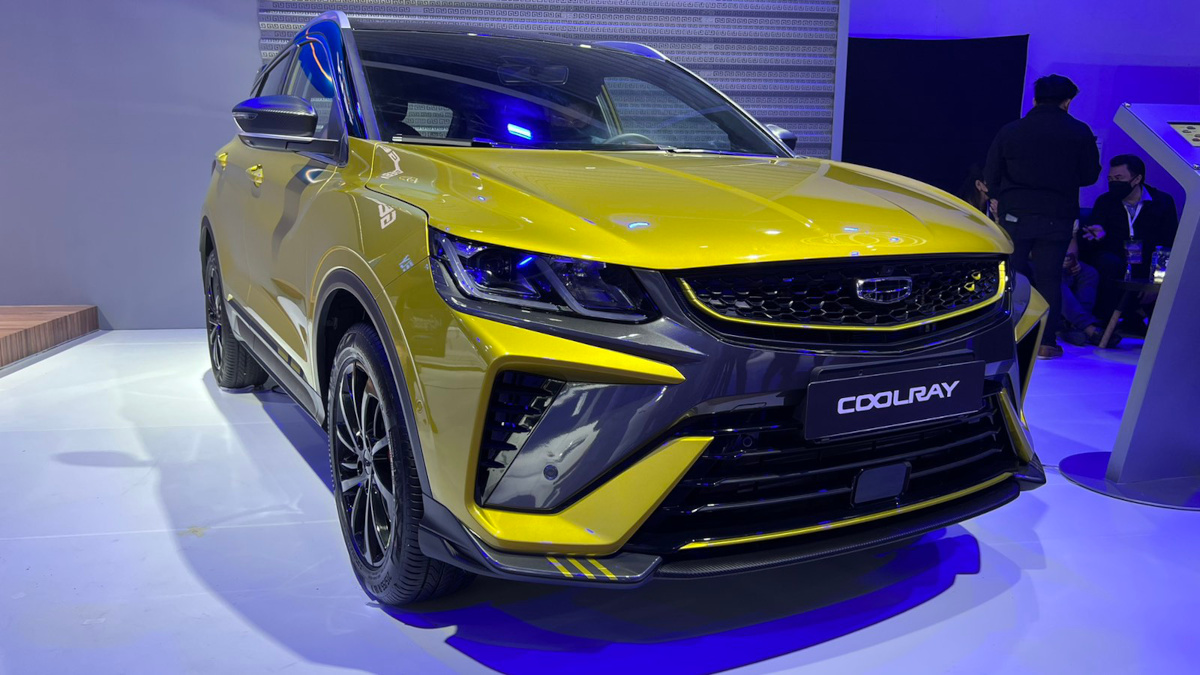
By the start of this year, Geely was still riding high, hovering around the eighth or ninth place in the monthly sales ranking of the Chamber of Automotive Manufacturers of the Philippines (CAMPI). As of July 2023, the latest sales information available, Geely has sold an impressive 4,673 cars. It ranked ninth behind a resurgent Hyundai. If the viral customer incidents will have any effect on business, this month’s sales will reflect that.
It must be said that Geely’s woes also happened during a time of management transition for the brand. A key figure in Geely’s rise to prominence is Froilan Dytianquin, its former general manager for sales and marketing. Dytianquin spent nearly three decades with the marketing department of Mitsubishi Motors Philippines Corporation (MMPC), helping the Japanese carmaker retain its solid number-two rank in the Philippine auto industry. He formally joined Geely Philippines in April 2019.
More than Dytianquin’s marketing skills, he is also a veteran of PR crises. It was under his watch that MMPC survived two notable PR challenges that I remember. The first was a customer complaint from a prominent broadcaster regarding his SUV in the mid-2000s. The second was the infamous sudden unintended acceleration (SUA) incidents regarding the Montero Sport.
Dytianquin and his fellow Mitsubishi marketing manager, Arlan Reyes, organized a press conference where they did a technical demonstration of how SUA wasn’t possible, and welcomed third-parties that wanted to investigate. It should be mentioned that a veteran crisis PR professional was also present during the press conference. (We would like to reiterate that we do not believe in SUA. In a country where anyone with a pulse can get a driver’s license, the potential for driver’s error is enormous.)
As of July 2023, MMPC still ranks second in vehicle sales according to CAMPI. Safe to say it survived those crises and is thriving.
At the end of July 2023, about a month before the Geely customer complaints spread like wildfire, Dytianquin was announced as the new managing director of Chery Philippines, another strong Chinese brand. With him now in Chery is media relations manager Jelene Fule, a member of the pioneering Geely team, and marketing director Rosemary Cruz, also a Mitsubishi marketing veteran.
The Geely crisis comes at a crucial time for this current batch of Chinese car brands. Buyers purchased them despite two glaring challenges: resale value and after-sales support. People were willing to risk the former, but the latter is a more bitter pill to swallow.
The Geely issues also have an indirect effect on other Chinese brands. On social media, Geely isn’t being singled out; many comments have the words “China car” in them. Because while each brand is supposed to be distinct, there are many similarities: designs, crossover bodies, the use of influencers, and a value-for-money proposition. Their main selling point is you can get better design, more features, and turbocharged or hybrid powerplants for a lesser price than their dominant Japanese counterparts.
But reliability and after-sales is what made the Japanese brands dominant. Toyota has reached such a critical mass that an owner can even look beyond the dealer and opt for OEM parts. Same with Nissan and Mitsubishi. Even a small player like Mazda invested in a warehouse in Laguna to make sure parts are readily available.
Filipino car buyers don’t purchase an automobile because of convenience. We do so out of necessity. There is no world-class rail or subway system to turn to at the moment. Without a car, we’re at the mercy of tricycles and jeepneys. And let’s not get started on who you might encounter if you opt to ride a bicycle to get around. So the idea of being deprived of our car, that we are still paying for, touches a nerve.
In a case of perfect timing, the Chinese car industry is also undergoing a massive realignment in our market. EV giant BYD has been acquired by Ayala Corporation. Changan has gone to global distributor Inchcape, joining prestigious brands like Mercedes-Benz and Jaguar Land Rover. MG has severed ties with TCCCI and will now be under its mother brand, SAIC. And as we mentioned, Chery has been re-energized by an experienced marketing team. There are new entries like Omoda and Jetour, and a returning Great Wall Motors.
Geely may have stumbled, but there’s still a chance for redemption if it plans its next moves right. And it has acolytes—happy owners who still believe in the brand and its offerings. But a veil has been lifted, and behind the curtain is a glaring inadequacy. Other Chinese brands should study and learn from this case. Because like it or not, they’re all in the same boat at this point. One more PR flashpoint could turn the tide unfavorably.