
This latest Patrol is the seventh generation of a full-size Japanese off-roader that traces its origins back to 1951. Sound familiar? It’s also an identical back story to the Toyota Land Cruiser, a car that looms large over Nissan’s latest contender.
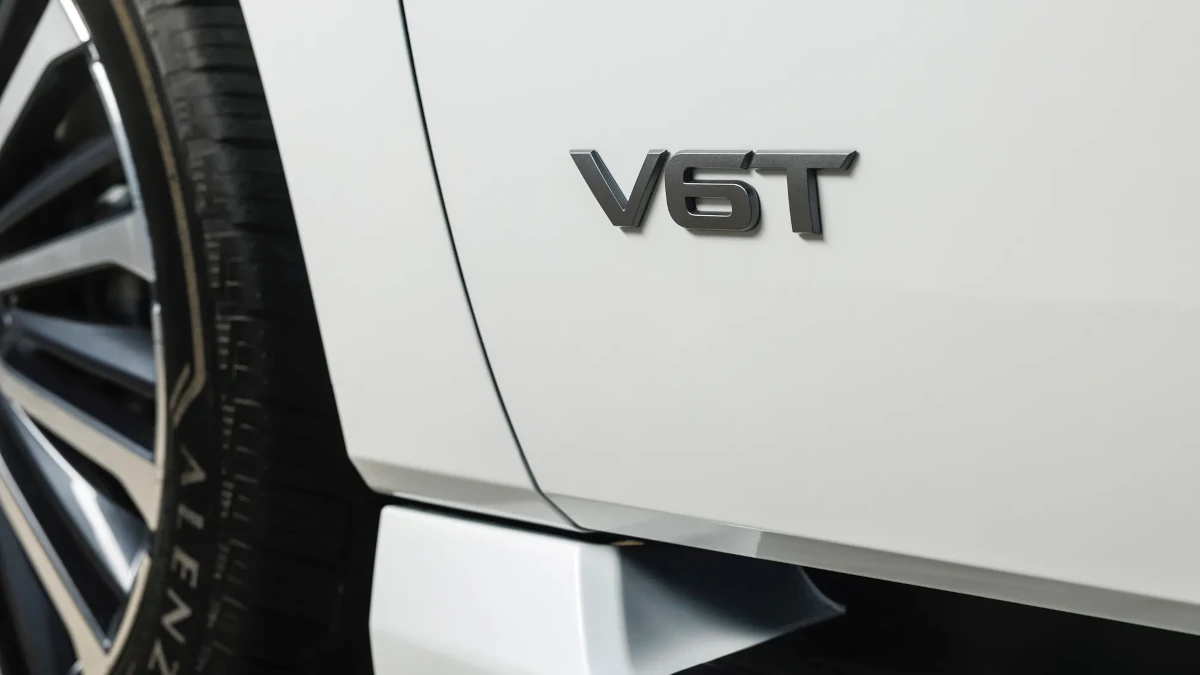
Not that the Patrol is small. It’s a whopper. It’s 5.2 meters long, tips the scales at over 2.7 tons, and packs a pair of V6 engines, the only one you probably care about being the 3.5-liter twin-turbo that develops 425hp and 700Nm, and hurls this gargantuan SUV to 100kph in 6.6sec. There’s also a naturally aspirated 3.8-liter V6 with 318hp and 386Nm. Which doesn’t seem enough given the mass involved. But you won’t have failed to notice the elephant in the room here: No diesel, no hybrid.
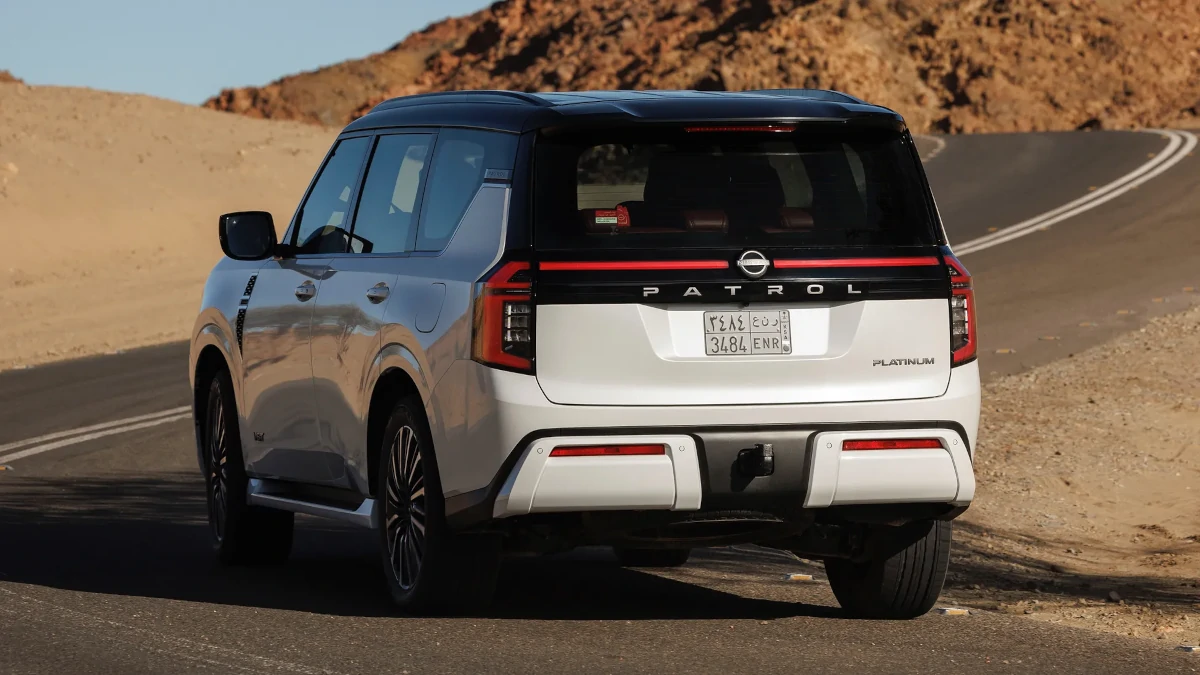
And that’s because of where the Patrol is sold. It’s not going to be sold in Europe at all. Or Japan, for that matter. This is a car designed, engineered, and developed from the ground up to excel in the Middle East. Seriously. They sell more of these across this region—over 20,000 a year—than anywhere else on the planet, including America (where it’s badged the Nissan Armada). Then look at what other countries are listed among the 28 territories it will sell in: Australia, Canada, South Africa, and the Philippines.
All places where fuel tends to cost less, so no one worries too much about economy and emissions, and the move to electrification isn’t a pressing concern. That it returns a claimed 11.6km/L is needlessly impressive, more relevant is that 100-liter fuel tank’s ability to carry you a long way. The Land Cruiser 250—a more global product—is available with either diesel or mild-hybrid gasoline propulsion.
ALSO READ:
First drive: The new Honda Civic is proof you shouldn’t count out sedans
Review: 2025 Hyundai Santa Fe 2.5T Calligraphy AWD 8DCT
Consider, too, that the Patrol has the reputation it does because it’s built tough. Adding electrification would have jeopardized that. It still uses body-on-frame construction, even if it hasn’t had beam axles since the fifth-generation Y61 died in 2010. It’s all independent suspension, newly air-sprung and-height adjustable, and now features a nine-speed automatic gearbox complete with low range.
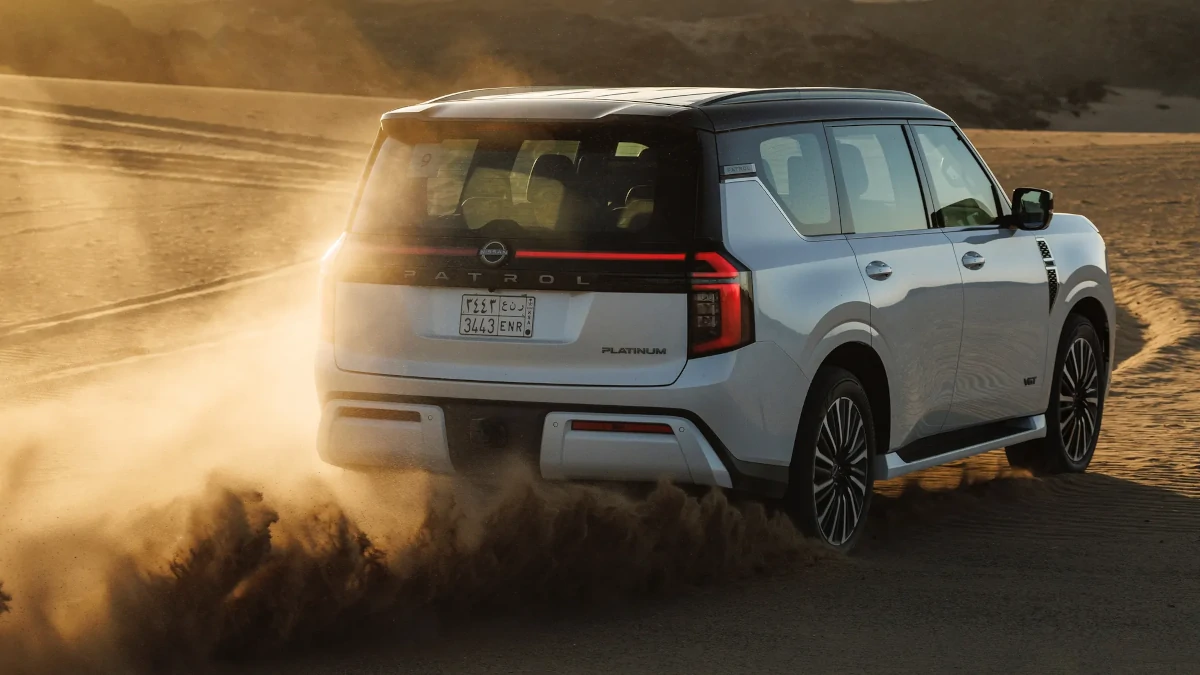
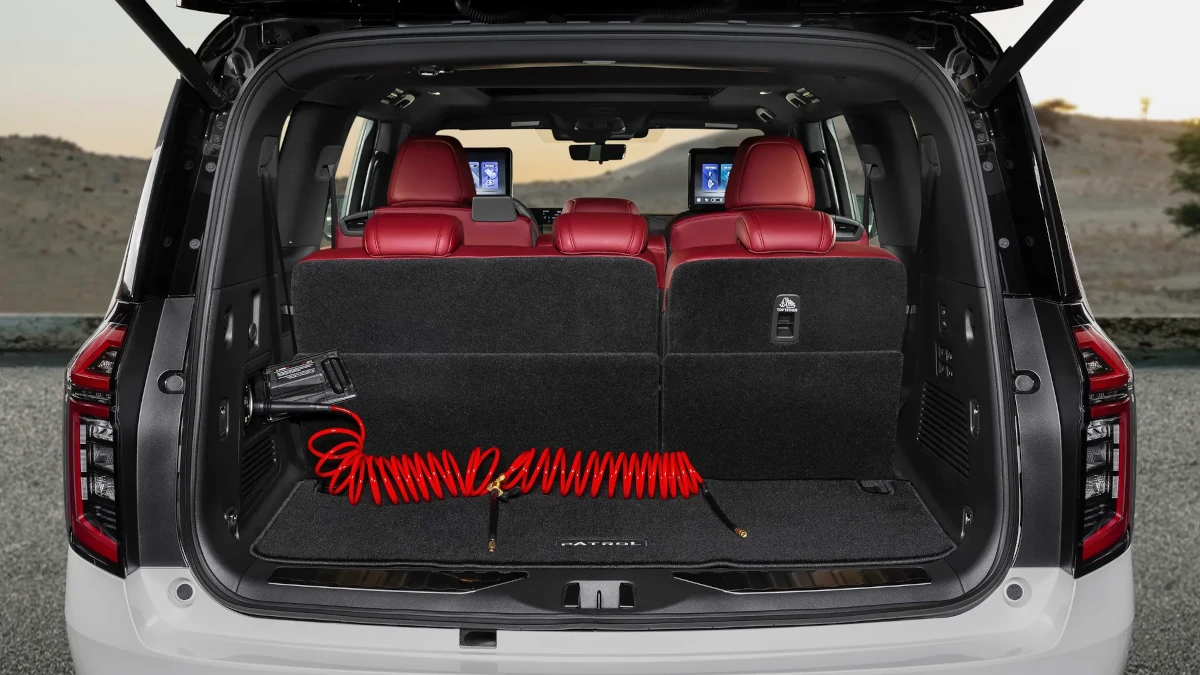
It’s designed for the environment. Off-roading in the Gulf means lamping through dunes, which doesn’t need much in the way of axle articulation so solid axles aren’t necessary. But getting traction in sand means you need to drop tire pressures, so top-spec Patrols come with a built-in compressor.
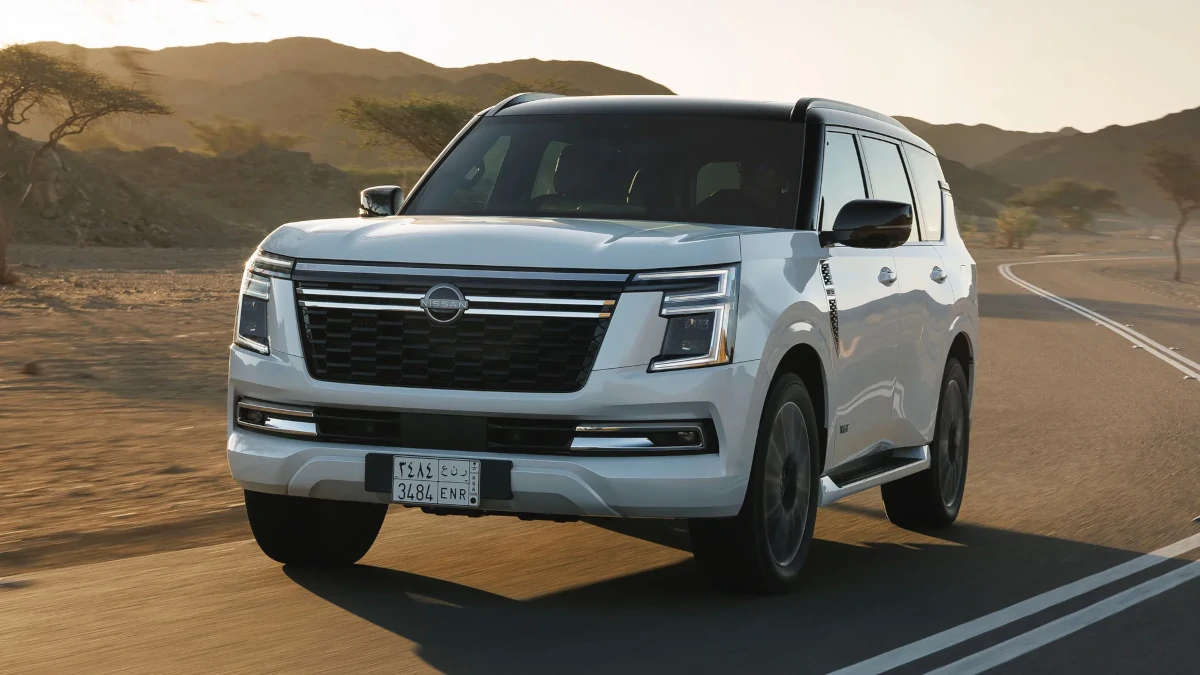
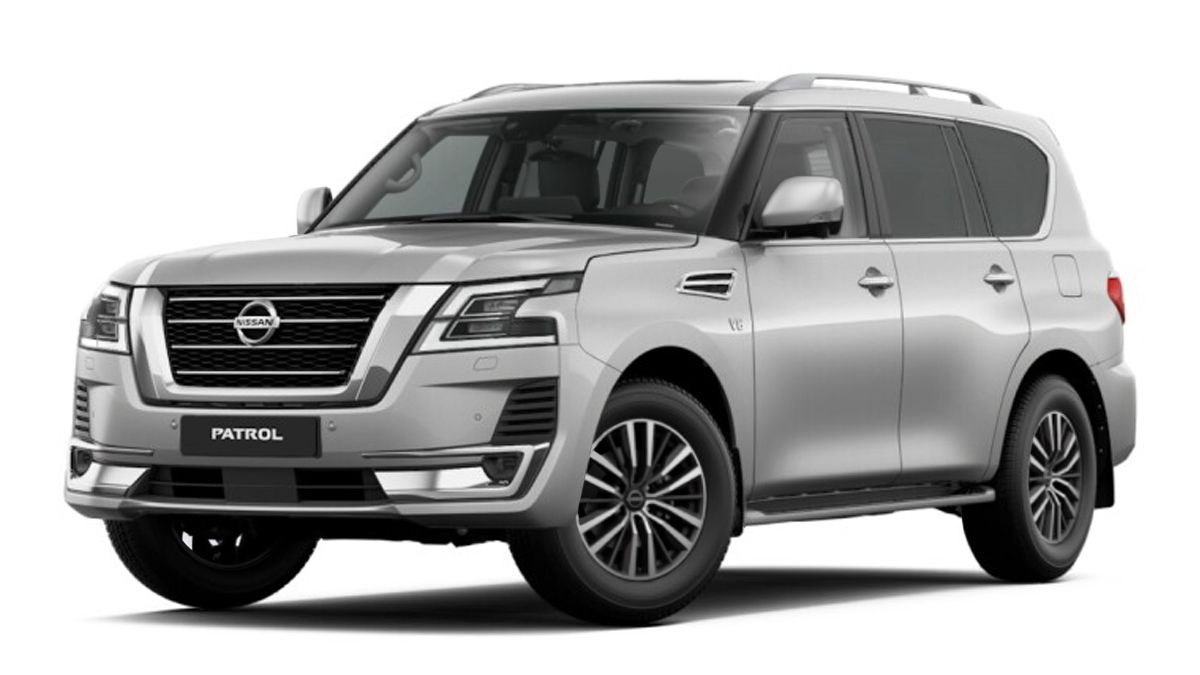
But yeah, the way it looks: It’s a big, bulky, bland bit of design. Shoulder-height hood, chrome, looks like a good facelift of its predecessor rather than an all-new car, and when rivals are successfully riffing on their history (not just the Land Cruiser, but also the Mercedes-Benz G-Class and the Land Rover Defender), this looks like a missed opportunity to bring back a bit of the Y61’s magnificent boxiness.
Here’s the crux of it for us: You should care about thePatrol because it has a proud history that’s just as long, varied, and interesting as the Land Cruisers. A first-generation Patrol was the first car to scale Mount Fuji in 1951; a few years later, the second-gen car was the first to cross Australia’s Simpson Desert. Over the years, the nameplate clashed axles with the Land Cruiser and had an equally formidable reputation for not breaking or going wrong. Together, they drove Land Rover out of the world’s toughest environments.
But globally, by expanding the Land Cruiser brand across three distinct model ranges (Heavy Duty 70-Series, the cool new 250 aka the Prado, and the Patrol’s most direct rival, the 300), Toyota has prevailed.
End result? Once sold in 90 territories, the seventh-gen Patrol will only be available in 28. And as the market has shrunk, the Patrol has been deliberately targeted into those areas and become more specialized. This must be one of the only cars in the world designed specifically to excel in sand dunes. It’s wonderfully well-suited to the Middle East. But elsewhere? It’s harder to make a case for it.
Nissan Patrol 2025 on the road
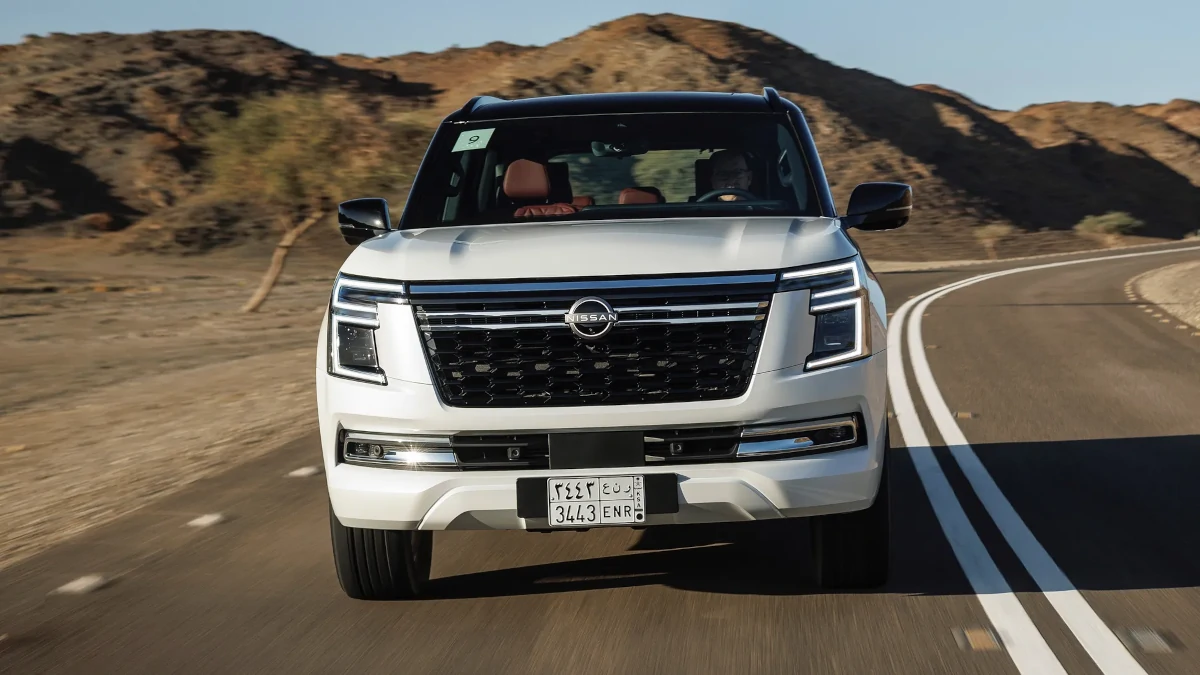
It’s a big step over the old one in terms of driving abilities, while at the same time falling short of the on-road standards set by genuine luxury off-roaders such as the Range Rover—and Defender for that matter. Blame the ladder-frame chassis for that.
It’s flawed—not badly, just in the same way we’re used to with all cars that have a ladder-frame chassis with the body on top. To be fair, there’s not much of the lateral shimmy that affects the new Prado, but that’s mostly because the Patrol uses more sophisticated independent suspension. Air springs help deliver a much calmer and more settled ride compared with the old model, and body control is actually very good for a car of this weight.
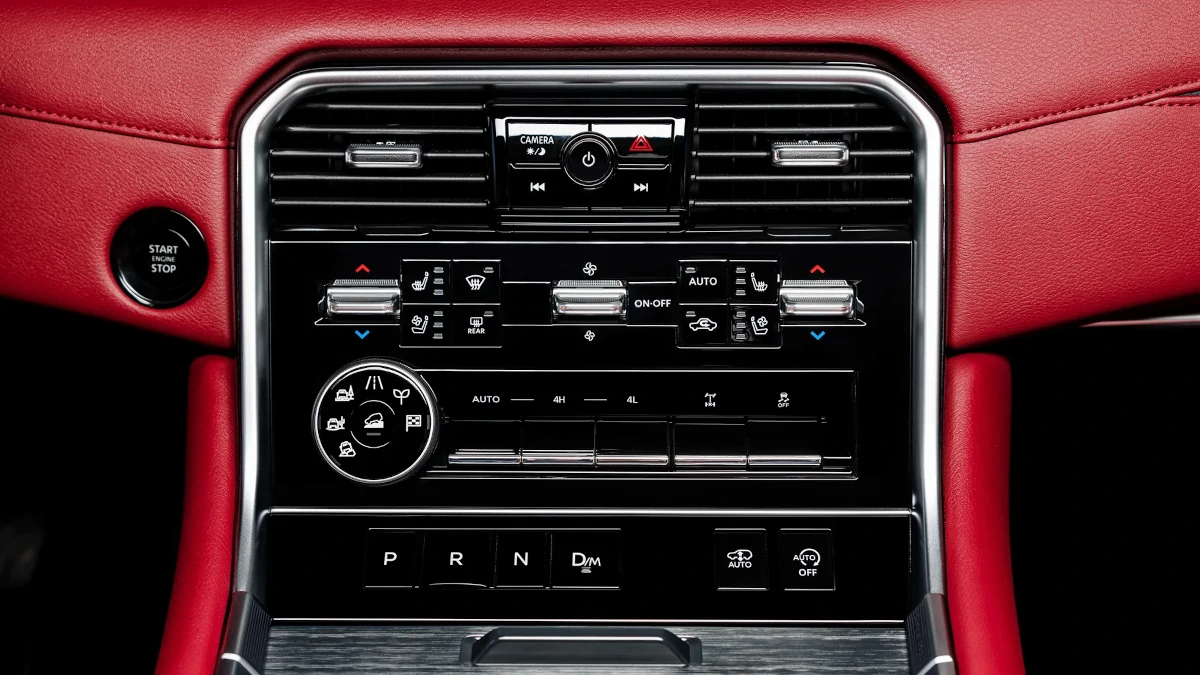
The off-road settings are easy to use via a control dial on the console, with separate buttons to select low range and the rear diff lock. The center diff and ride height are controlled automatically. And there’s more: The steering is more accurate and better weighted than you might expect from a car that’s been engineered for the sandy back of beyond, and once leaning in a corner, it settles and holds a consistent line nicely. The brakes are pretty sharp, too.
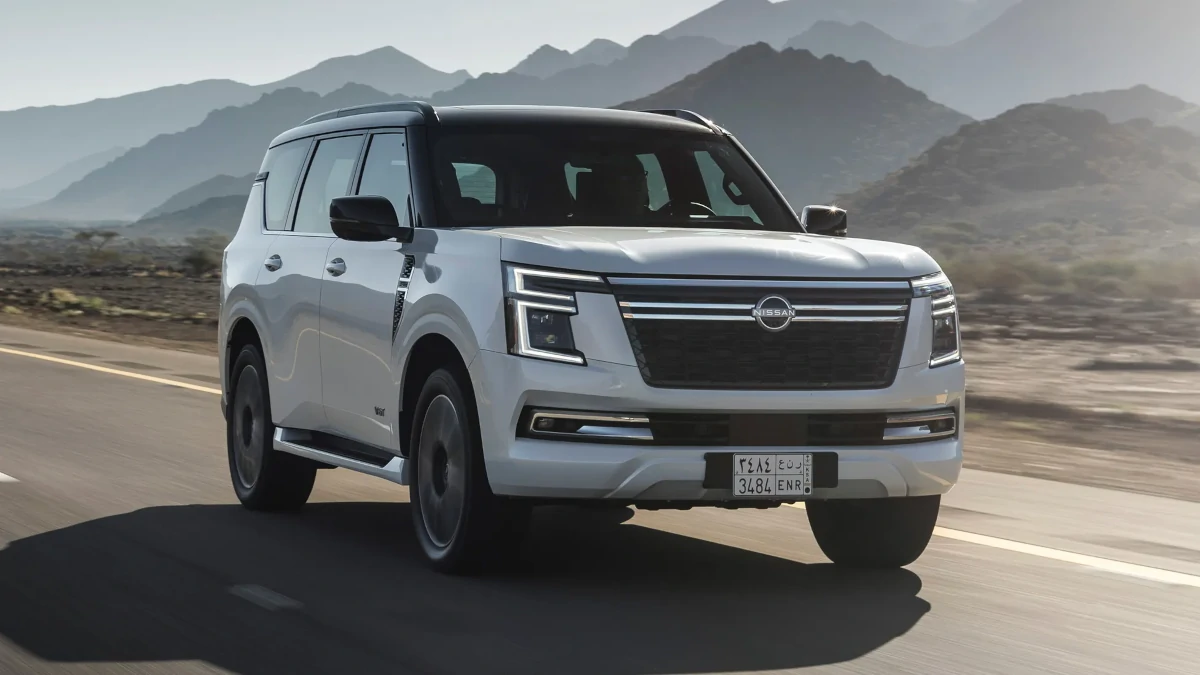
The suspension, however, can’t quite control the heavy wheels when they get kicked by potholes and speedbumps, and there’s generally more commotion and buffeting than you’d expect from a car with luxury pretensions. But people still considered the old one a luxury car, and this one is way more together—torsional rigidity is up by 40%, and lateral rigidity by 57%.
But here’s the Patrol’s dilemma: It wants to be luxurious and yet devastatingly capable off-road. So some compromises have been made (beam axles have gone), while others haven’t (the ladder frame remains).
The engine, at least, is better than the gearbox. The nine-speed automatic is fine if little is asked of it, but if you choose to pull paddles (they’re fitted to all versions, as they’re very handy in the sand so you stay locked in a single gear), the shifts take too long. In regular Drive mode, the gearbox has a tendency to surge the low gears at high revs. No one will care a jot about any of this provided it tolerates huge abuse.
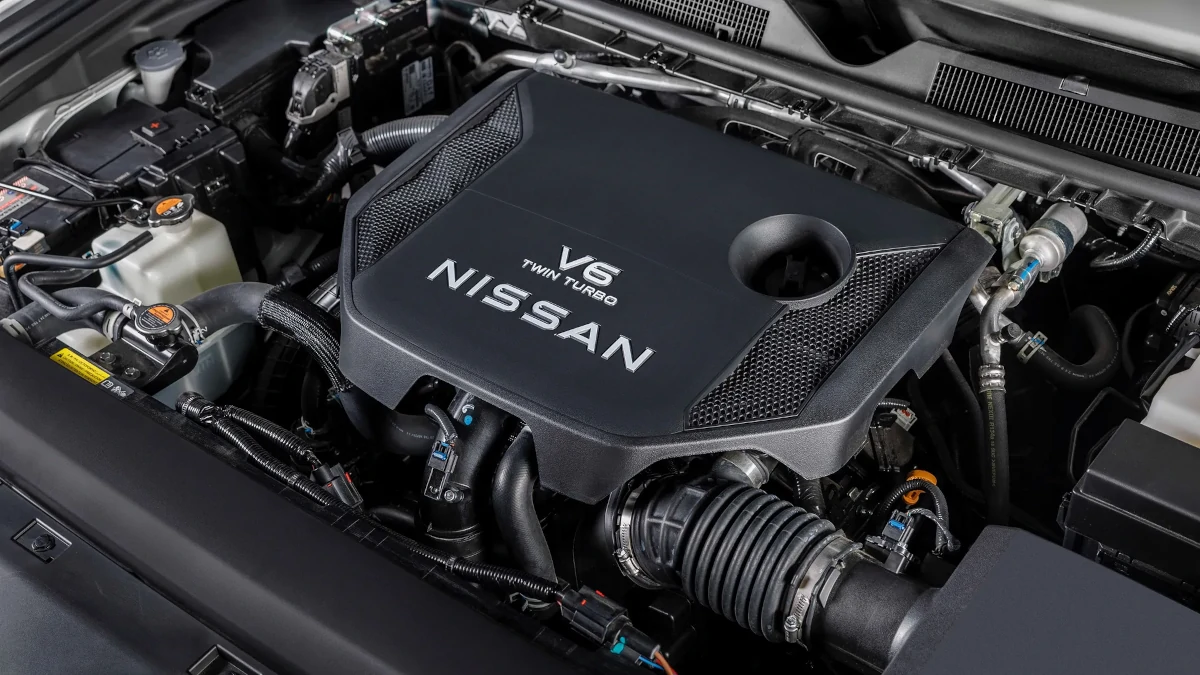
The V6 has certain commonalities with the engine in the 400Z, including the bore diameter, but a longer stroke to generate more torque. That stands at 700Nm at 3,600rpm—meaning the Patrol doesn’t have a stump-pulling bottom end. Again, there’s a reason: In the dunes, you need to keep revs up to maintain engine response and momentum. At low revs, there’s also a fair amount of delay before the turbos start swinging. Again, you never notice off-road because you’ve always got at least 3,000rpm on the dial.
And another neat feature: Most low-range systems cut out once you reach a particular gear or speed. That’s fine if you have rock rather than sand as your primary obstacle, but driving through a vast expanse of desert speeds can get quite high, so the Patrol’s low range works across every gear at all speeds.
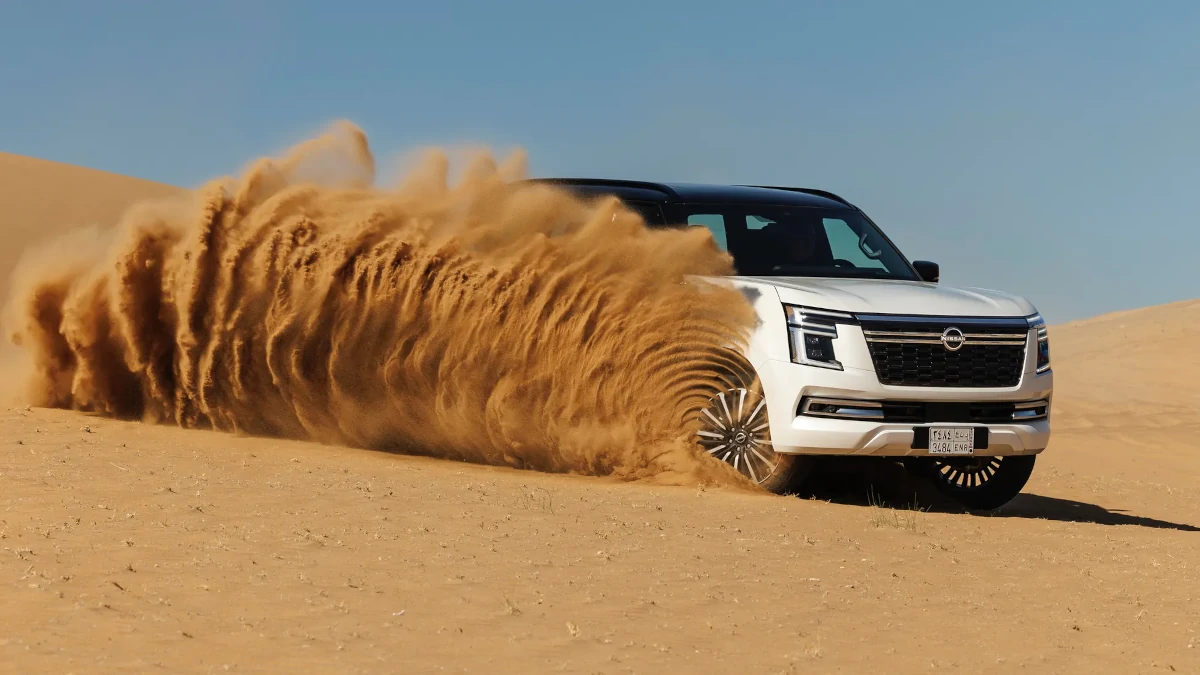
That said, it would be a lot better in the dunes if it didn’t weigh upwards of 2,700kg. Sand drags hard on weight, and even with 275-width tires dropped to 25psi, once you break the wind-blown sand’s surface tension, the Patrol has to work very hard to keep itself going forward rather than down. Where a 1,000kg Suzuki Jimny can skim over sand like a Beetle, this has to batter its way through, max power and torque churning sand everywhere.
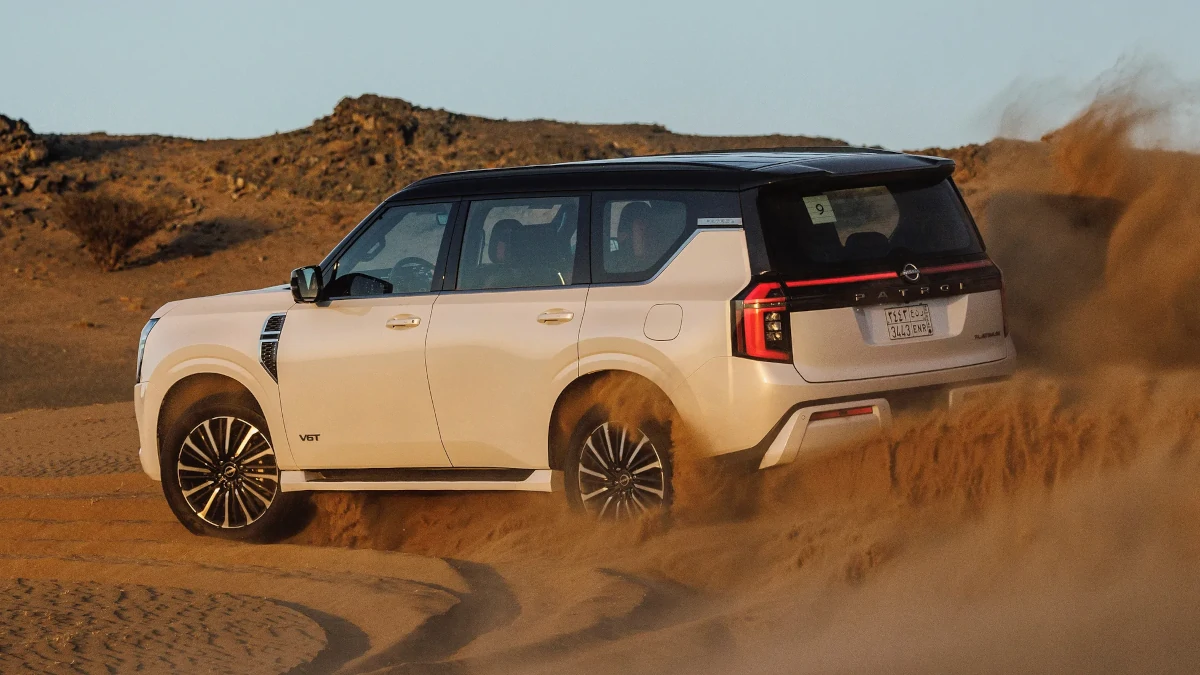
Don’t get us wrong—there’s not much that’s more entertaining in the driving world than charging anywhere you please across a desert that spreads to the horizon. And not much that’s more stressful and exhausting than having to dig a Patrol out when it (ahem, inevitably) gets beached. It’s also fabulously heavy on fuel in the dunes—we averaged about 1.3km/L because it often uses a lot of fuel to go very little distance, with the wheels almost permanently spinning.
As part of the Patrol’s development, Nissan engineers covered over 100,000km in the dunes, and you can tell. Twist the mode dial to Sand and it’ll raise the body to maximum height, ask you to select low range (but leave you the choice of locking the rear diff), and unshackle the traction and stability control so the car can move around. Not once did we feel the Patrol didn’t know what it was doing. No matter how much of a novice dune driver you are, the Patrol is there to hold your hand. Reading the dunes, working out where the sand will be softer or harder? That’s down to you, though.
On paved roads, the Patrol was averaging closer to 10.6km/L, against a claim of 11.6km/L. Which doesn’t sound too bad, does it?
Nissan Patrol 2025 on the inside
Now for some trivia: Do you know where Nissan’s first-ever dealership outside of Japan was? Kuwait. That was in 1952. And do you know why the Middle East really took the Patrol to its heart? Yeah, there’s the whole thing about the royal families buying Patrols, which meant those who wanted to curry favor quickly followed suit.
But the reason the royals went for the big Nissan in the first place? Air-conditioning. That arrived with the third-generation car in 1980, Nissan realizing that powerful, reliable aircon was essential in that part of the world. The system is a complete monster. You can leave the Patrol outside in the sun for hours, but within a couple minutes of getting in, the sauna will have turned into an ice bath. Effective seat cooling, too.
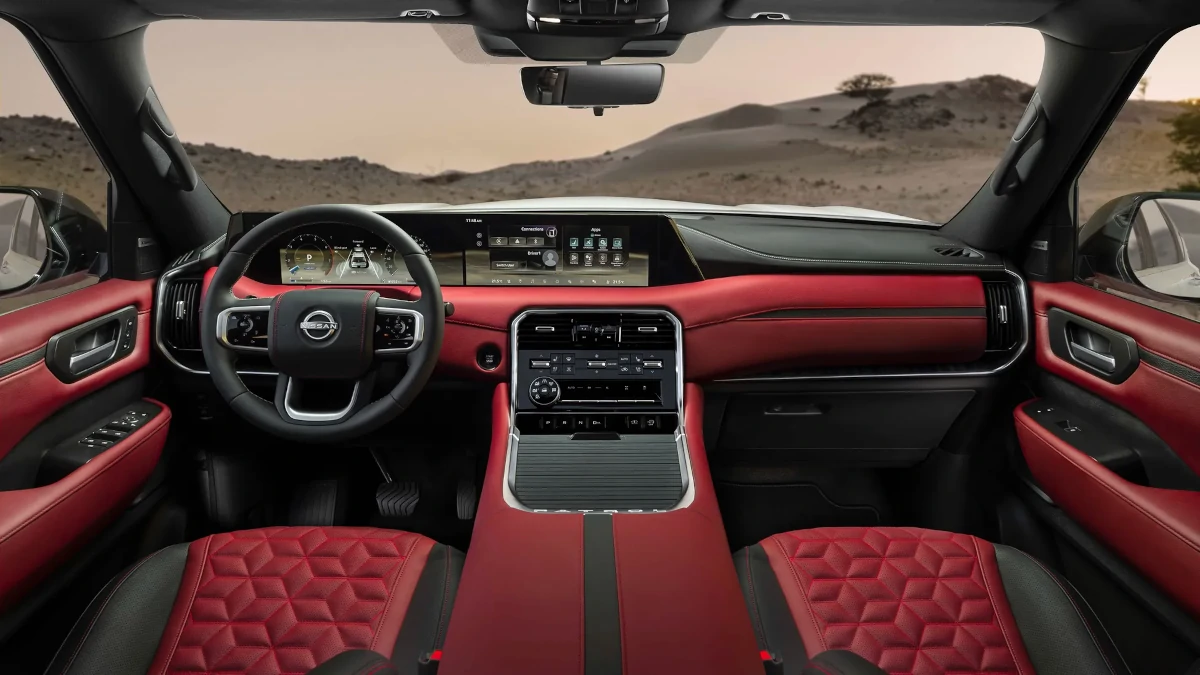
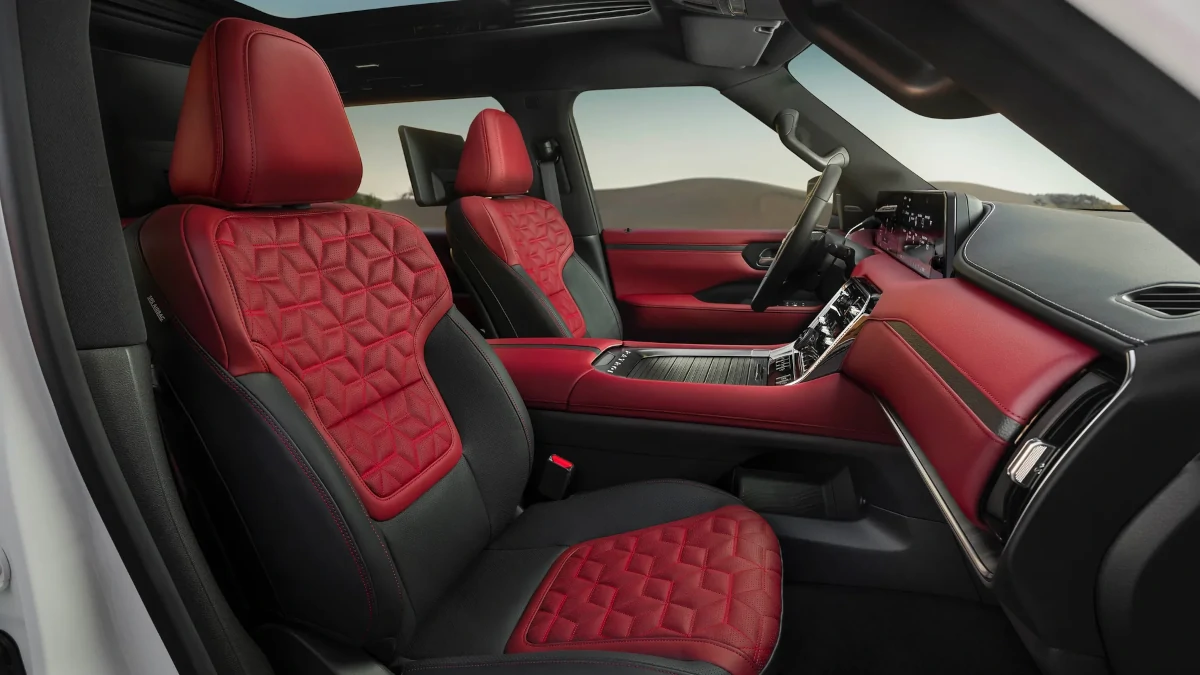
Other than that, it doesn’t come across as a car suitable for royalty. Can’t see European monarchs being persuaded by cheap plastics, basic stitching, and astonishing lack of marquetry, because by the standards not only of Bentley and Rolls-Royce, but even of Audi, Mercedes-Benz, and BMW, the Patrol isn’t a smart or luxurious car. It’s the trim and materials that let it down—everywhere the designers could have gotten more creative, they’ve instead gone for practicality. Loads of storage, less surprise and delight.
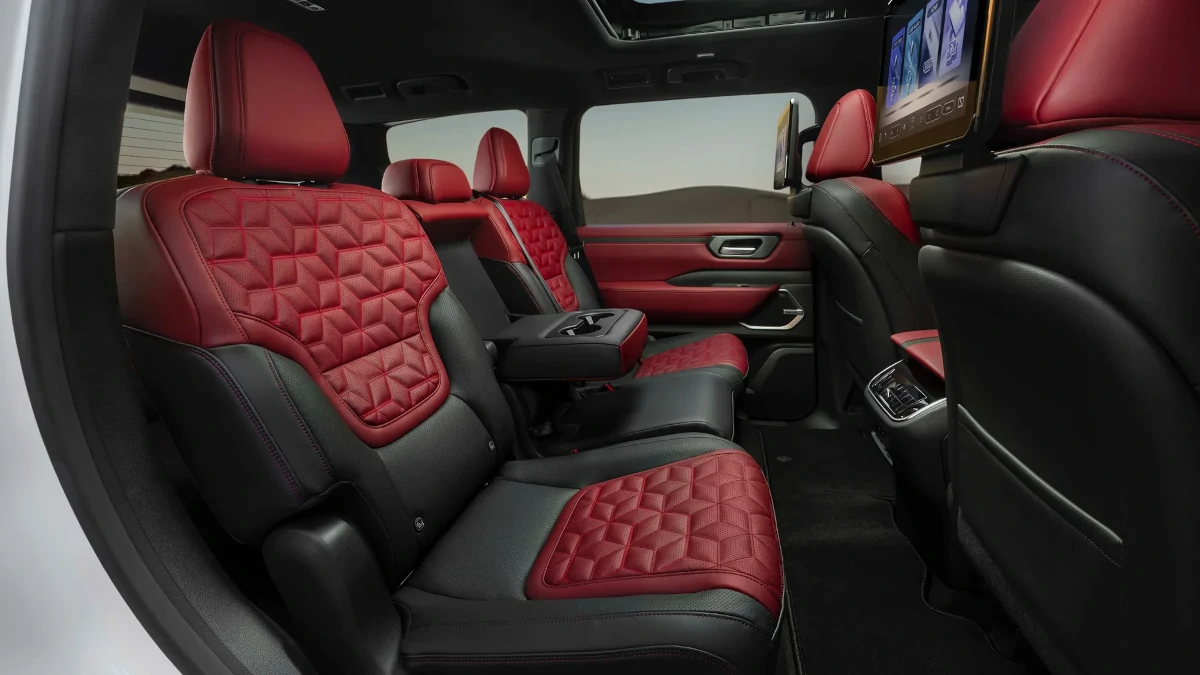
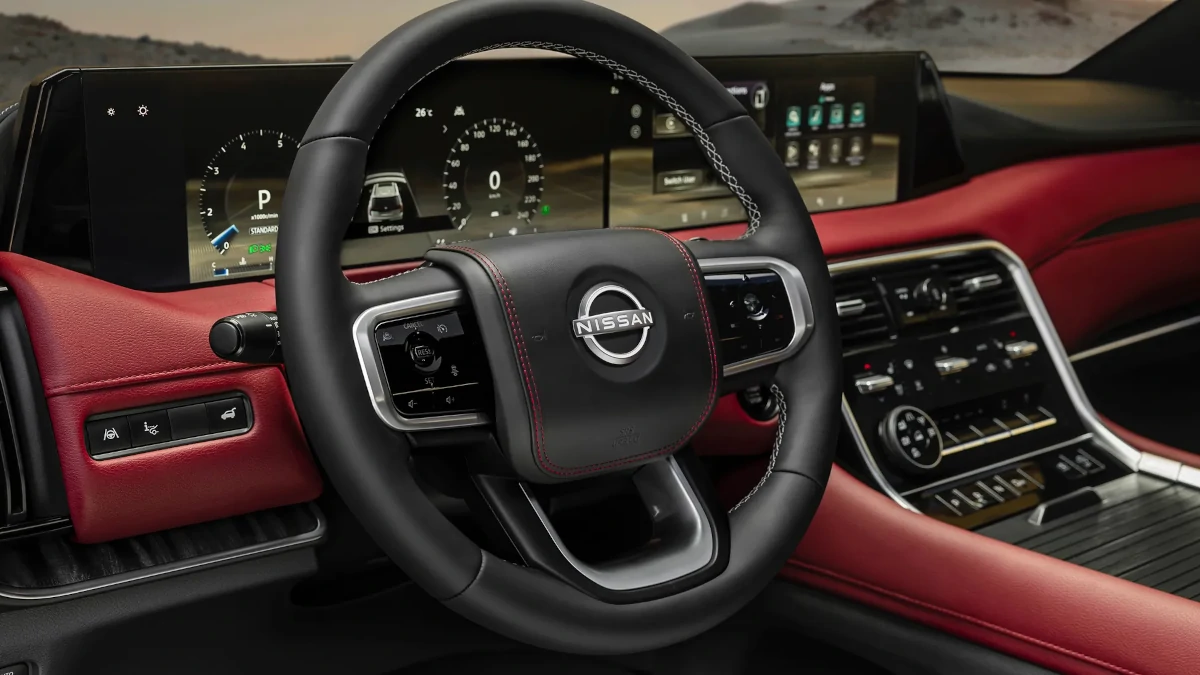
Still, it’s very much posh Nissan in here. You get all the toys you’ll ever need in top-spec versions: big, comfy massaging chairs, a central fridge, twin 14.3-inch screens, surround cameras, 64 colors of ambient lighting, even ‘biometric cooling’ where infrared sensors check your body temperature and adjust the cabin temperature accordingly.
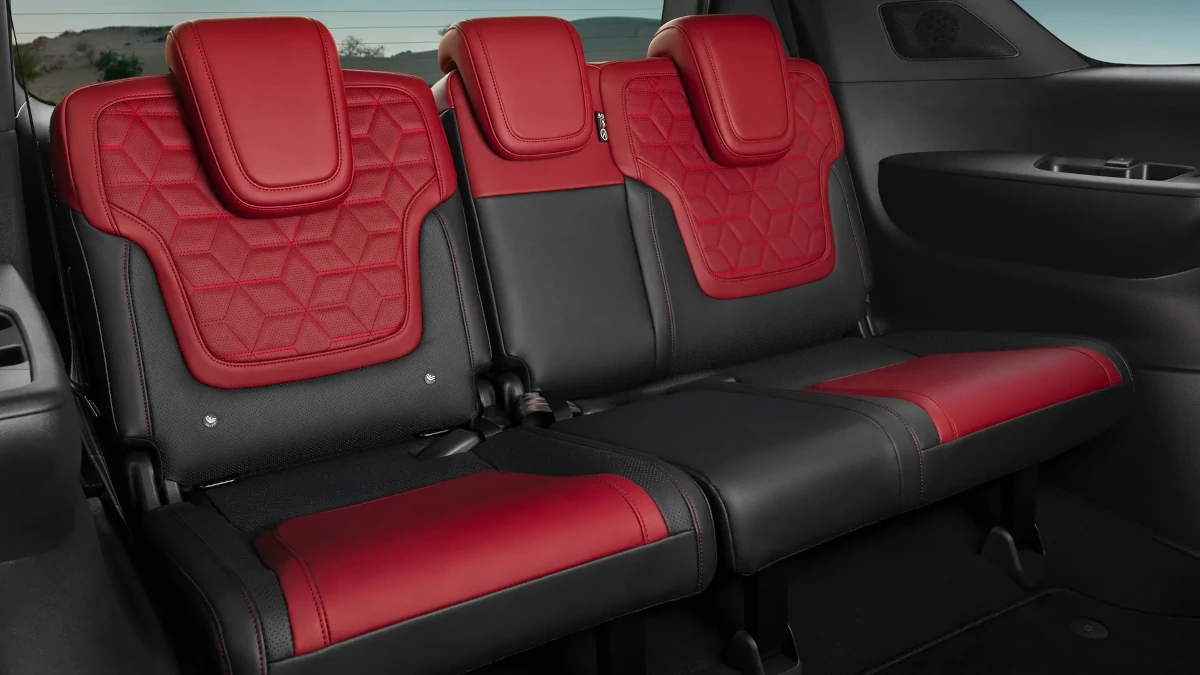
Cabin space is large enough to stage an inter-village tug of war. Fold all the seats down and the 2,680-liter volume is positively van-size. With all seven seats up, the 623-liter cargo area is double what most family SUVs offer. No passenger, no matter what row they find themselves in, has any cause for complaint. It’s well thought out, too—not quite to Volvo levels, but near enough. But so it should be given it’s as long as a stretched Merc S-Class, and wider than most hypercars.
Crucially, this is a vehicle that’s easy to use for the driver. The screens are actually pretty basic despite the large swathe of dash they occupy—not good if you want to be dazzled by swirling graphics, but who wants that when they’re driving? Simplicity is effective, and the layout here is easy to get on with. And yes, there are plenty of actual physical buttons and controls.
Final thoughts on the Nissan Patrol 2025
Does this new Patrol do the job it needs to do? Yes. Does it do much more than that? No. It’s a conservative update, designed to make people who already had an old one buy a new one. As a result, what it’s unlikely to do is attract a new audience to the brand, and given Nissan’s well-documented issues at the moment, this should surely have been a priority.
Compare and contrast to Toyota’s approach with the Land Cruiser, which now looks set for sales success. The Patrol is big, but to our eyes, it isn’t particularly clever or far-sighted, and we can’t help wishing Nissan had pushed the boundaries a bit further, particularly with the design.
But then it’s hard to know how to judge a car that doesn’t conform to our idea of luxury and style given we’re not the audience it’s aimed at. In the environment it’s designed for, where durability and toughness are king, it’s hugely popular for a reason.
More photos of the Nissan Patrol 2025:
NOTE: This article first appeared on TopGear.com. Minor edits have been made.