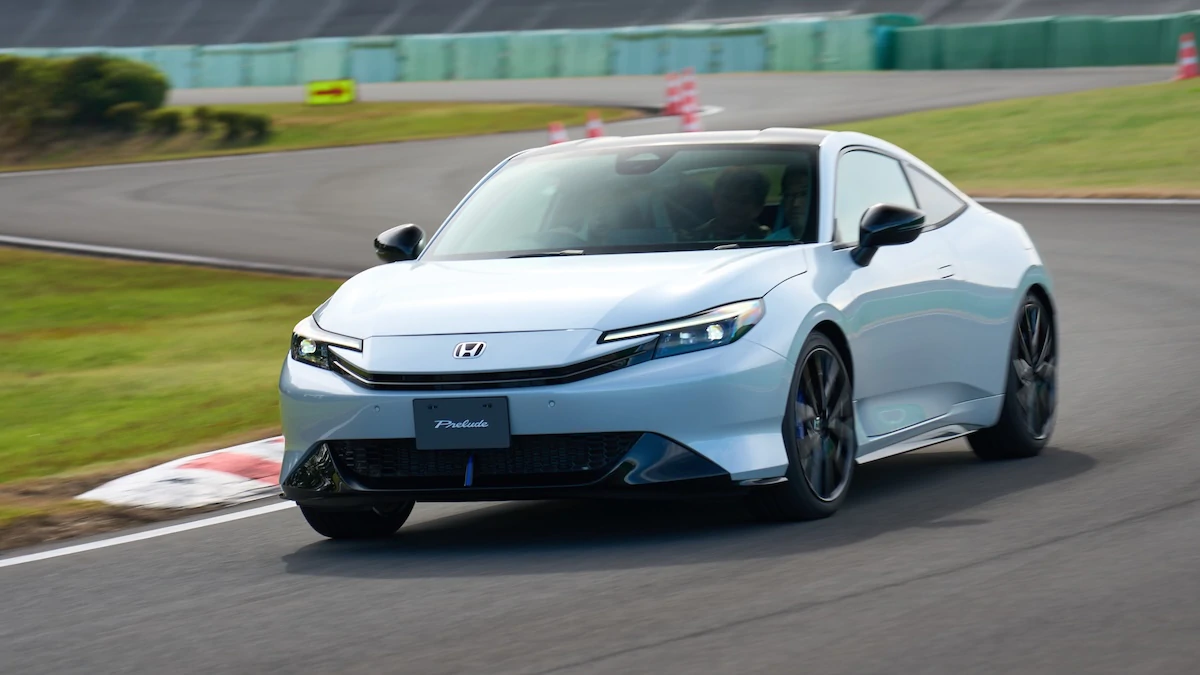

Honda couldn’t have chosen a better name for the latest Prelude.
According to company director, president, and representative officer Toshihiro Mibe, the coupe was already deep in development when they began thinking of what to call it. “It was beyond anyone’s expectations,” he said—so good that they decided to revive the long-unused Prelude nameplate, now printed on the back of the sixth-generation model in the classic ’90s script.
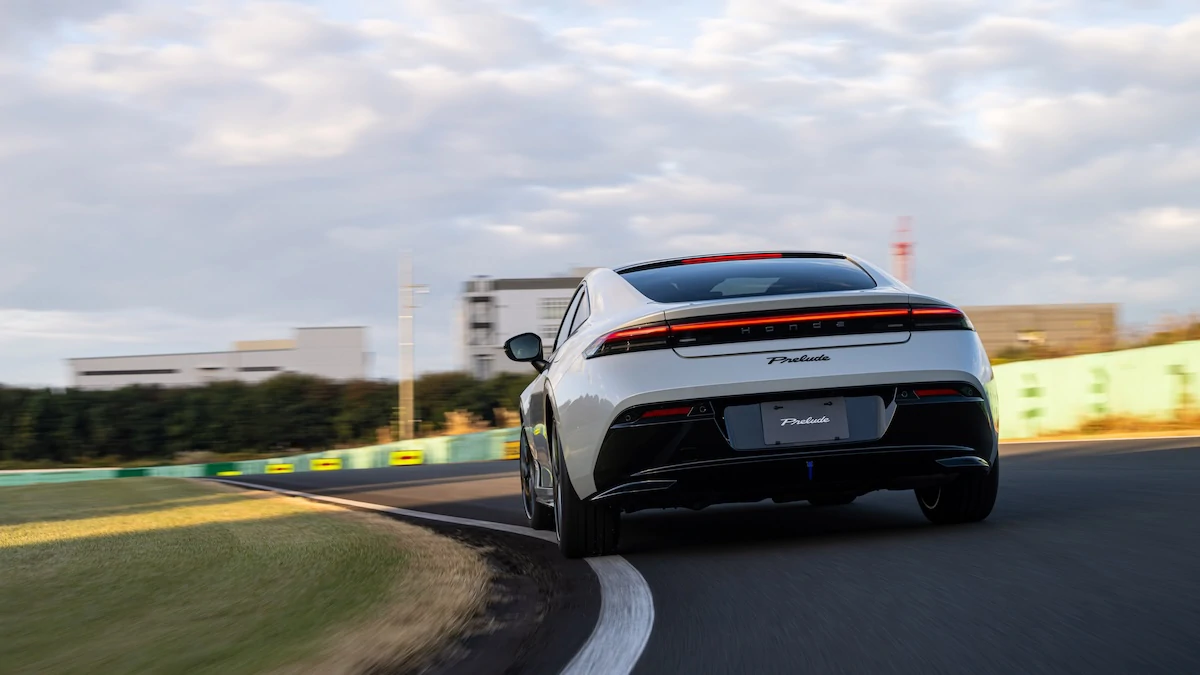
All this comes at a time when EV development has slowed down globally, leading Honda to refocus on hybrids as the core of its business until 2030 while continuing its efforts to develop full EVs over the long term. The carmaker also intends to rectify the lack of sportier models in the lineup, hinting that the shifting goalposts for electrification now allow them to pay more attention to that gap in the portfolio.
The Prelude could be considered the first deliberate step into this space. I still wouldn’t call it a sports car, now that I’ve driven it, but it’s a fantastic piece of engineering that previews how Honda can extract greater performance from its hybrid powertrain.
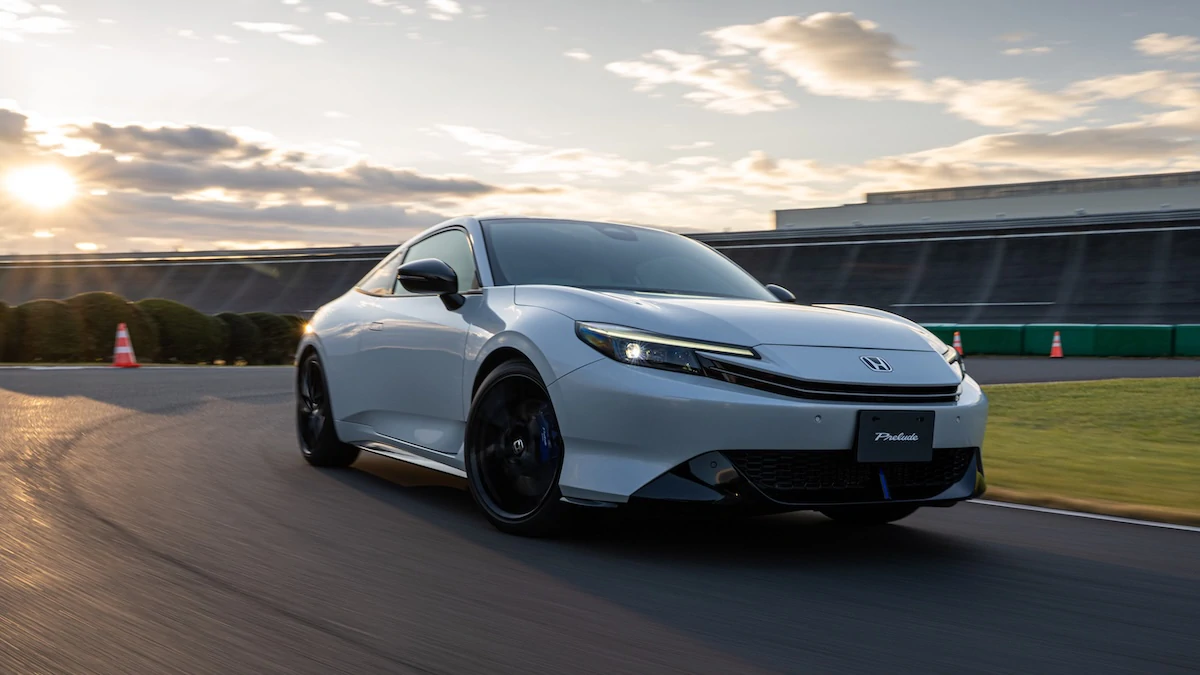
Much has been said about its propulsion, which uses the same dual-motor e:HEV system as the hybrid Civic. The chassis does feel capable of handling much more than 200hp and 315Nm, but that is (and never was) the point of the Prelude: The previous Accord-based iterations were upmarket, comfort-oriented GTs, their power and handling geared toward highway cruising and the occasional canyon carving.
OTHER STORIES YOU MIGHT HAVE MISSED:
Confirmed: Honda Prelude, 0 Series models arriving in PH market
The Honda Super-One’s power output won’t be limited by kei car regulations
The latest Prelude embraces this idea. The section of the Tochigi proving ground where I drove it was never a real challenge to its power output, and fair play if that was the intention since this was a brand event. That said, the short course highlighted the car’s agility and S+ Shift, which makes its debut on this model.
S+ Shift is essentially trickery, but after three laps, I think I’m fine being tricked. There’s no actual transmission here: Instead, the system simulates an eight-speed dual-clutch by having the drive motor cut torque delivery for a split-second to mimic declutching and a gear change. The generator motor, linked directly to the engine, manages the revs—and consequently, the exhaust note—to match upshifts and downshifts.
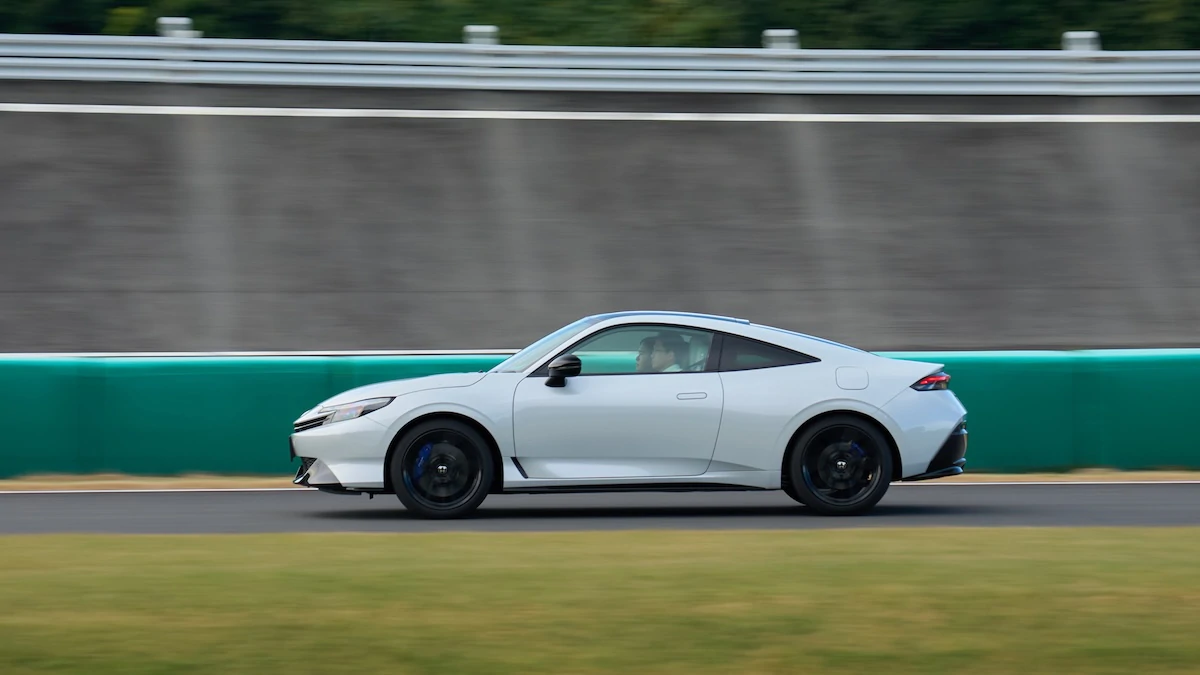
It’s satisfyingly convincing because the engine sound is enhanced but real, and tackling a series of corners feels more fun and intuitive when you can “shift gears yourself” and be in full control of how aggressively you power out of a turn. I will say it’s a bit funny that after years of refining transmissions to swap cogs almost imperceptibly, carmakers are now bringing back shift shock to make hybrids and EVs more engaging.
The dual-axis front struts borrowed from the Civic Type R help make the sharp end pointy, but an improved version of Agile Handling Assist also gets the Prelude to tuck neatly into turns by dabbing on the brakes on the inside front wheel if it senses the dreaded front-wheel-drive understeer. The Tochigi course had some tightening corners, and by the third lap, I was pushing harder than I thought I would—the car was that composed and that willing to be hustled, always precise and gripping faithfully.
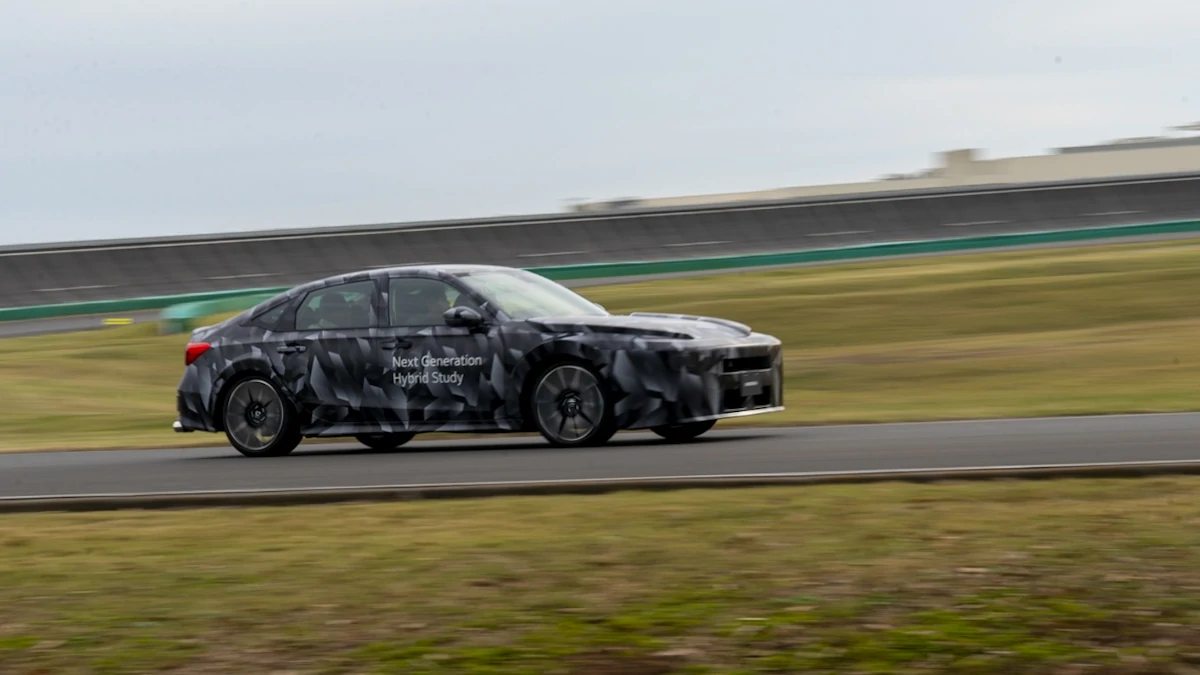
As a bonus, Honda had us drive what the Prelude will eventually lead to. The carmaker is working on them now through the Next-Generation Hybrid Studies, with the ‘Small-Size’ platform using the HR-V and the ‘Midsize’ using the Civic as development mules, respectively.
All the new tech is hidden under the camo-clad and kitted-out shells of the current models, but future cars using these platforms will have lighter frames and bodies, new systems to manage ride and handling, and the next evolution of e:HEV with updated engines and motors. I’ve written a separate story about it here; this time, I’ll share more about the driving experience.
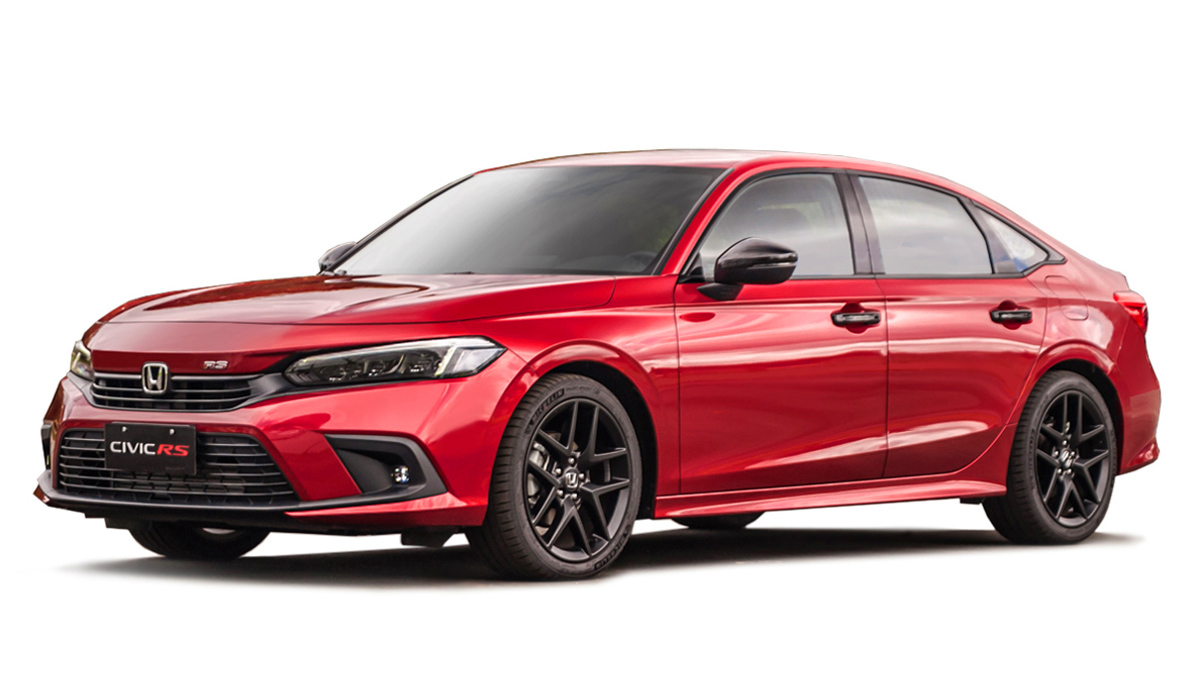
All two laps of it, at least, but this midsize prototype felt quicker and more agile than any other Civic I’ve known, barring the Type R.
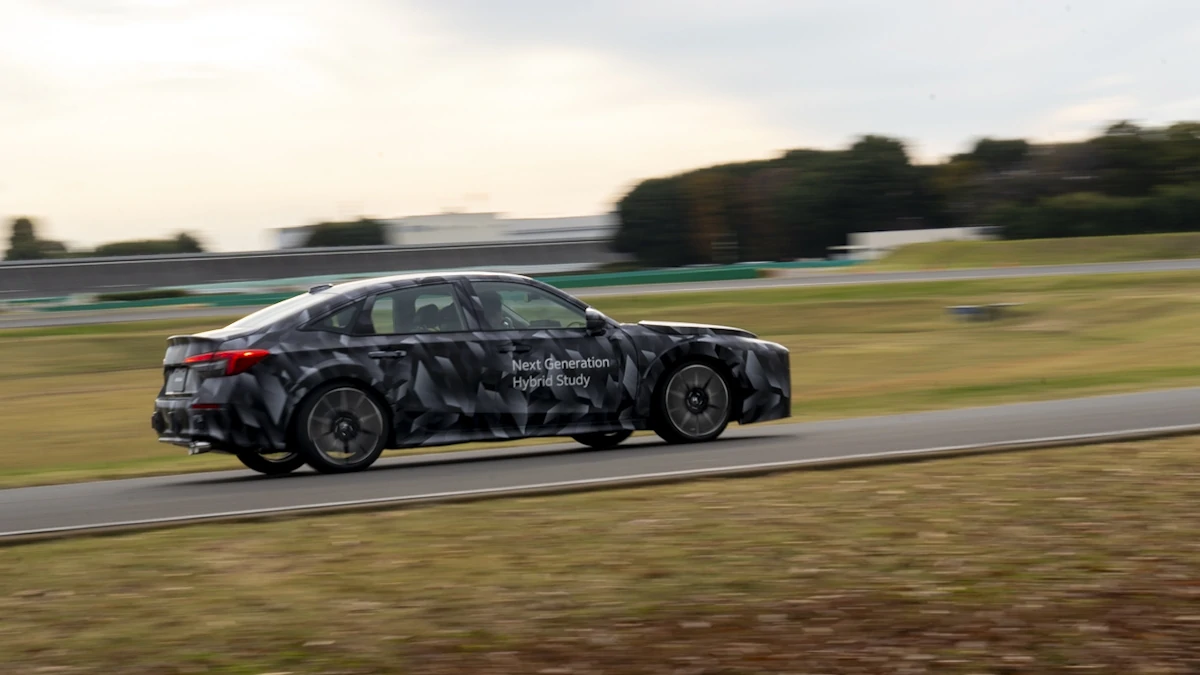
While Honda’s engineers weren’t about to divulge any output figures at this point, the prototype car surged forward eagerly, more so than the current hybrid Civic I drove recently. That could be down to a power increase, weight reduction, or a combination of both. And yes, weight will be down by up to 90kg for this platform, even if the new car gains a few millimeters here and there.
S+ Shift will make its way to future hybrid models, and here, it was just as persuasive in its simulation of an actual gearbox. If anything, it was more believable because the exhaust note was that much louder. The Prelude’s pumped-up engine noise piped in through the cabin speakers belied how dignified and well-mannered it really was from the outside. In contrast, the prototype car made its riotous presence known whenever it was out on the track, braking and blipping into corners then powering out of turns and down the straights.
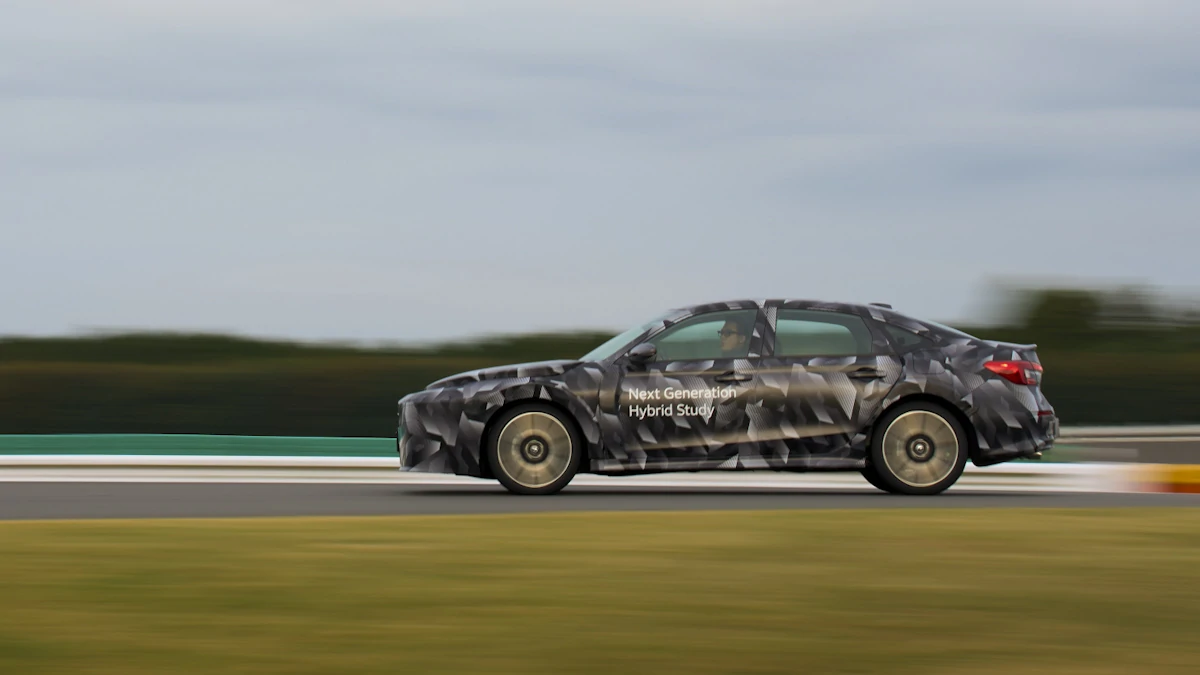
What made the strongest impression was how nimble this thing was. The nose instantly pointed wherever I wanted to go, and the rapid steering response caught me off guard for the first few seconds until I was sure the car would grip as well as it turned.
One of Honda’s key body developments for this new platform is an engine bay structure that allows for a very small amount of flex; that way, when the car turns in, the powertrain’s weight can shift ever so slightly the other way and load up the outside front wheel, increasing grip and stability. Does it work? Honestly, I felt regular weight shifting and a controlled amount of body roll, and I don’t know if it’s even possible to pick out 1mm of flex amid all of that. It’s really just one of many things, along with solid chassis engineering and new electronic wizardry, that make the car steady and balanced around corners.
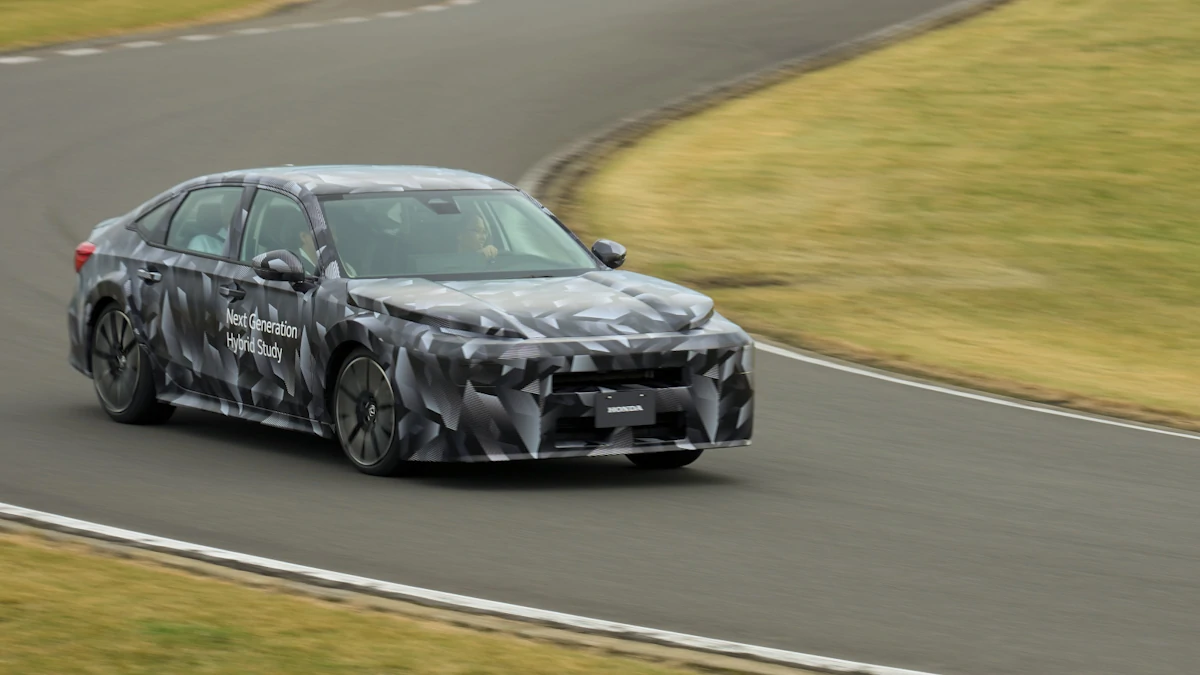
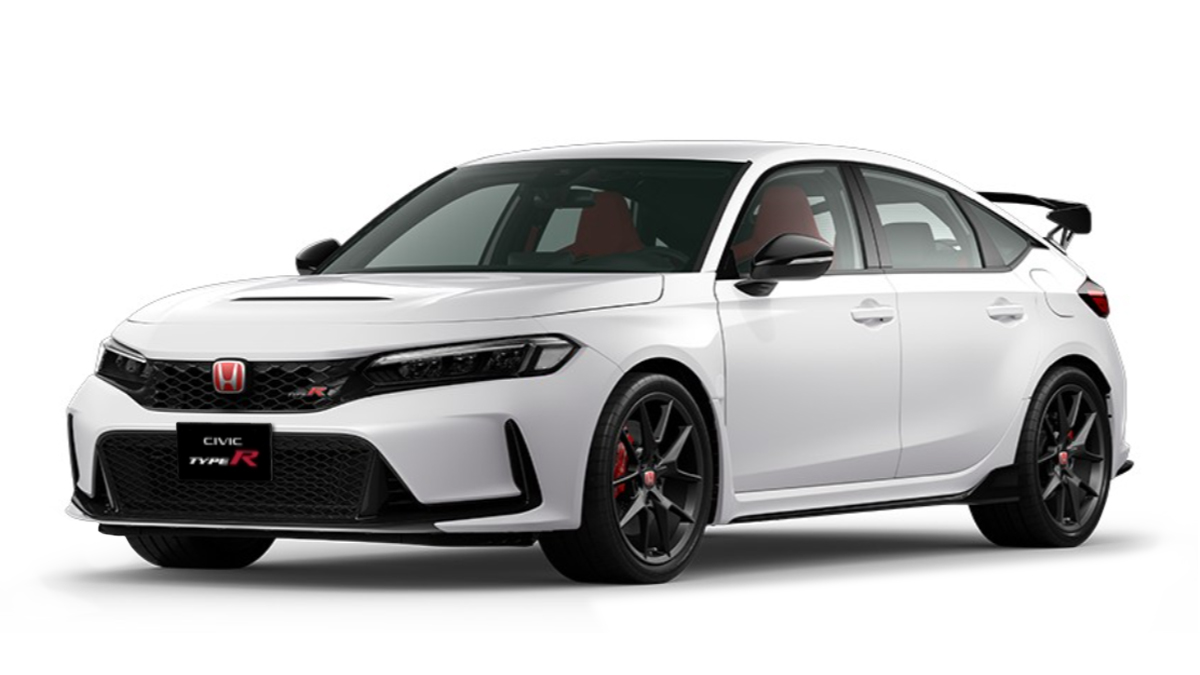
These brief encounters with the Prelude and the Civic prototype do quell my misgivings about the Type R going hybrid. Though nothing has been confirmed, that’s the most logical path to its survival, what with increasingly stringent emissions standards being rolled out. I still look back on the Tochigi drive and wonder if that development mule wasn’t a dialed-down Type R, or if there are Type R development bits tucked in there somewhere. The FL5’s successor isn’t due out till around 2028, but work on it should be well underway by now, and no less than Honda’s top boss said that they want more sporty cars in the lineup.
Of course, the 12th-generation Civic arrives first, with the production model expected to launch sometime in 2027. That’s not a long wait, and we’ll be treated to a concept or some teasers to tide us over. The next version we see will probably be the actual body and styling, and maybe by then, we’ll get more concrete details and specs. If the prototype is any indication, it will be a proper driver’s car.