Toyota is famously late to the EV game. After spending billions of dollars perfecting the hybrid formula, the Japanese giant then went in heavy on hydrogen. The resulting Mirai is a technological masterpiece but also a commercial dead end, given how fast batteries are developing and how expensive and difficult hydrogen refueling infrastructure remains.
As such, the carmaker has found itself belatedly pivoting toward full electrics over the past few years. Once a leader, now a follower. With sales of rivals Tesla and BYD booming and no affordable EVs to fight them with, Toyota has had no choice but to bring in what EVs it can to gain a foothold in the market.
Can the four-year-old bZ4X—aka the Subaru Solterra—convince buyers that it’s a better deal than the Tesla Model Y or the BYD Sealion 7? Let’s find out.
Styling
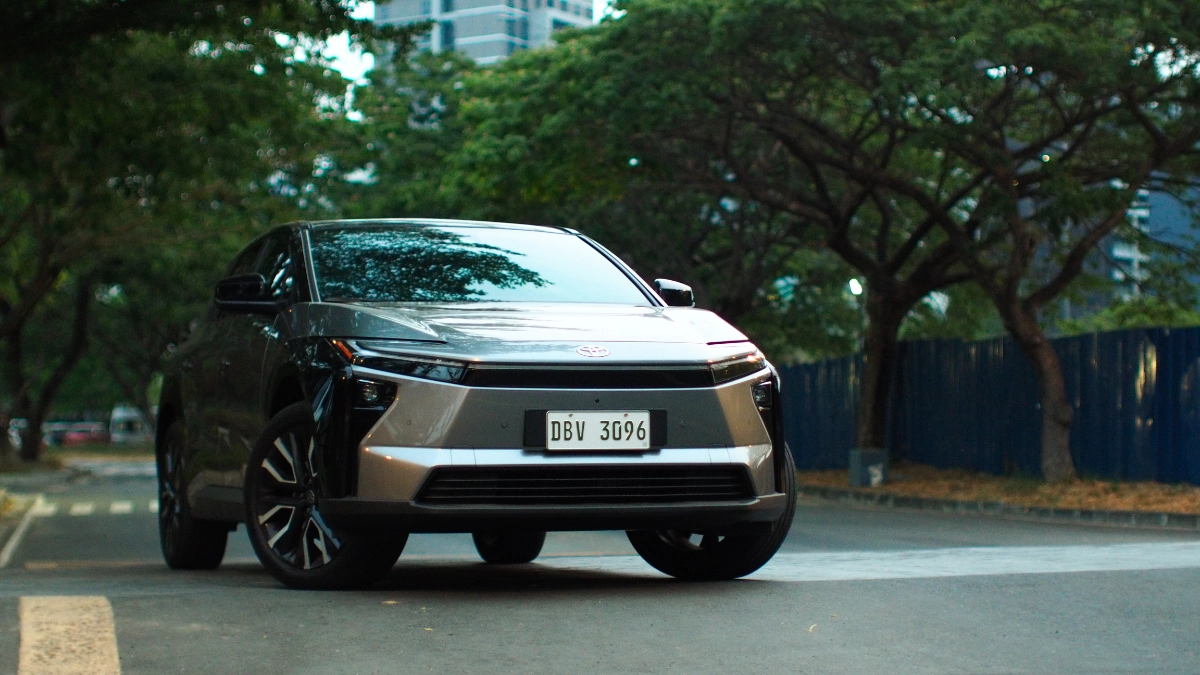
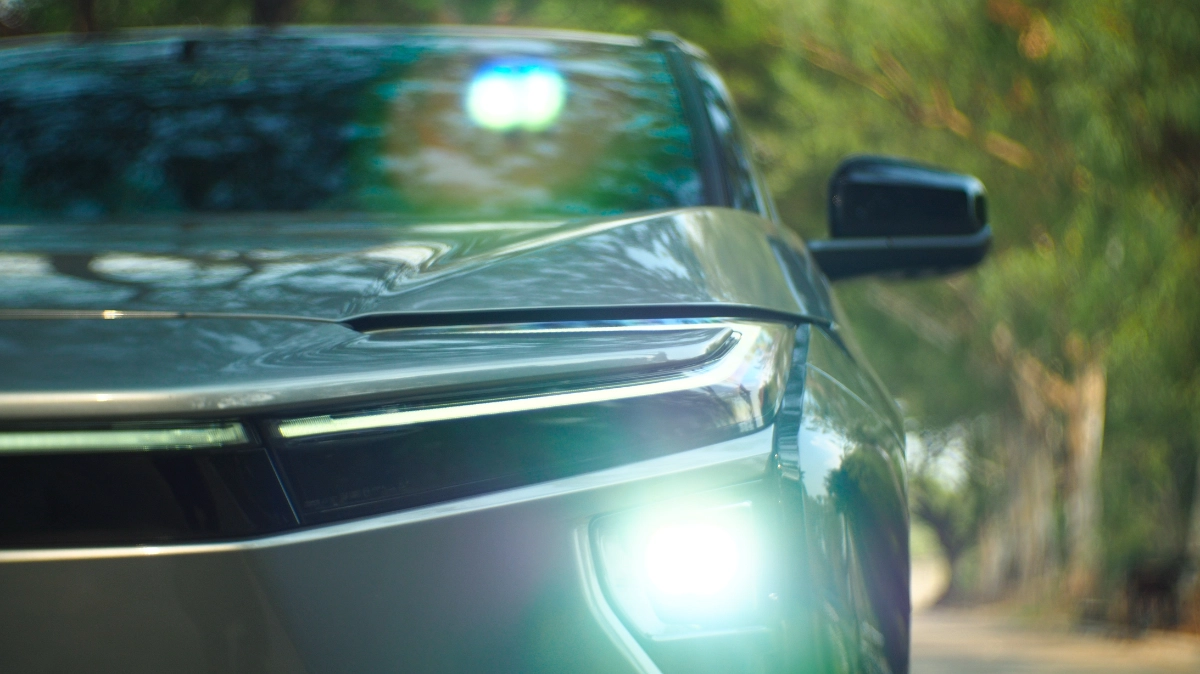
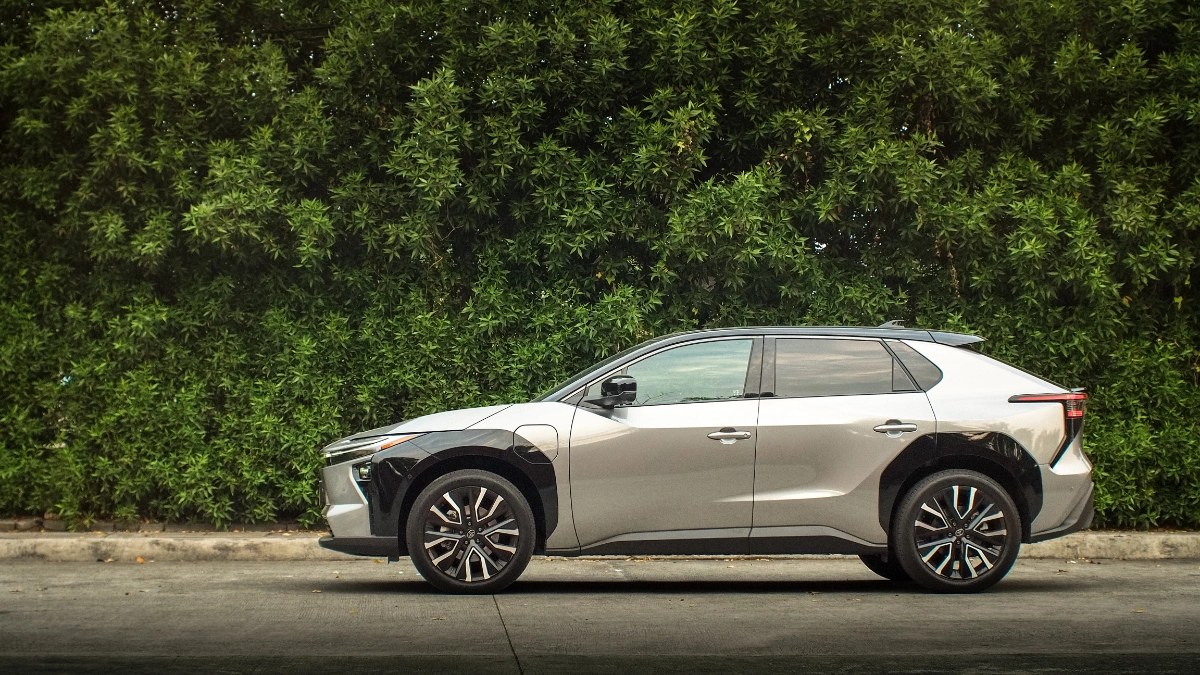
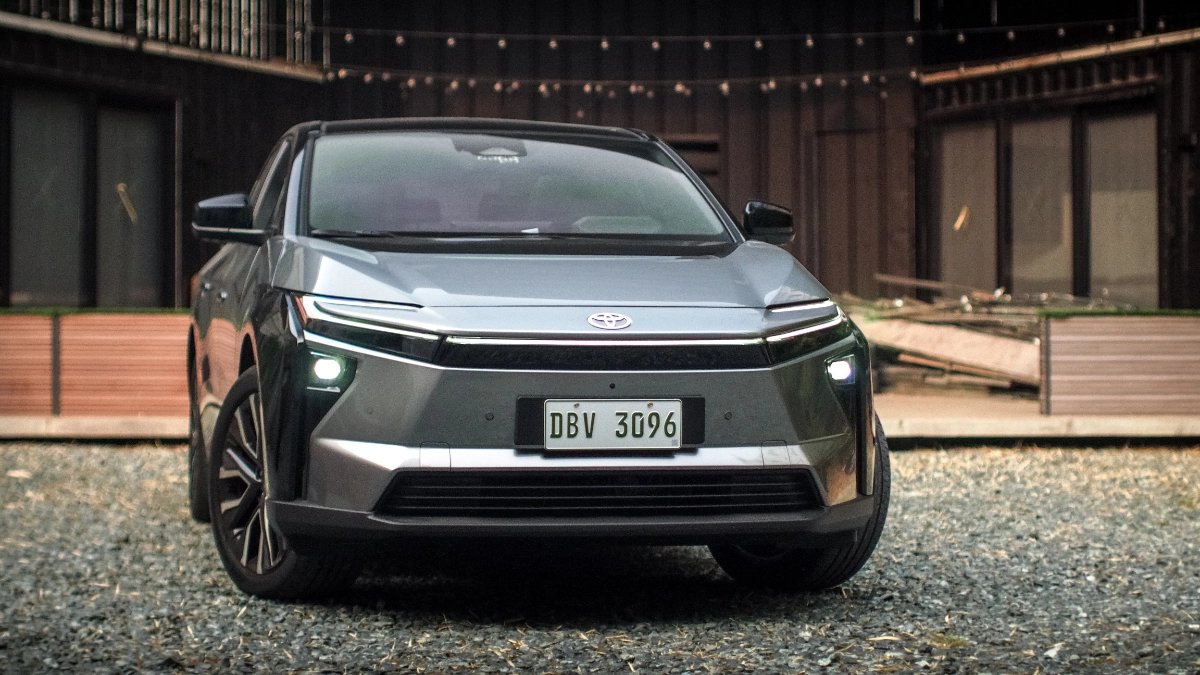
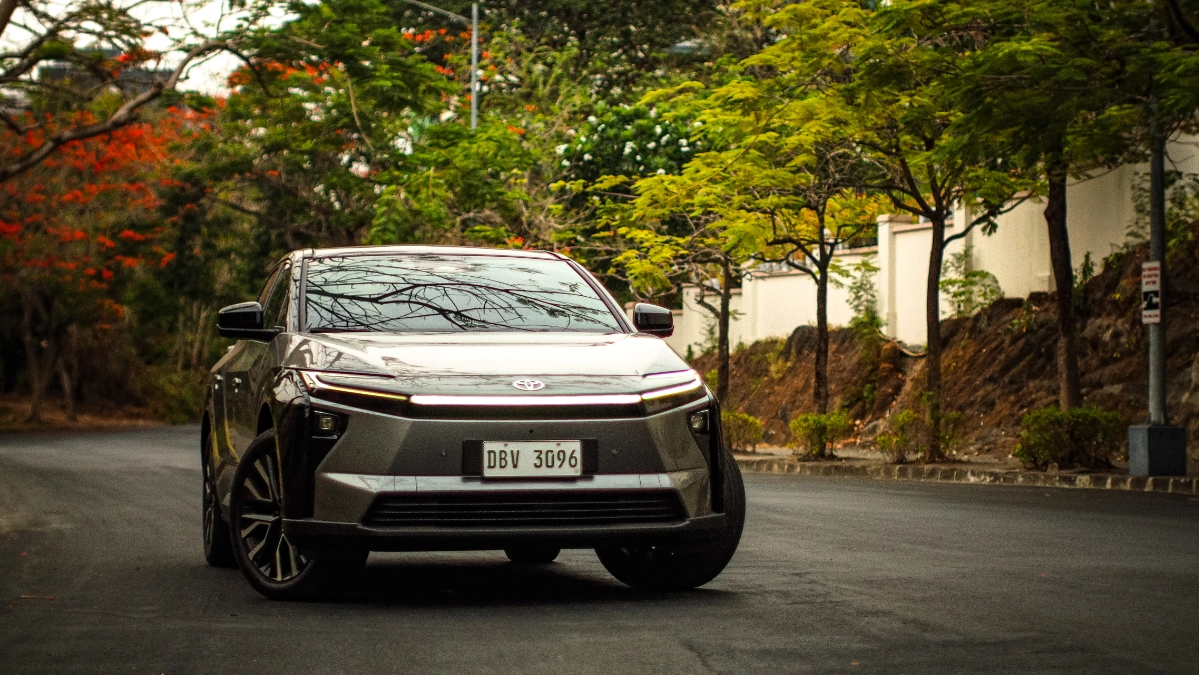
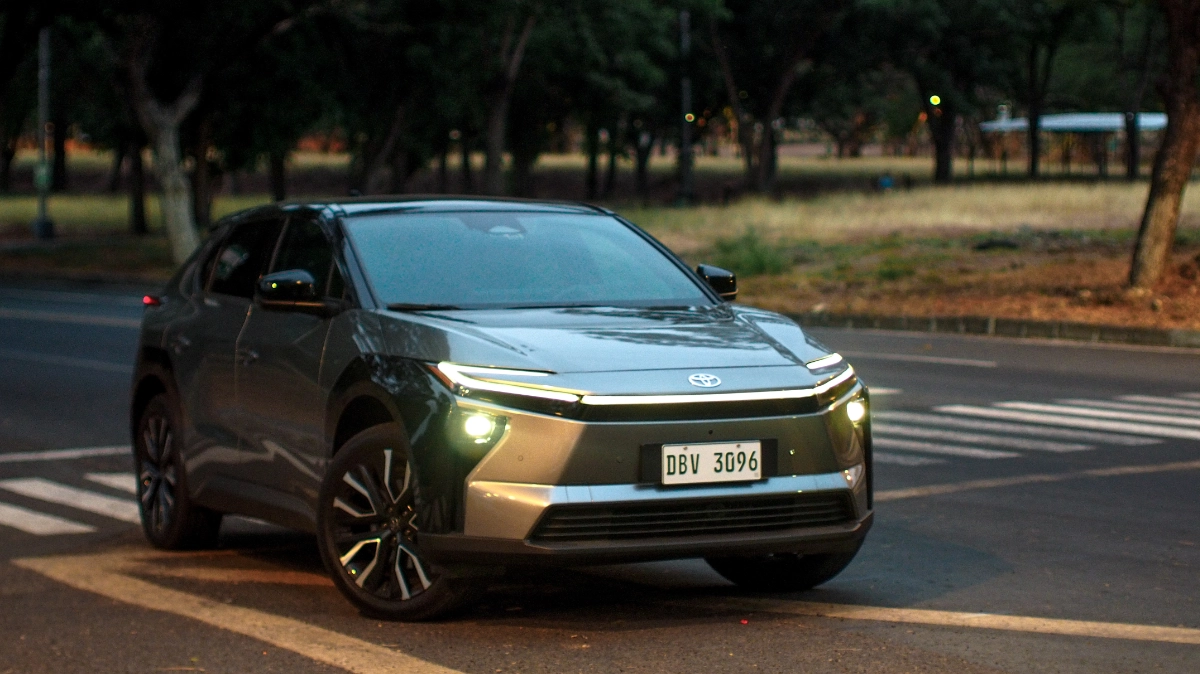
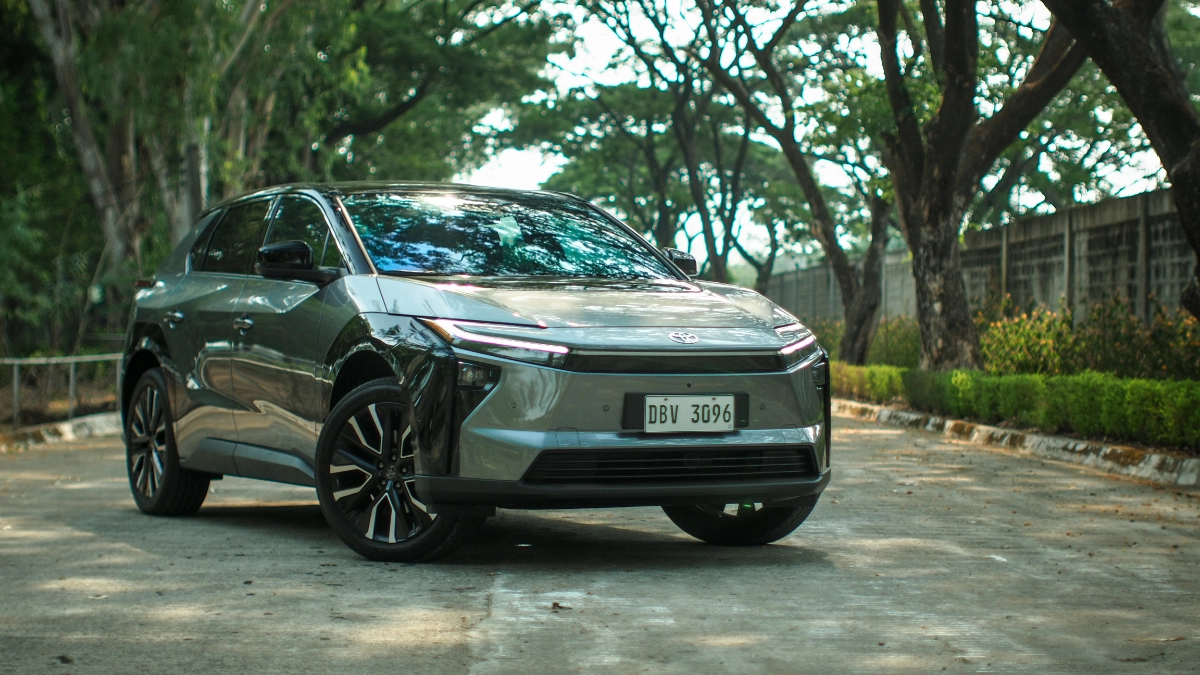
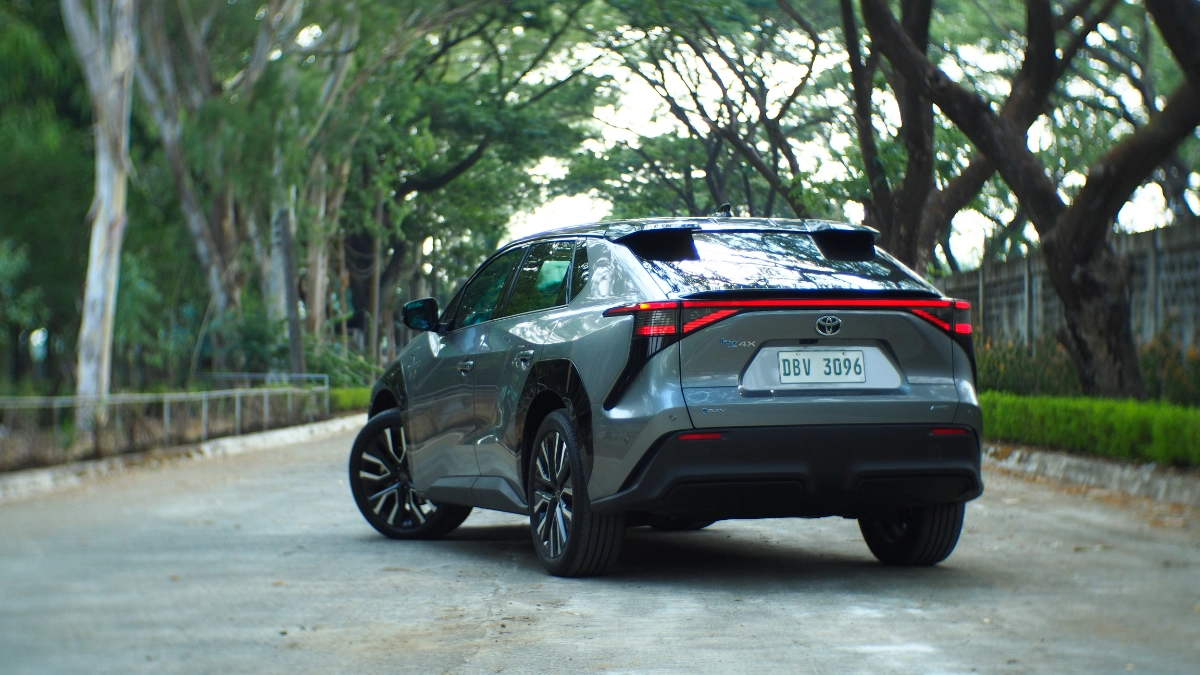
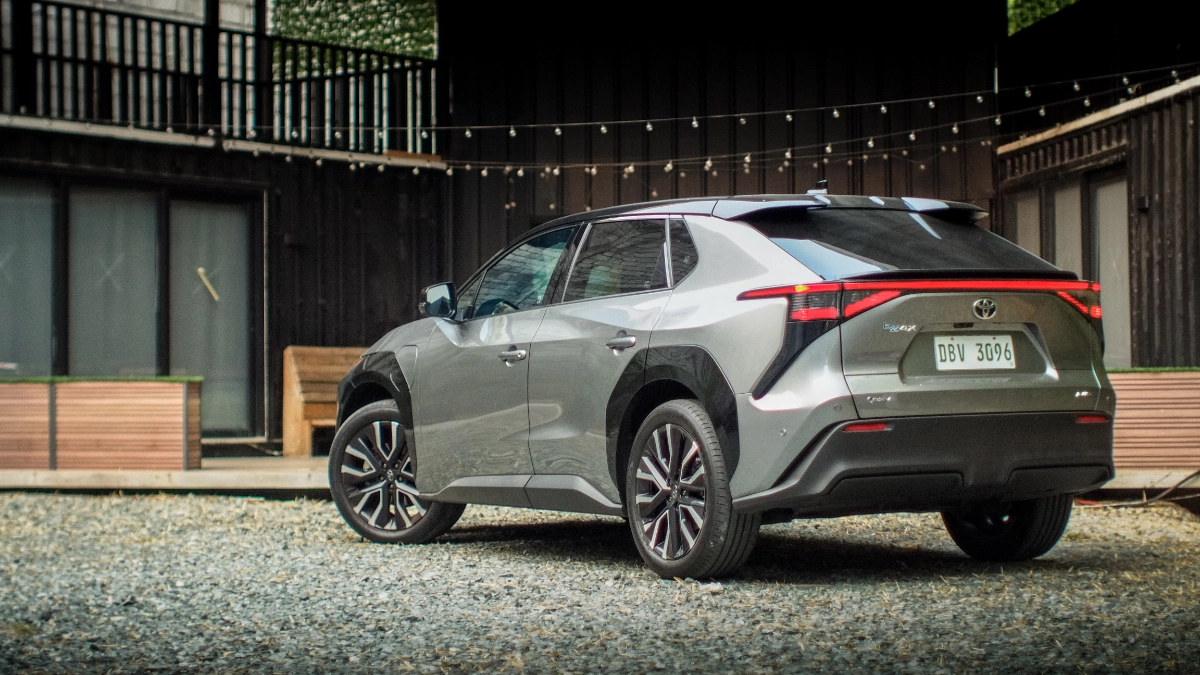
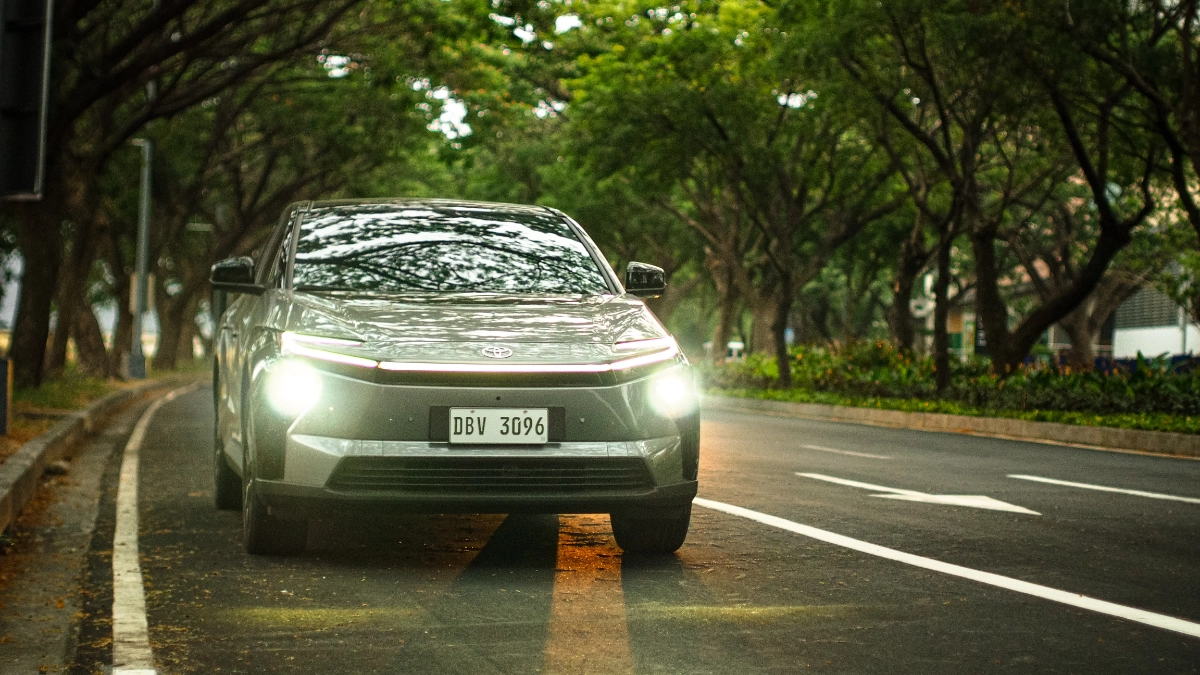
Despite being halfway through its life cycle, the bZ4X still looks futuristic. Toyota’s TRON-like light bar dominates the origami-angular front end, with tiny projector headlights underneath blending into the bodywork until they’re turned on. Muscular shoulders—a common conceit on EVs lacking that central engine hump—lead into a coke-bottle side profile defined by contrast-colored fender flares and side skirts. Those Subaru-like flares are one of only two notable contributions by Toyota’s partner here, tying the Solterra to the rest of Subie’s lineup.
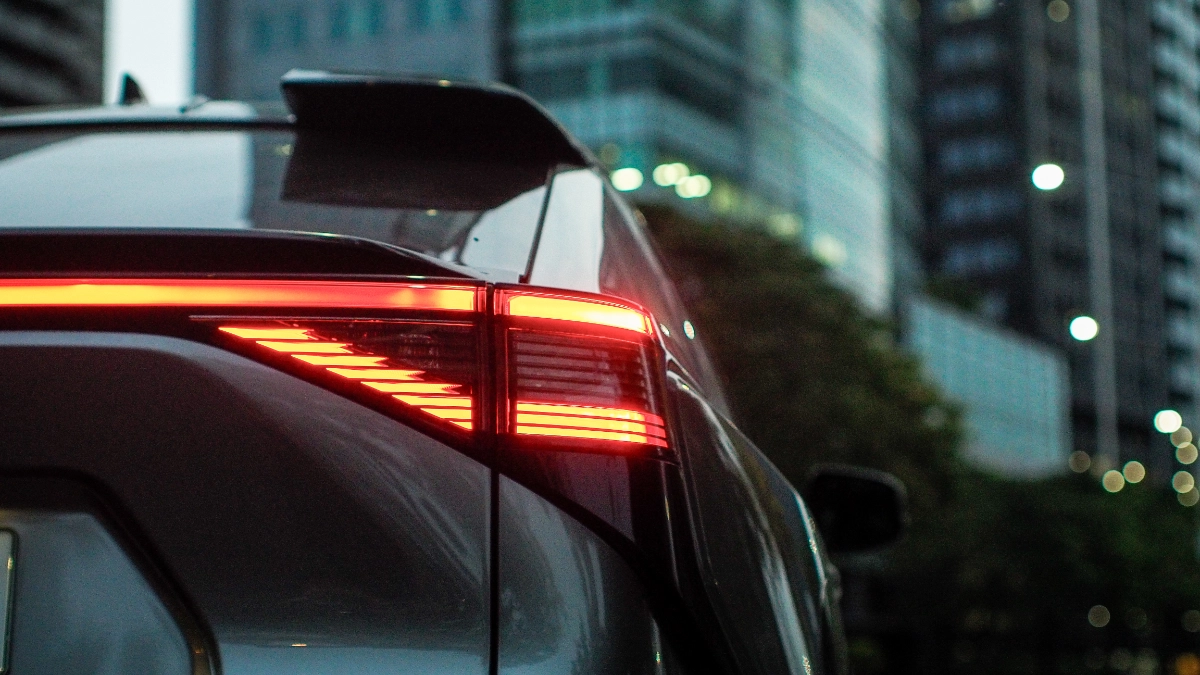
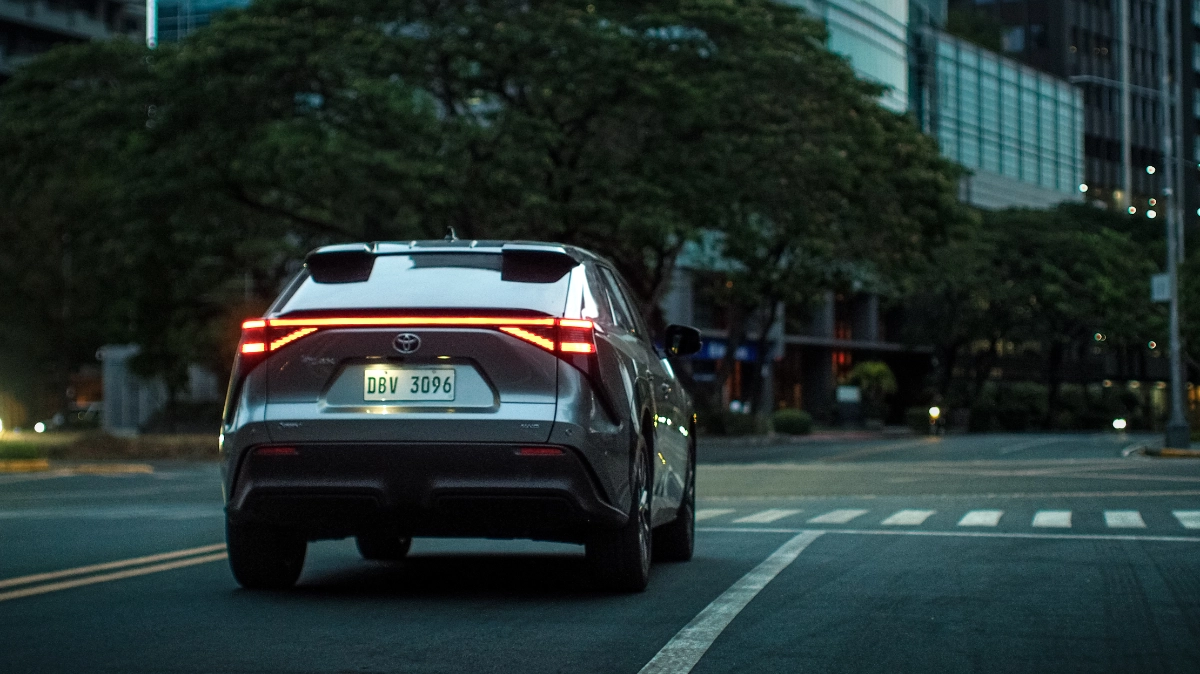
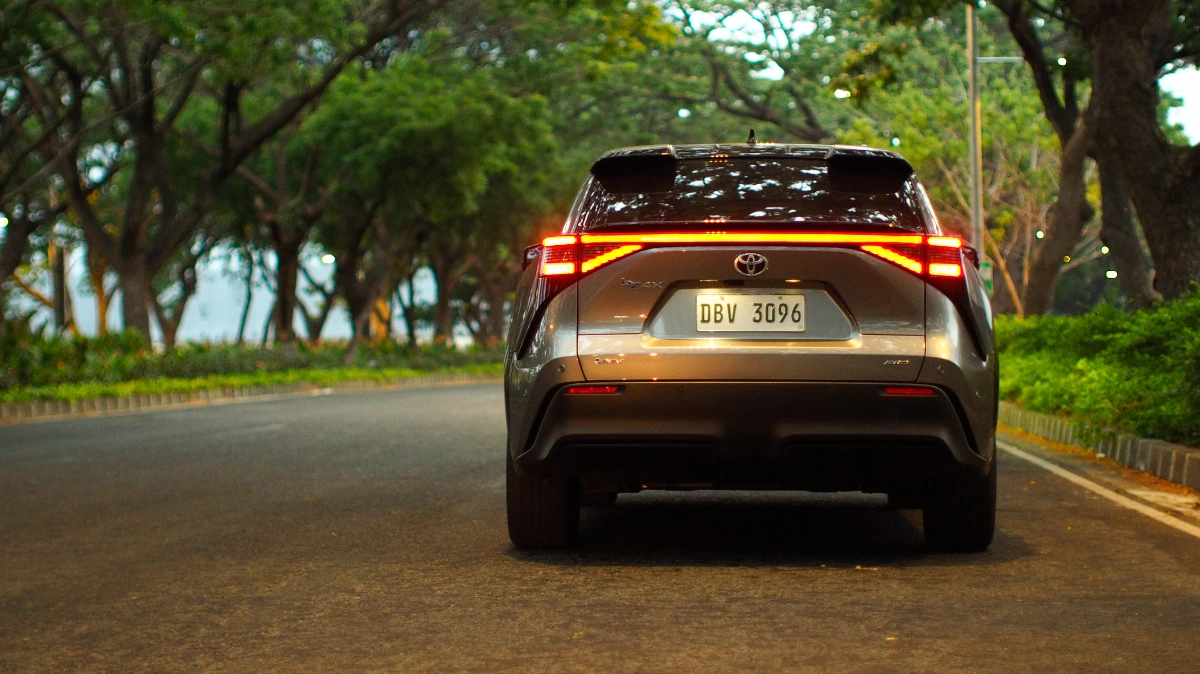
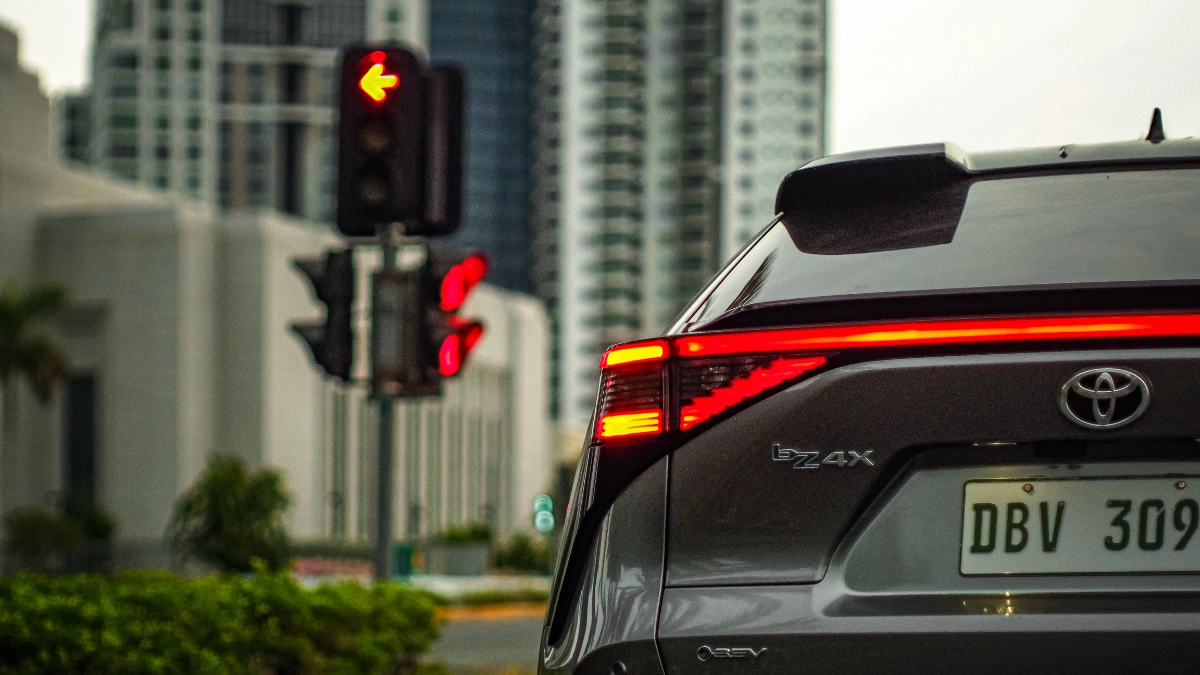
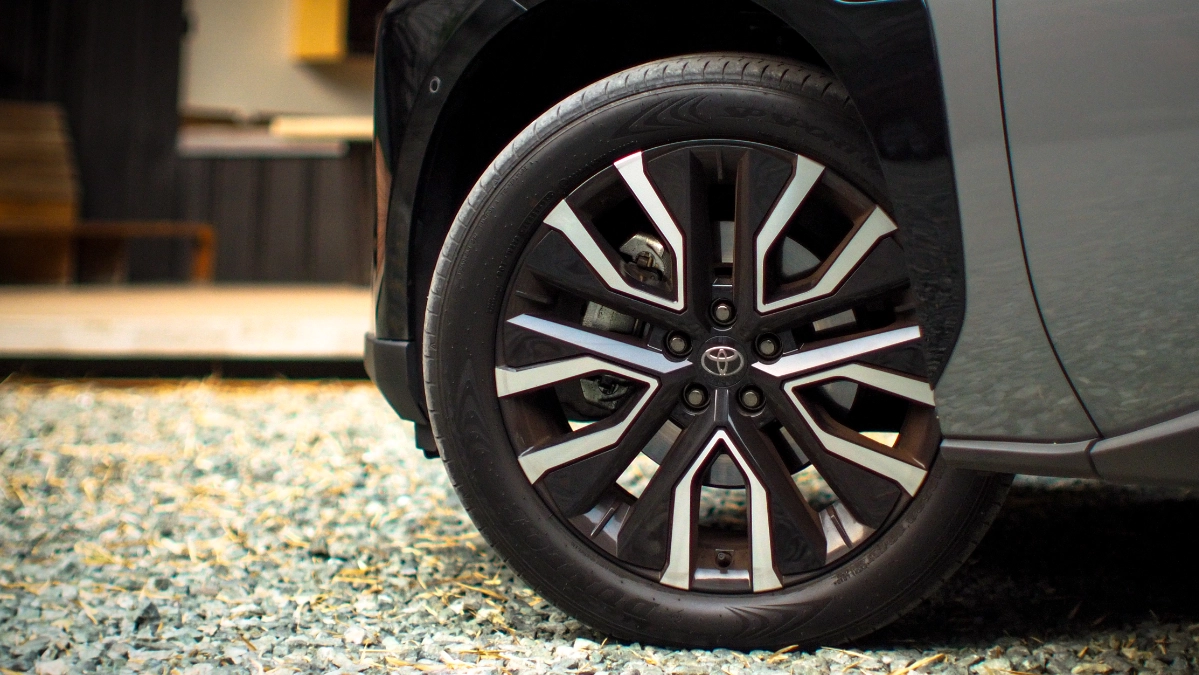
The D-pillar hooks up sharply, giving the bZ4X a fastback hatch sandwiched between split roof spoilers and a trunklid spoiler. Eyeliner extensions on the taillights create a Lexus-like effect to the rear light bar, but the angular bodywork is more RAV4 than RX. Big two-tone split-spoke wheels complete the look, the black eyeliner here hiding the heft of those meaty spokes quite nicely.
ALSO READ:
Review: 2027 Chevrolet Spark eUV
The 2027 Toyota Hilux has officially started retail sales in PH
Interior
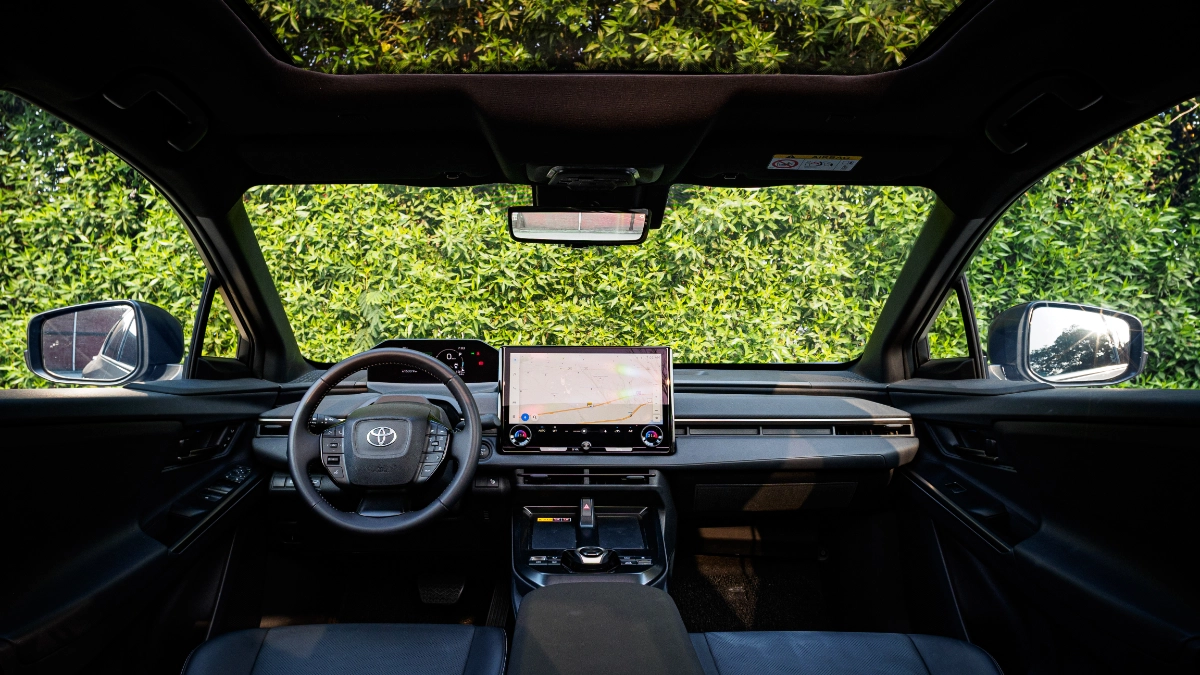
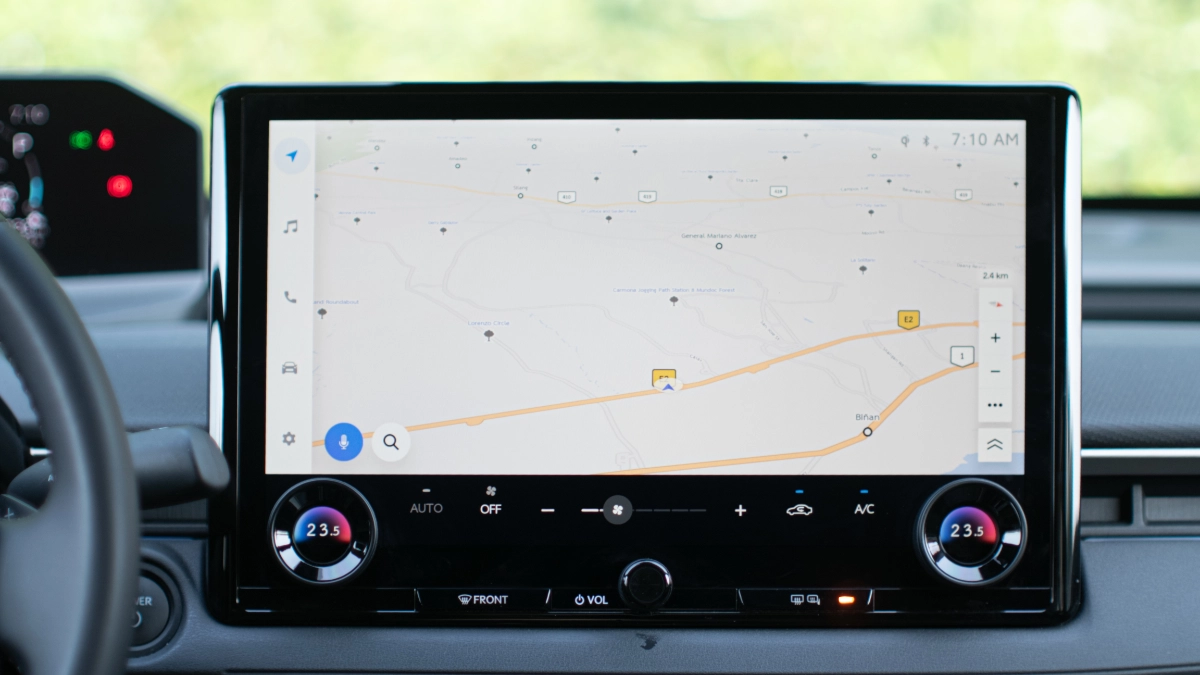
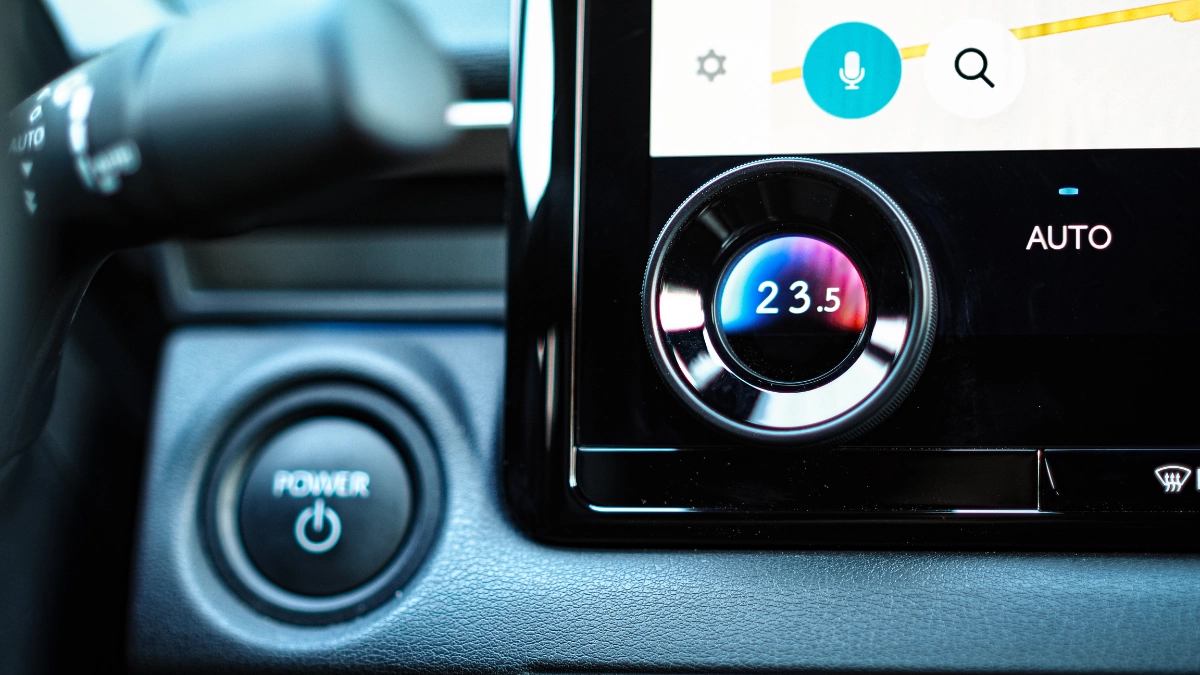
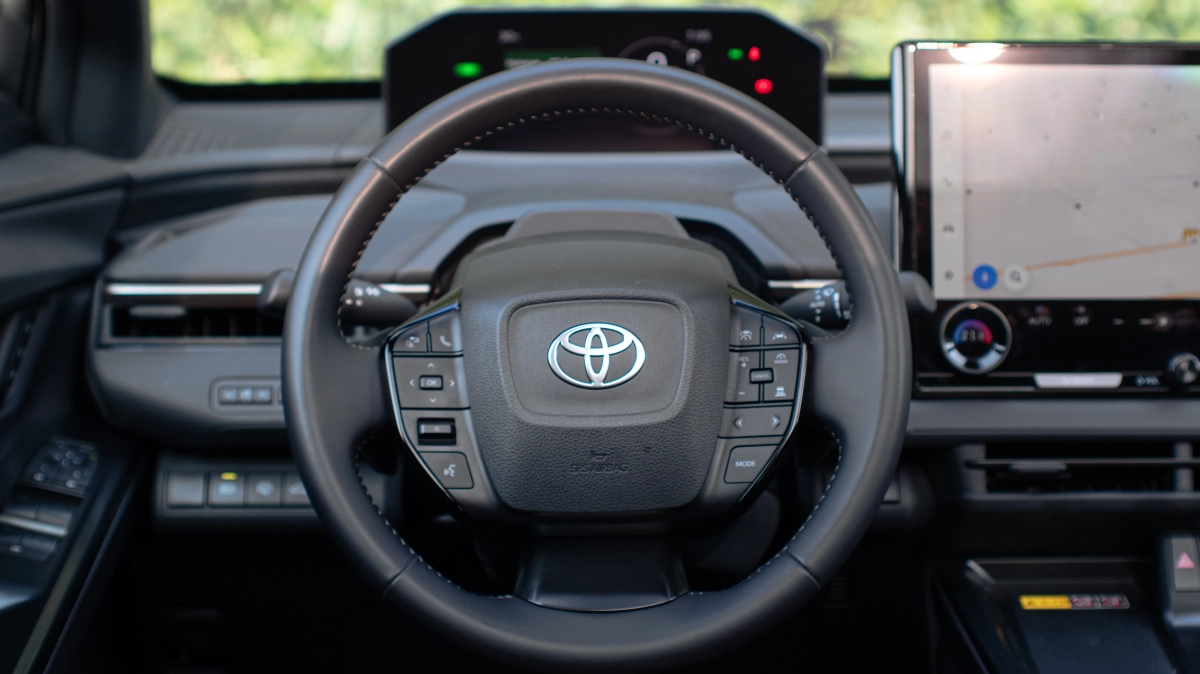
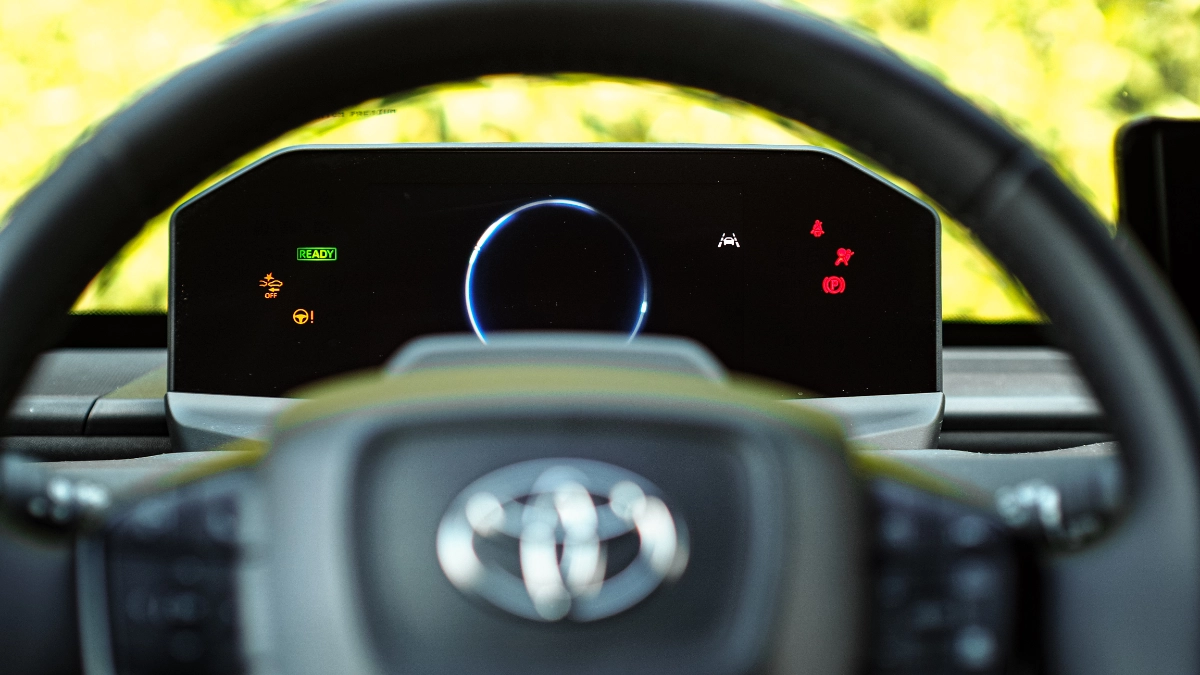
Interior design is adventurous, with a two-tier dashboard featuring strong horizontal elements spanning the width of the car. A large touchscreen sits low on the dashboard, with fancy physical knobs featuring frenched-in LED displays inset into the panel. A smaller screen sits in front of the driver—the full-color panel blending perfectly into the stenciled surround. It’s one of the neatest implementations I’ve ever seen.
The steering wheel, on the other hand, is clunky, with an oversized center boss and an awkward button layout. The dash layout was designed around an optional steering yoke—think an F1-style controller with no hoop to obscure the instrument display. There’s no position in which the bigger standard wheel doesn’t obscure at least part of the screen.
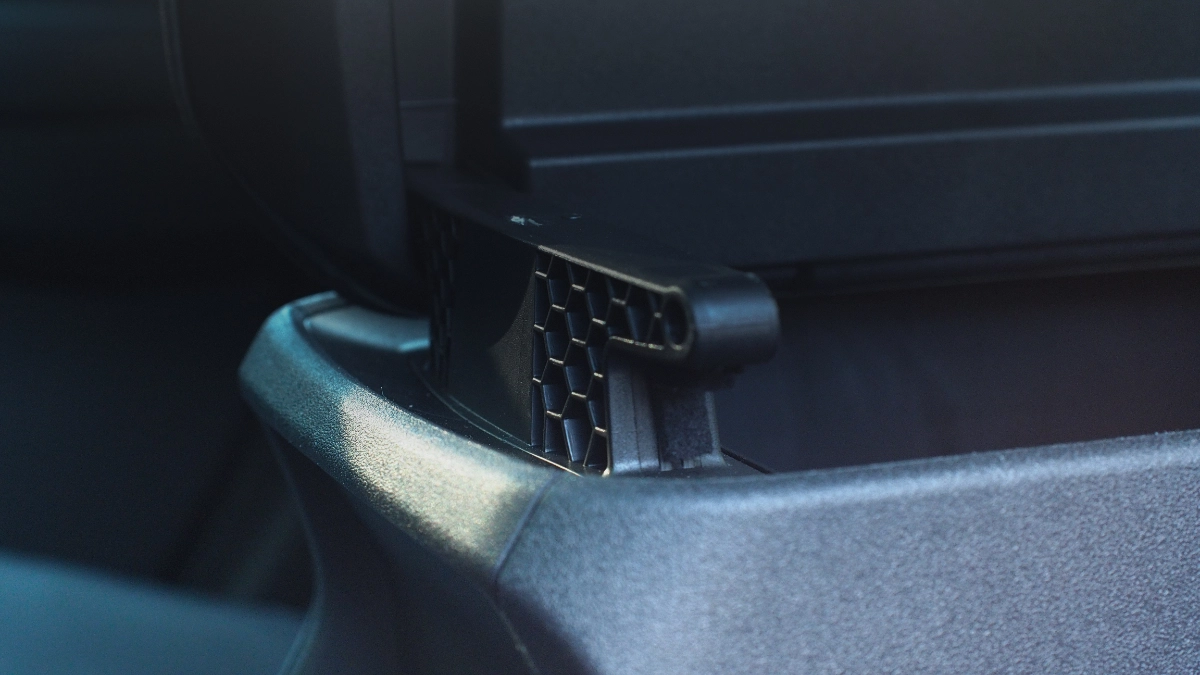
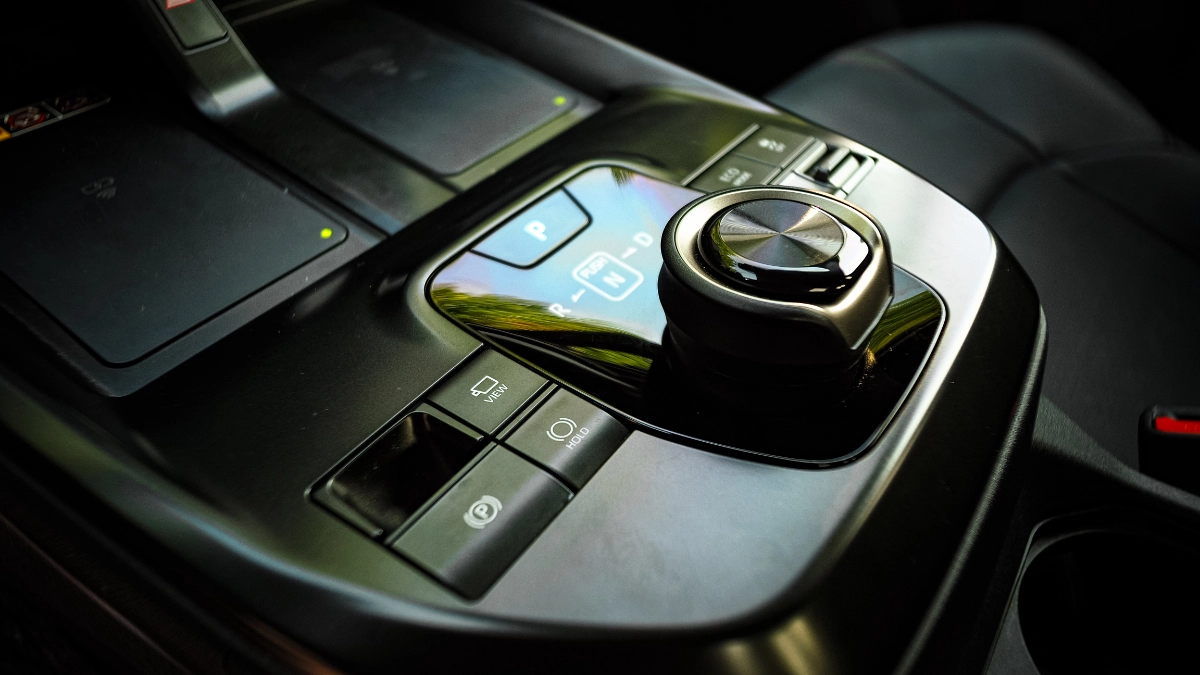
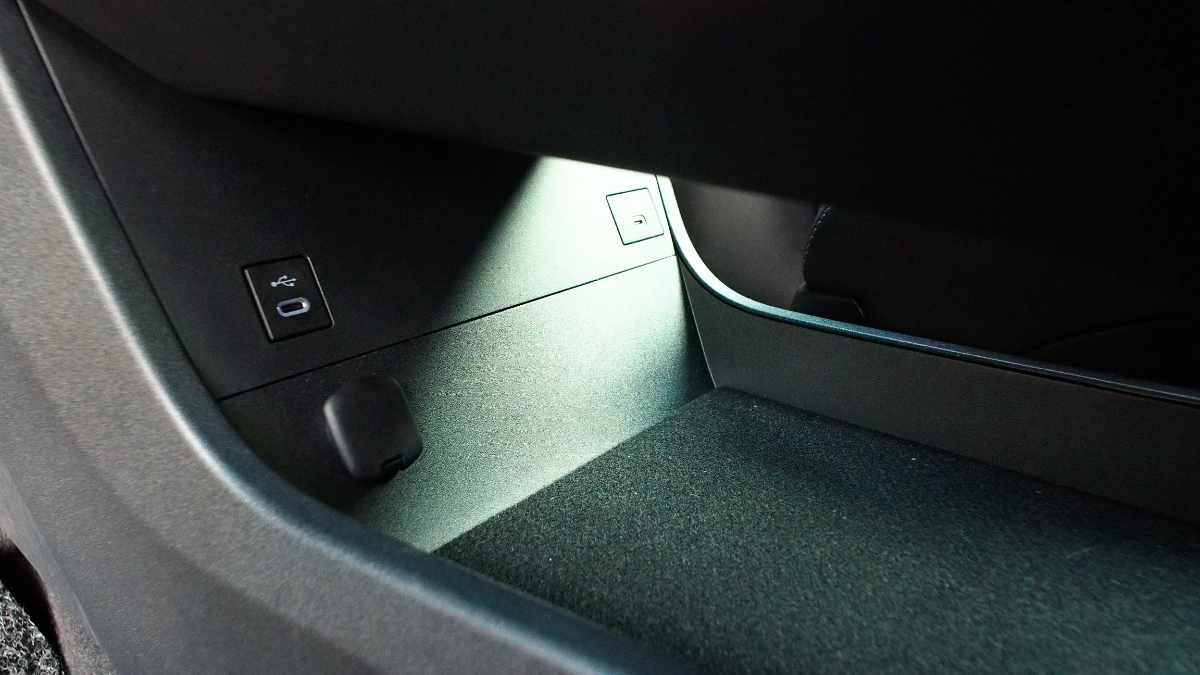
The split-level center console features a dual wireless charging bay up top and a lower shelf with 12V and USB-C ports. The center box uses a clever double hinge that opens both to the left or the right. Unfortunately, tight dash packaging means no glovebox, so your papers and gloves will be taking up most of that clever little box.
Seats are well-bolstered and comfortable, though the leather feels more plebian than on Korean competitors. Once you get past that, you appreciate the solid build quality and the spacious cabin. You can even cross your legs in the second row without scuffing the seatbacks—provided you’re under 5’6.” There’s sufficient depth and bolstering to the seats in all positions to ensure long-distance comfort for all passengers.
At 452 liters, trunk space is surprisingly good, but an included safety spare tire takes up a lot of that space. There’s no underfloor storage or underbody mount to mount it to, thanks to the motor underneath. A tonneau cover hides the unsightly thing, plus whatever groceries you choose to fit around it, so there’s that.
Powertrain performance
The ‘engine bay’ is packed with electronics and control modules, sitting over the 224hp front motor. Along with the 118hp rear motor, this gives a combined 338hp, zipping you from 0-100kph in 5.2sec and making this the second fastest Toyota you can buy locally, right behind the GR Supra.
Unlike most high-performance EVs, there is no Sport or Race mode, and no ‘one-pedal’ EV mode, either. What you see is what you get. You do get multiple off-road X-Modes—that other Subaru feature on this car—but most buyers won’t be taking this off-road. On the road, the system mimics the smooth, gradual power delivery of a traditional automatic. You don’t feel all 338 horses unless you bury the ‘gas’ pedal to the floor. Paddle shifters allow you to dial in extra regenerative braking—but the system resets to zero when you get on the go-pedal again. This helps make it feel a little more natural for first-time EV drivers, but may frustrate veteran EV owners coming from Korean or Chinese cars.
With that big 73.1kWh battery, the bZ4X promises 570km of range, with up to 150kW charging available if you’re lucky to find a charger that fast. In the real world, mid-400s are a more realistic expectation. Efficiency averaged around 3-4km/kWh in the city and 7-8km/kWh on the highway at 80kph. You can get much better at 60-70kph with the aircon set to low, but given the power and silence, most drivers will not be driving that delicately.
Ride and handling
From the driver’s seat, you’re well isolated from outside concerns. There’s a bit of road noise coming through from the wheel wells, but not much else disturbs you here. The bZ4X doesn’t pretend to be a giant electric sports car. The ride isolation is surprisingly good given the weight and the size of the tires, and you can easily eat up hundreds of kilometers here in perfect comfort. Granted, there’s a bit of choppiness over broken roads due to the weight, but it comes nowhere close to being as bad as the ladder frame diesels most traditional customers are driving.
The handling is not up to the supernatural levels we’ve come to expect from some other high-powered electric SUVs—despite the huge 235/50 R20 Dunlop SportMaxx tires—but Toyota knows its audience well. Handling is quite neutral and secure, with enough firmness to keep you planted and enough body lean and pliancy to make you back off before you do anything stupid. The steering is good. Not entirely feelsome, but it does what you expect. Maybe it isn’t a great fit for a sports crossover like the RZ, but on what is basically an electric RAV4, it works. The only issue I have here is the rather wide turning circle, which feels more in line with the Hilux than the RAV4.
Visibility is decent up front, middling out the sides and terrible out back. The rearview mirror can switch to camera mode to give you a better view, but like many electronic rearview mirrors, it can feel a bit unnatural until you get the zoom and offset levels dialed in. The 360-degree camera system is a big help when parking up against the curb, but other safety systems, like forward- and rear-collision mitigation, feel a bit too intrusive. Several times over the week, the system hit the brakes hard when a parking attendant or security guard stood behind the car to guide us into a spot. One time, pedestrians passing several feet to the side triggered the system, despite being out of the line of travel!
Extra features
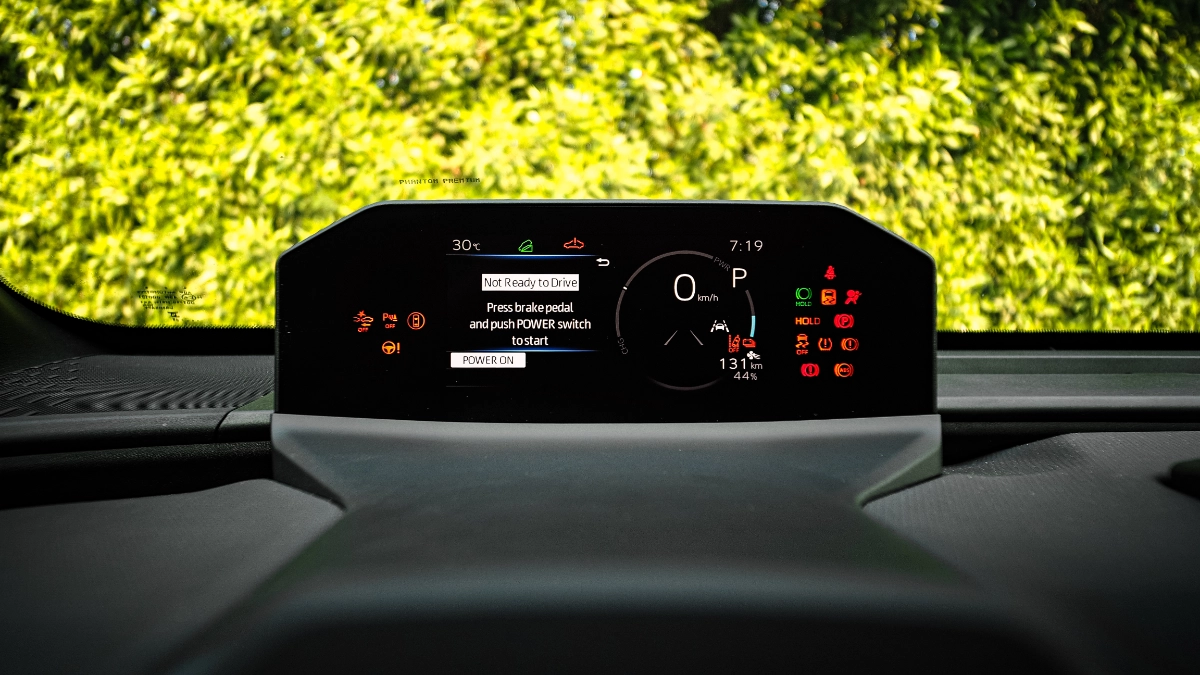
Thankfully, Toyota’s other safety systems are better behaved. The bZ4X comes with full Level 2 assists, including adaptive cruise control that works from highway speeds down to stop-and-go traffic, and a lane-keeping assist system sophisticated enough to keep you centered in the lane in high-speed curves—given decent lane markings. You get keyless entry and pushbutton start—albeit with a key fob so huge it barely fits in your pocket. There are memory seats, seat ventilation—heating and cooling in front, but heating only in the rear. For utility, the rear armrest serves as a trunk pass-through, and a tonneau cover and automatic tailgate make for better cargo security. You also get a safety spare in lieu of an inflation kit, but honestly, it would be nice to have both.
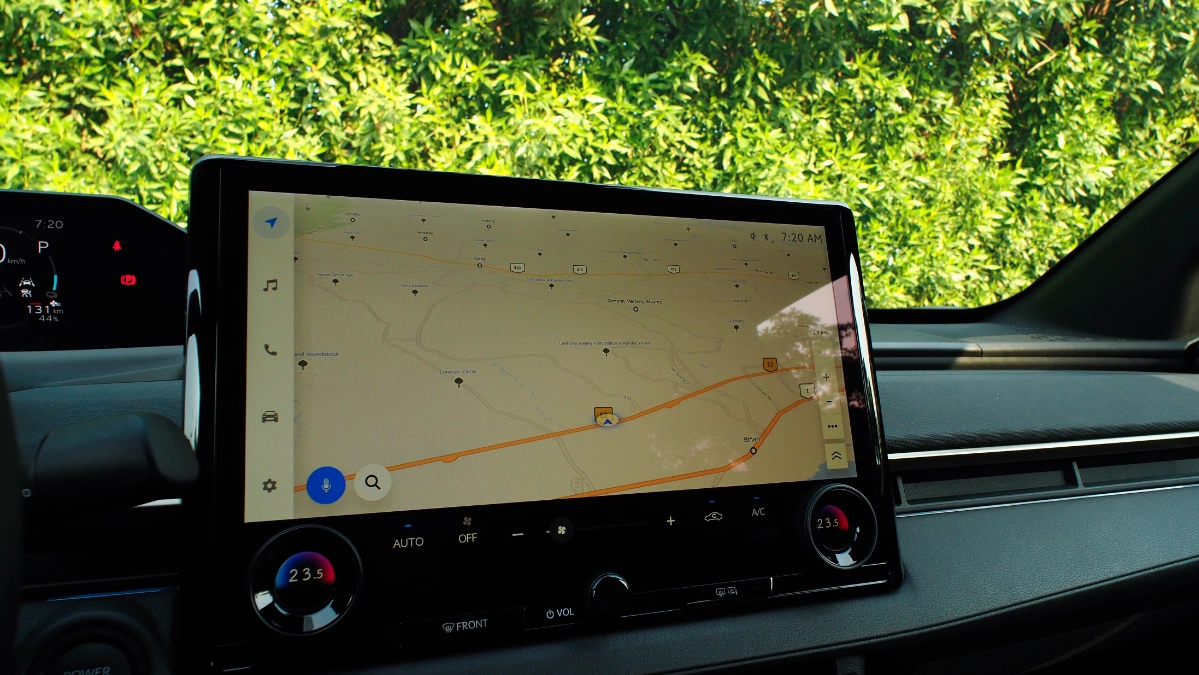
The 14-inch infotainment screen is nice and bright, incorporating physical A/C and media controls as well as a dedicated A/C touch panel at the bottom. The knurled knobs built into the screen, with their own little displays inside, are brilliant. You get built-in wireless data, navigation, and Android Auto and Apple CarPlay hooked up to a pretty competent eight-speaker system with good clarity and bass reproduction. Twin wireless charging ports give you more charging flexibility than most, and the four USB-C charging ports are a good argument to upgrade your old micro-USB cellphone. It’s been 10 years, dude. Move on.
Verdict
Toyota itself seems to finally be moving on from hydrogen dreams, embracing BEV supremacy. The bZ4X may be late to market, but it drops at a competitive price, undercutting the Koreans and many of the higher-end Chinese electric SUVs.
The cars that will prove tough for Toyota are the Tesla Model Y AWD Premium—which offers more power and range at the same price—and the newly launched BYD Sealion 7, which offers similar levels of kit and power for less than either of the ‘T’ brands. Both competitors boast more advanced battery management systems and tech than Toyota, and are excellent values.
But the bZ4X does give Toyota a fighting chance in a dynamic market, especially as it’s now competing on price parity. And whatever else it may lack, it is actually a fun and reasonably familiar car to drive. Perfect for those who feel intimidated by the EV experience.
SPECS: 2027 Toyota bZ4X AWD BEV
Price: P2,753,000
Powertrain: dual electric motors + 73.1kWh battery
Power: 224hp (front motor), 118hp (rear motor)
Torque: 269Nm (front motor), 170Nm (rear motor)
Transmission: single-speed automatic
Layout/seating: AWD/5
Score: 8.5/10
More photos of the 2027 Toyota bZ4X AWD BEV: