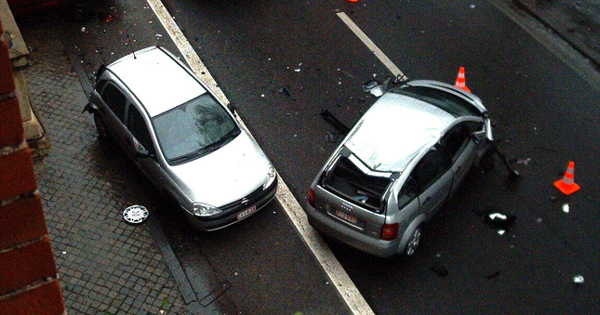
Deadly road crashes have made headlines over the past weeks, raising concerns and questions about the state of road safety in the Philippines.
What are the causes of all the road crashes? Why do these vehicular accidents keep happening? Why can't we have better drivers on the road?
In case you missed the news, a bus crashed into the SCTEX toll plaza resulting in a multiple collision, killing at least 10 people, half of them minors. Days later, a sports utility vehicle rammed into the entrance of Ninoy Aquino International Airport (NAIA) Terminal 1, leaving two people dead, including a young girl.
Sadly, fatalities due to road crashes are not new. According to the Philippine Statistics Authority, road traffic accidents are the 12th leading cause of death in the Philippines. Car crashes and pedestrians getting hit remain the leading cause of death among Filipino youth 15-29 years old and are a major killer among children.
Data from the Highway Patrol Group (HPG) showed 2,747 people perished in road mishaps in 2024, a spike of 35.32% over the previous year. Most of the incidents (87.17%) were caused by reckless driving.
Various studies and news reports confirm that most road mishaps, particularly those in Metro Manila are attributable to human error, as reported by Rappler.
According to the Metro Manila Accident Recording and Analysis System or MMARAS Annual Report 2023: “Human error remains the top cause of road crashes in Metro Manila. Negligence, distractions and violations of traffic rules play a significant role. Reckless driving, overspeeding, and failure to yield right of way are common issues.”
Below are just a few common causes of road accidents in the country.
Speeding
Exceeding the speed limit, which means driving a vehicle faster than the legally prescribed speed limit for a specific road or area, is a major factor in road crashes, especially fatal ones. Speeding reduces reaction time and increases the severity of impact in accidents.
Various speed limits are mandated depending on whether you’re driving on crowded streets, city and municipal streets, boulevards or expressways and “open country roads.”
In most toll expressways, there’s a minimum of 60kph and a maximum of 100kph for cars. However, buses and trucks have a maximum speed limit of 80kph in some expressways like NLEX and Cavitex as listed on LTO's website.
Some cities and municipalities may also have specific speed ordinances, especially for areas near specific roads, school zones, hospitals, churches, parks, markets, inner streets, gated villages.
Driving Under the Influence (DUI)
Driving under the influence of drugs or alcohol, which can significantly impair judgment, coordination and reaction time, is a significant cause of road accidents. Studies show that at least 25% of road traffic deaths in the Philippines can be attributed to cases of DUI.
The Anti-Drunk and Drugged Driving Act (RA 10586) aims to address this with stiff penalties for anyone who operates while their mental and physical faculties are impaired by alcohol or drug use.
Distracted driving
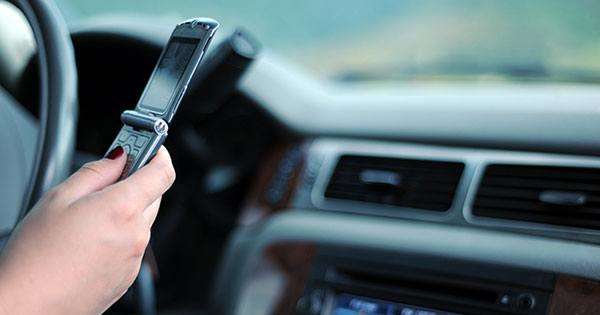
Distracted driving, which refers to any activity that diverts a driver’s attention from the task of driving, is another common cause of road accidents in the country. In the Philippine context, this includes the use of mobile devices and phones to make or receive calls, check or send text messages, surf the internet, play games, watch videos, read e-books, and the like while driving.
Based on guidelines of the Anti-Distracted Driving Act (RA 10913), the local law prohibits motorists from using communication devices and other electronic entertainment and computing gadgets while vehicles are in motion or temporarily stopped at a traffic light or an intersection. Motorists can still use phones for navigation and hands-free calls as long as phones are mounted properly on the dash.
Aggressive driving
Reckless driving behavior such as tailgating, road rage, and unsafe lane changes increase the likelihood of accidents. Aggressive driving refers to dangerous and selfish driving behaviors that endanger or are likely to endanger other people or property. This can be characterized by reckless disregard for traffic laws and road safety, often stemming from anger or frustration, as typically seen in many cases of road rage. We’re all too familiar with road rage scenarios, which can include honking excessively, using rude gestures, and even physical confrontations.
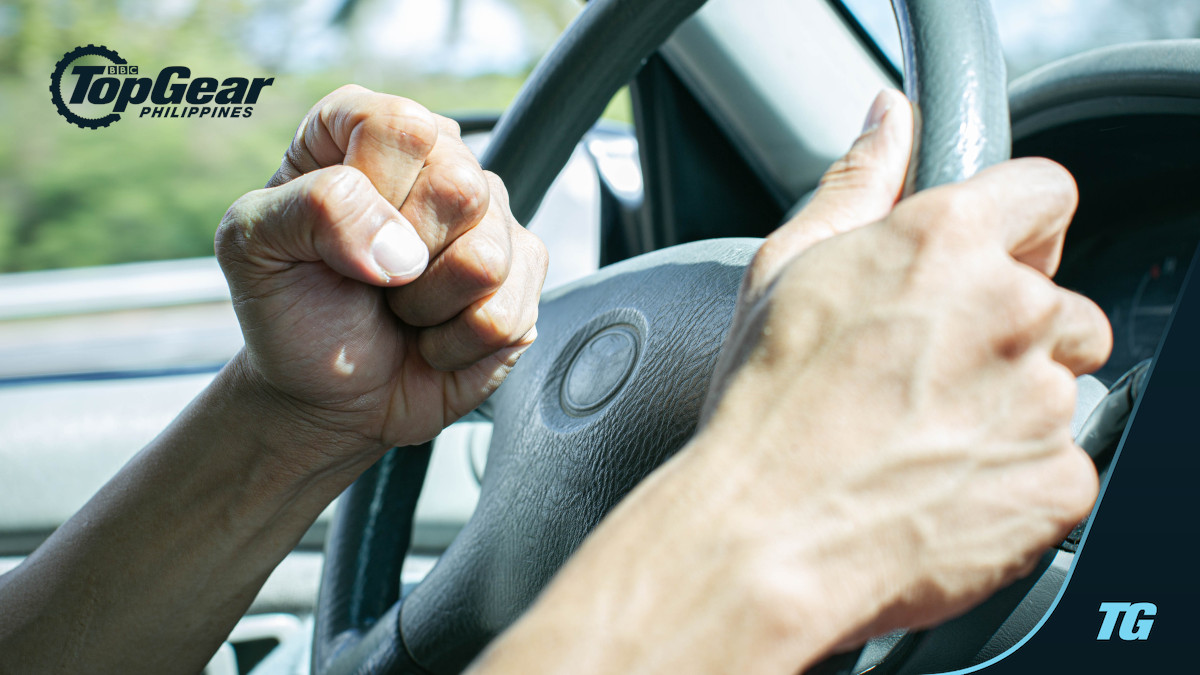
In 2019, a proposed Anti-Road Rage Act was filed seeking to sanction drivers who intimidate, threaten, or attack fellow motorists on the road either verbally or physically. There are other existing laws such as the Land Transportation and Traffic Code that cover “reckless driving” and “improper person to handle a vehicle.”
Improper turning
Making unsafe or illegal turns can also lead to collisions with other vehicles or pedestrians and cause road accidents. In 2016, the Philippine National Police (PNP)-Highway Patrol Group (HPG) released a report claiming that bad turning or changing direction without using the vehicle's signal lights was one of the major causes of accidents in the country. Accidents occur when the driver changes lane abruptly without checking the side mirror if an oncoming vehicle on either the left or right side is approaching, according to police authorities.
Bad overtaking
Overtaking, or driving around another slower vehicle to get ahead of it, is also a common cause of collisions. Bad overtaking happens when a driver improperly passes other vehicles, which can happen if you miscalculate the distance and speed of oncoming vehicles. According to the MMARAS Annual Report in 2018, bad overtaking ranked as the 8th cause of road accidents in the Philippines.
While LTO has detailed various overtaking rules to ensure safety, which are all part of basic road safety, not all drivers are aware of the rules regulations on the road.
Failure to adhere to traffic rules
Ignoring traffic signals, failing to yield the right of way, running red lights and jaywalking are also among the many traffic violations in the country that lead to traffic accidents and deaths.

Under the Single Ticketing System in 2023, MMDA noted that “Disregarding Traffic Sign (DTS)” was one of the most commonly committed violations by Filipino drivers. DTS refers to a driver's failure to follow visual instructions and warnings provided by road signs, including failing to follow speed limits, disregarding yield and stop signs, making u-turns in prohibited areas, driving the opposite of a one-way street, and similar violations.
Driver fatigue and tiredness
Fatigue is a significant contributor to road accidents in the country, with studies indicating it is one of the leading causes. According to the MMARAS 2023 report, fatigue and drowsiness among drivers, especially those awake early morning hours between 12 midnight and 6am, can impair the ability of drivers to focus and react quickly, leading to accidents.
Fatigue is often linked to sleep deprivation, which can be exacerbated by long driving hours, particularly at night. Those who regularly have to travel long-haul routes, such as bus and truck drivers, can experience slower reaction times, reduced alertness, and impaired judgment, increasing the risk of collisions.
Mechanical failure
As per Rappler, aside from human error, other causes of road crashes in Metro Manila can also be caused by vehicle defects and road defects.
Mechanical failures, such as faulty brakes or tire blowouts, could cause drivers to lose control of a vehicle and result in severe injuries or death.
“Nawalan ng preno” (brake failure) is one of the most commonly used excuses by drivers during accidents. While not always the case, this can stem from poor vehicle maintenance.
Mechanical problems such as problematic brakes, worn-out/under-inflated tires, suspension and steering issues, headlight/taillight malfunction, engine and transmission problems, and faulty windshield wipers, are accidents waiting to happen if not addressed. Regular car maintenance ensures that your vehicle remains roadworthy.
Poor road conditions
As if it wasn’t challenging enough to drive in the country with all the driver behavior problems listed above, the traffic congestion and poor road conditions in some places only make driving more dangerous.
Unfinished roadworks, shoddy infrastructure, potholes, open manholes, insufficient lighting, slippery road surfaces, and other hazards make driving more dangerous and increase the possibility of accidents. Other cases noted by the Highway Patrol Group (HPG) involved calamities or animals crossing roads.
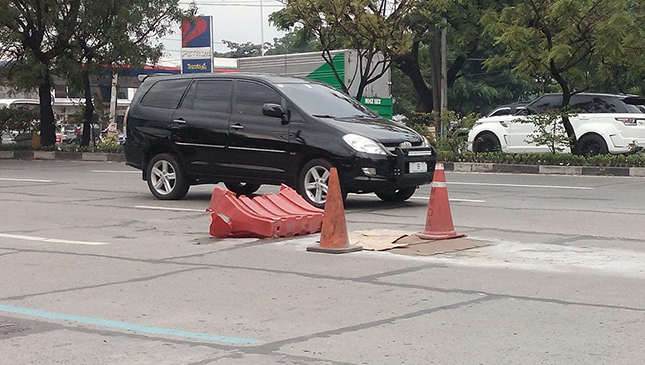
According to DriveSafe PH: “Many roads have not kept up with the rapid pace of urbanization. In Metro Manila, congestion and narrow roads are infamous, while in rural areas, poorly lit roads, potholes, and a lack of proper signage make driving risky.”
It's no wonder that the Philippines ranked 7th out of 35 nations for the most stressful countries for new drivers, according to driver education platform Zutobi cited in a report by BusinessWorld: “Congestion, road traffic deaths, registered vehicles, and road quality score were the four categories used for the ranking system.”
Stay safe on the road!