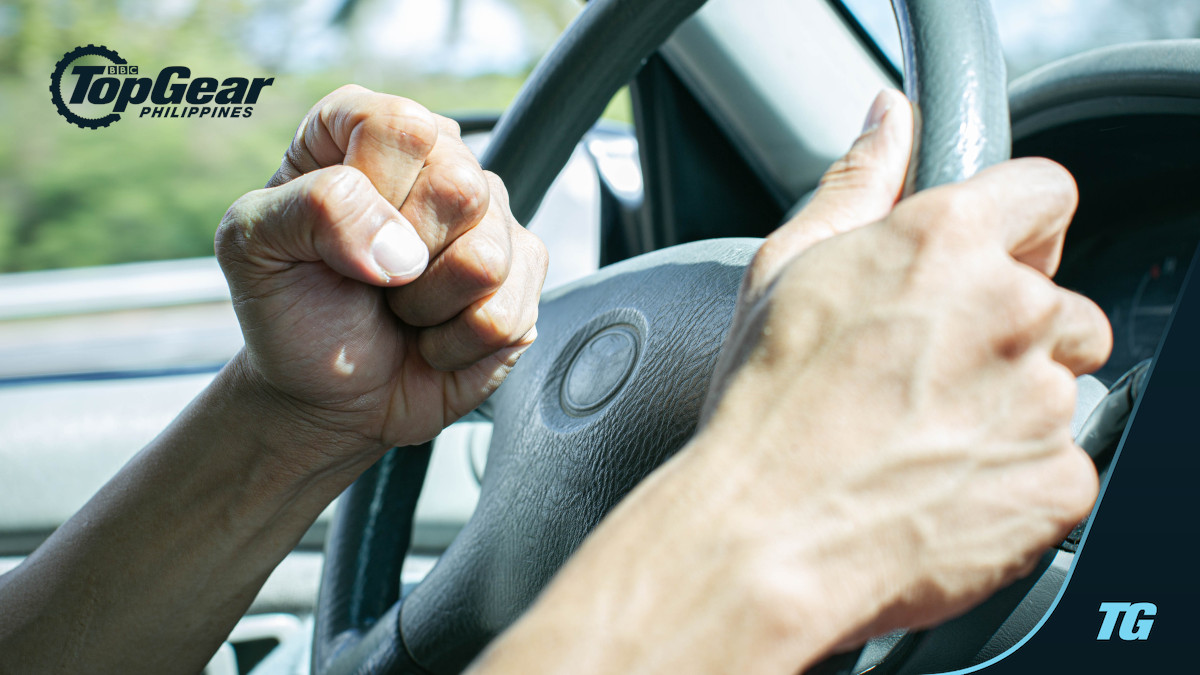
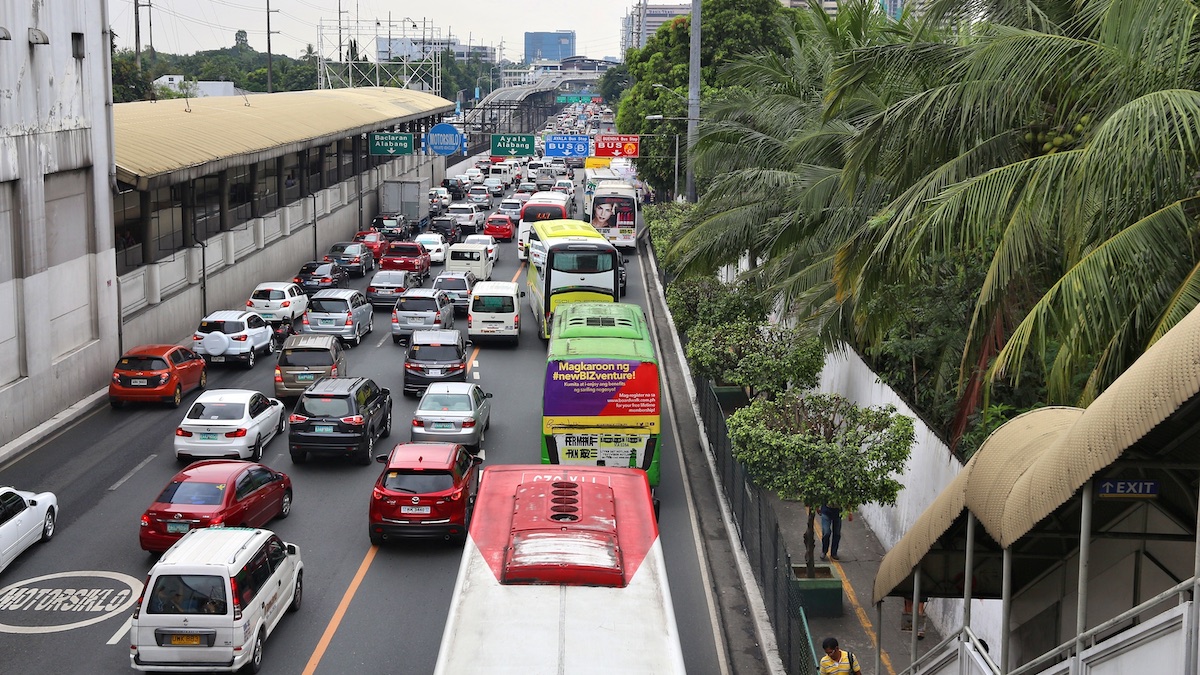
We all know how frustrating it can be to drive around Metro Manila’s streets. Having to navigate through bad traffic day in and day out, the constant roadwork, limited parking, high cost of fuel, and many other environmental factors (not to mention the overall quality of life) can really make you see red every time you get behind the wheel.
More often then not, the pent-up frustration manifests in road rage or aggressive driving.
Back in 2019, House Bill No. 5759 or the proposed Anti-Road Rage Act was filed seeking to sanction drivers who intimidate, threaten, or attack fellow motorists on the road either verbally or physically.
According to the proposed bill, which is currently pending at the House Committee on Transportation, demonstrations of road rage include “mild to moderate screaming, wild gesturing at others, cursing or using bad language, physical attack at another or an attempt thereof, reckless driving, any kinds of threat or intimidation, any use of force against another person, and other analogous circumstances.”
Should the bill be signed into law, drivers who succumb to road rage may face tough penalties of up to six years’ imprisonment and a P250,000 fine. You can read the provisions in the proposed bill here.
Currently, the act of aggressive driving itself is considered a traffic violation and not a criminal offense in the Philippines. Erring drivers can be charged under relevant sections under the Republic Act No. 4136, also known as the Land Transportation and Traffic Code, as well as local city ordinances.
ALSO READ:
CCTV footage of QC road rage video gives cyclist’s account of incident
Driver’s licenses of cop, alleged AFP personnel in Makati road rage video suspended
However, there are more serious offenses listed under the country’s Revised Penal Code that could potentially be violated, if the road rage incidents escalate (as they often do) to damage to property, assaults, and collisions that result in serious physical injuries or even death.
Here are some relevant laws you could potentially be breaking and their corresponding penalties when you give in to road rage.
Land Transportation and Traffic Code
1) Reckless driving
Reckless driving often happens when a driver’s temper gets the best of them while driving. This can strike when a driver does not comply properly with legal regulations on road traffic and drives a vehicle without any reasonable caution following an incident. It also involves causing direct or potential harm to people and animals, as well as property damage.
Article V, Section 48 of the Land Transportation and Traffic Code states that: “No person shall operate a motor vehicle on any highway recklessly or without reasonable caution considering the width, traffic, grades, crossing, curvatures, visibility and other conditions of the highway and the conditions of the atmosphere and weather, or so as to endanger the property or the safety or rights of any person or so as to cause excessive or unreasonable damage to the highway.”
These are the latest penalties for reckless driving in the Philippines under the single ticketing system of the Metro Manila Traffic Code of 2023:
- First offense – P1,000 fine
- Second offense – P1,000 fine with driver seminar
- Third and subsequent offenses – P2,000 fine with seminar
2) Obstruction of traffic
Meanwhile, Section 54 of the same law details the penalties of obstruction of traffic stating that: “No person shall drive his motor vehicle in such a manner as to obstruct or impede the passage of any vehicle, nor, while discharging or taking on passengers or loading or unloading freight, obstruct the free passage of other vehicles on the highway.”
So by getting out of a car to confront someone else in traffic, you’re essentially leaving your car in the middle of the road unattended, which causes an obstruction to the rest of the vehicles on the road. The penalty for obstruction of traffic also comes with a P1,000 fine.
ALSO READ:
Here are the most expensive traffic violations under the new single ticketing system
3) Disregarding traffic sign (DTS)
Considered one of the most common traffic violations in the country, this violation applies to drivers who don’t follow rules and traffic signs while driving on the road. Drivers who end up going on a rampage with their vehicles and in turn ignore all road rules can be charged with this.
Similar to obstruction of traffic, the penalty for DTS is a P1,000 fine under the single ticketing system.
4) Improper person to operate a vehicle
Under Section 27 of the Land Transportation and Traffic Code, authorities are given the right to suspend or revoke a driver’s license if they believe the license holder is an “improper person to operate motor vehicles” or if they commit “any crime or act which endangers the public.”
Take note: When your non-professional driver’s license is revoked, it means you can’t be granted a new license for a period of two years. Meanwhile, when professional driver’s licenses are revoked, they are perpetually disqualified from getting any driver’s license.
Local city ordinances
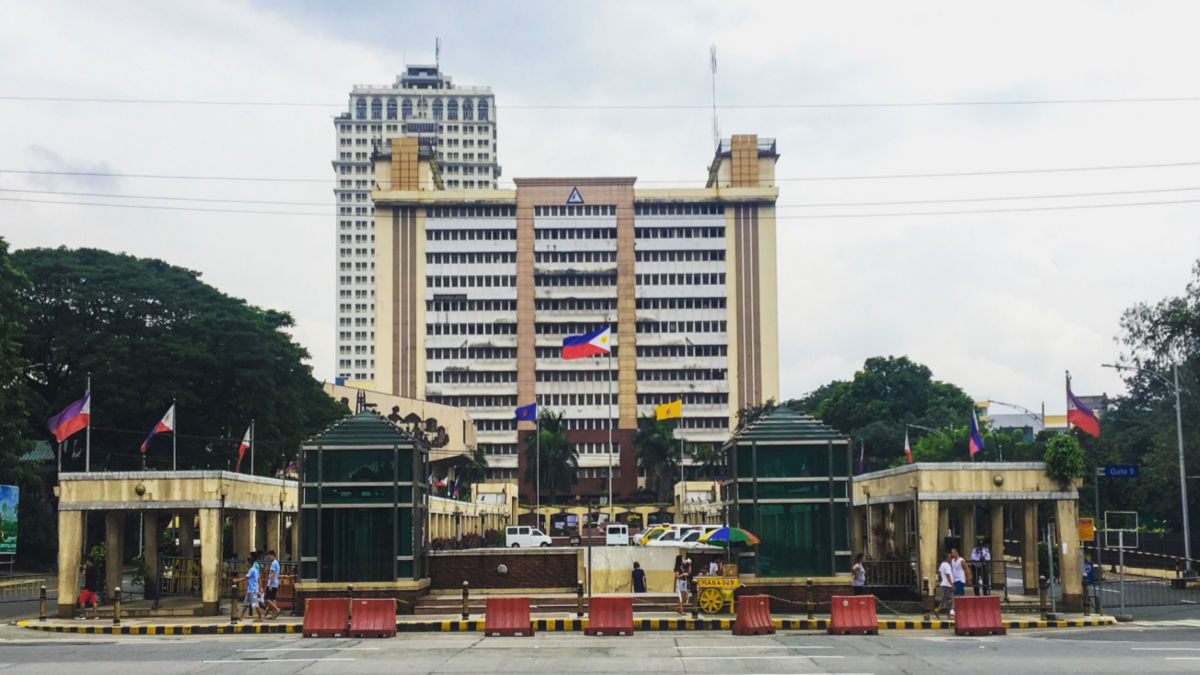
The recent viral road rage incident involving a cyclist and an armed motorist that occurred in Quezon City also violated two city ordinances that prohibit motorists from obstructing bike lanes and walking paths.
So in case you’re tempted to cut into the bike lane when driving around Quezon City, these are some other local regulations you need to consider when driving within the city limits.
1) Obstructing cycling lanes or walking paths
City Ordinance SP-2988 S-2020 or the Ordinance Promoting Safe Cycling and Active Transport penalizes motorists who obstruct cycling lanes or walking paths.
Motorists using or obstructing cycling lanes or walking paths face the following penalties:
- First offense – P1,000 fine
- Second offense – P3,000 fine
- Third offense – P5,000 fine and 30 hours of community service
2) Road Safety Code
Furthermore, Section 8.2.2 of City Ordinance SP-2636 S-2017 or QC Road Safety Code states that, “no driver shall permit his/her vehicle to block any portion of the bicycle lane. At no time shall any vehicle use, straddle, or obstruct the designated bike lane.”
Penalties include:
- First offense – P500 fine
- Second offense – P1,000 fine or 1 hour community service
- Third offense – P2,000 with 30 days imprisonment at the court’s discretion
Other cities may also have their own relevant traffic codes and ordinances.
Revised Penal Code
Aside from the traffic laws, incidents of road rage can lead to other forms of violence against people and properties under Act No. 3815 or the Revised Penal Code of the Philippines (RPC). For instance, pulling out a gun or threatening other motorists are considered criminal offenses under penal laws.
1) Grave threat
Article 282 of the RPC holds liable for grave threats “any person who shall threaten another with the infliction upon the person, honor or property of the latter or his family of any wrong amounting to a crime.”
According to the law, the penalties vary depending on the gravity and nature of the threats, with corresponding fines and imprisonment terms. The penalty of arresto menor (one to 30 days) in its minimum period or a fine not exceeding P20,000 shall be imposed upon those who “shall threaten another with a weapon or draw such weapon in a quarrel, unless it be in lawful self-defense.”
2) Reckless imprudence
Reckless imprudence as defined in Article 365 of the RPC, consists in “voluntarily, but without malice, doing or ailing to do an act from which material damage results by reason or inexcusable lack or precaution on the part of the person performing or failing to perform such act, taking into consideration his employment or occupation, degree o intelligence, physical condition and other circumstances regarding persons, time and place.”
More than negligence resulting in an accident, this refers to “willful, wanton or reckless disregard for the safety of others.”
Again, penalties vary depending on the gravity of the consequences, but for reckless imprudence resulting to serious physical injuries, a straight penalty of two month imprisonment imposed.
3) Physical injuries
Road rage incidents can also lead to assaults and physical injuries, a criminal offense. In cases where “any person who shall wound, beat, or assault another, shall be guilty of the crime of serious physical injuries,” penalties include prision mayor. Lighter sentences are imposed for slight injuries.
4) Slander by deed
Slander by deed is another possible charge against those succumb to physical violence induced by road rage. This is defined as “a crime against honor, which is committed by performing any act, which casts dishonor, discredit, or contempt upon another person.”
For instance, slapping or hitting someone with an intent to ridicule and shame them publicly in front of other people is considered as slander by deed. This differs from maltreatment, which is slapping or hitting a person without the motive of casting dishonor.
Article 359 of the RPC cites a penalty of imprisonment of arresto mayor in its maximum period (four months and one day) to prison correctional in its minimum period (two years and four months) or a fine ranging from P20,000 to P100,000 if it is of a serious nature. However, if the nature of slander is not serious, the imprisonment shall only be arresto menor (one to 30 days) or a fine not exceeding P20,000. (Fines amended by R.A. 10951)
5) Failing to render assistance to injured
Some cases of road rage can also result in hit-and-run incidents, a serious offense that has harsh penalties punishable by law. It is the responsibility of the driver to aid any person who is harmed due to a vehicular accident.
Under Article 275 of the Revised Penal Code, fleeing the scene can turn a road accident into a crime scene as it constitutes “abandonment of a person in danger and abandonment of one’s own victim.” The law states that “anyone who shall fail to render assistance to another whom he has accidentally wounded or injured” will receive the penalty of arresto mayor.
So the bottom line is that no matter how bad things get on the road, remember to keep your cool.
When your anger starts boiling over, restrain yourself. Take a deep breath and just think of the legal repercussions and effect it will have on you and your family. Aside from becoming the subject of viral memes and online hate if the incident got caught on camera, you might also be stripped of your right to drive in the future. At any rate, you could be facing fines and possible jail time unless settlement terms are reached.