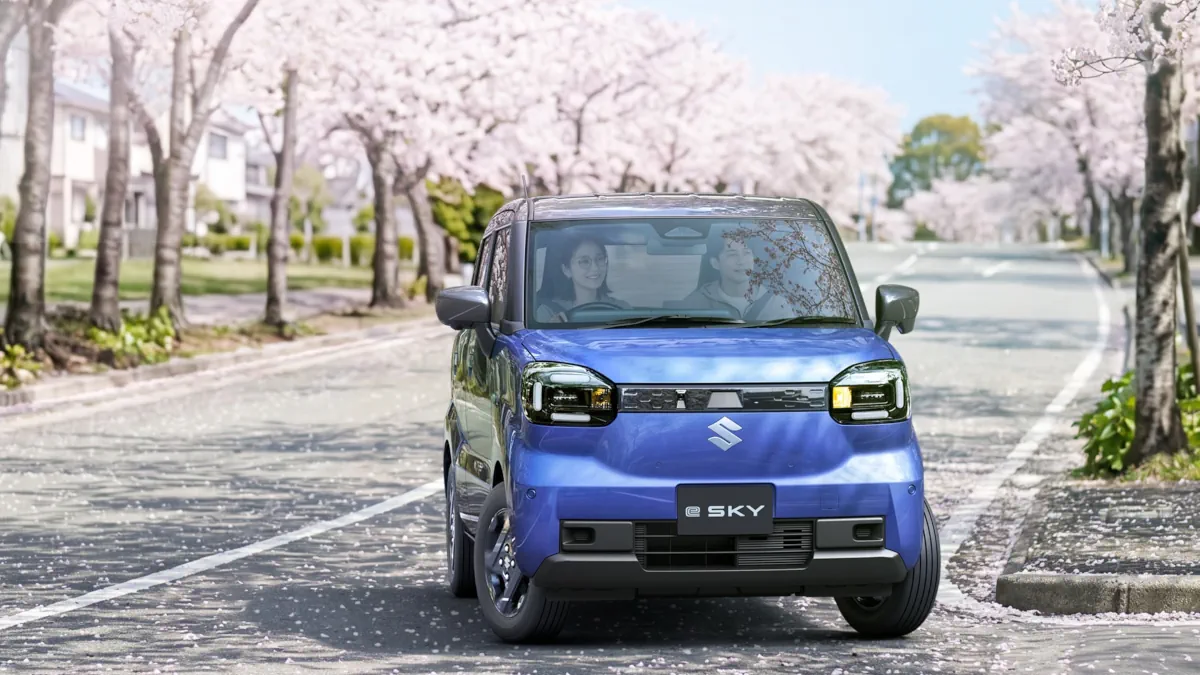

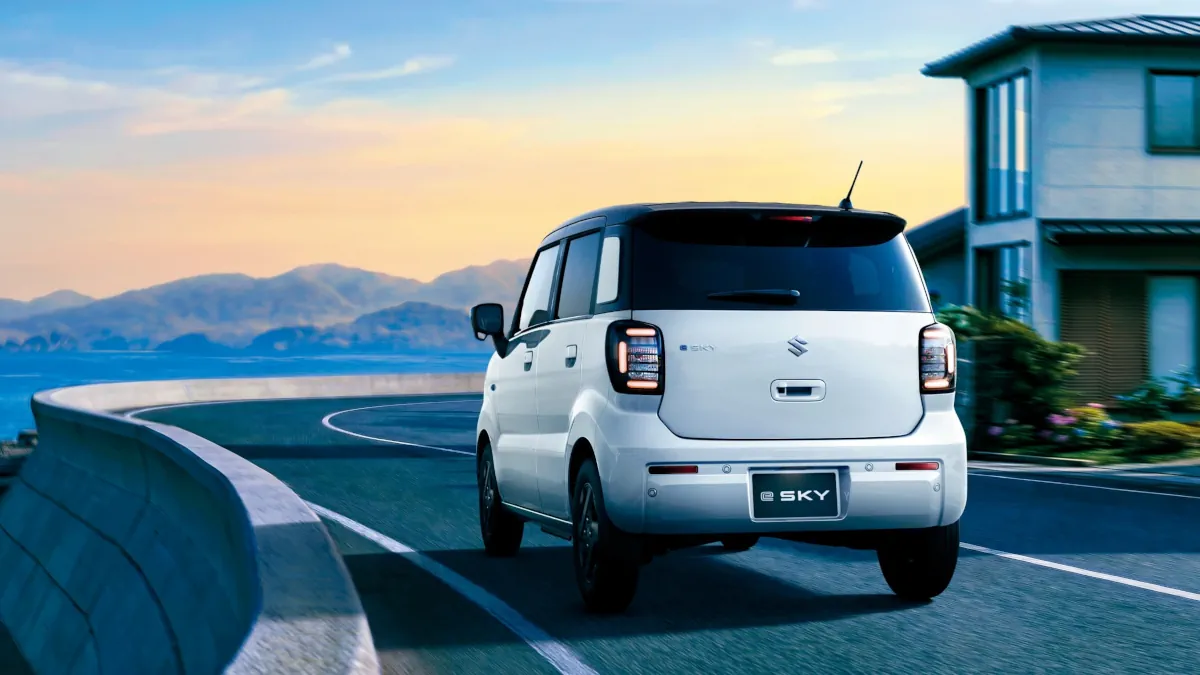
Suzuki’s latest go at BEVs has been officially revealed, and this one plays into the automaker’s specialty. This is the Suzuki e-Sky, a fully-electric kei car for the Japanese market. This is the production version of the Vision e-Sky unveiled at the 2025 Japan Mobility Show, with minor design tweaks in line with the brand’s current roster.
Equipped with a 26kWh LFP battery, Suzuki claims the e-Sky can achieve a range of 310km—for context, other electric kei cars such as the Nissan Sakura typically offer just 180km of range. The recently launched BYD Racco, however, still edges ahead slightly with 320km of range.

The e-Sky’s dimensions are expectedly compact to fit within kei regulations, sitting at 3,395mm long, 1,475mm wide, and 1,625mm tall. The vehicle’s total weight comes in at 1,030kg, which is significantly heavier than a typical ICE-equipped kei car.
OTHER STORIES YOU MIGHT HAVE MISSED:
The fully electric Mazda 6e is launching in more Southeast Asian markets
This US-exclusive Toyota Corolla may be the cleanest 60th anniversary edition yet
While light on other technical details, Suzuki did elaborate on its emphasis on the e-Sky’s driving experience. The brand aims to position the e-Sky as a vehicle as predictable to handle as an ICE kei car, ultimately targeting drivers switching to electric motoring. This includes tuning power delivery to smooth out sudden jolts during acceleration and make single-pedal driving more intuitive. It also makes use of the same Heartect-e platform in the e-Vitara, which has the battery under the vehicle floor for improved stability and handling dynamics.
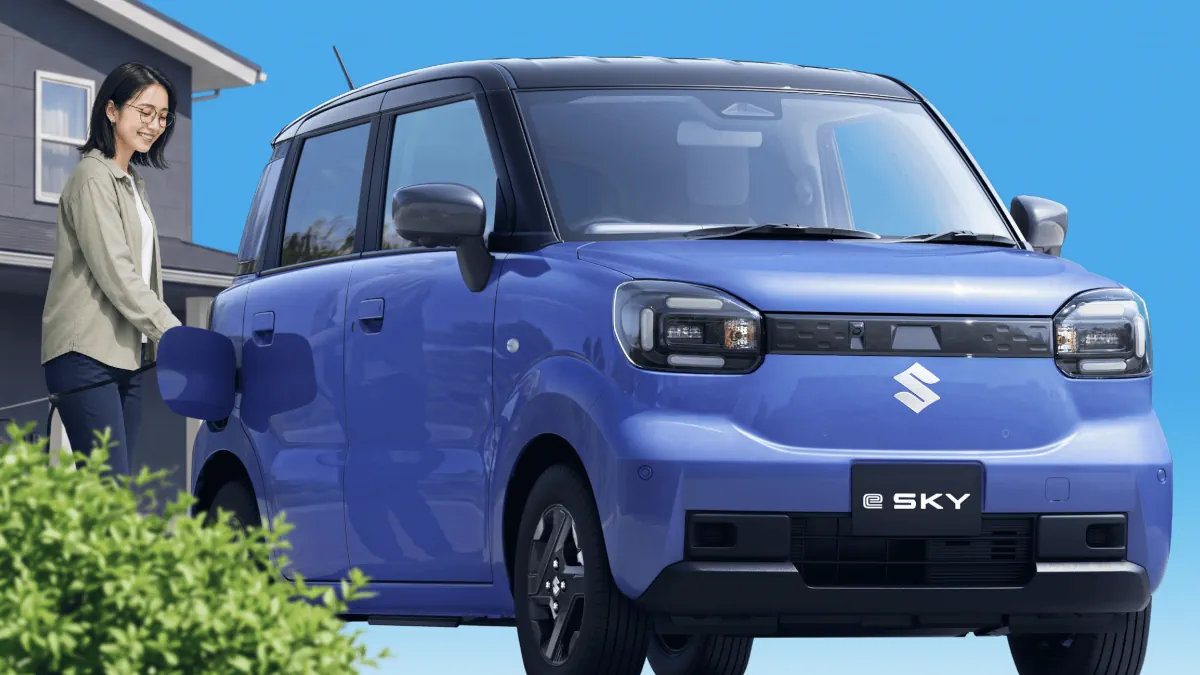
The e-Sky is being produced at Suzuki’s Kosai plant, as opposed to the e-Vitara, which is produced in India. This all but guarantees a Japan-only release for the e-Sky, as is typical with kei vehicles. Still, between this and the BYD Racco, it’s going to be interesting to observe this segment as the race may now be on to deliver longer ranges for these city cruisers.
Suzuki is lining up the e-Sky for launch towards the end of the year—specifically, in fall.