
Comfortable Runabout Vehicle. It’s what ‘CR-V’ actually stands for. And for five generations, it’s been exactly that—a decent family car that doesn’t have a bouncy ride. That alone was enough to have customers lean more towards the CR-V than a typical ladder-frame SUV.
Now with this sixth iteration, Honda Cars Philippines (HCPI) faces more competition than ever, and ‘comfort’ isn’t the only selling point car buyers look at. Unlike during the fifth-gen model’s heyday, the market is now stacked with budget-friendly and feature-packed crossovers.
The all-new CR-V, however, isn’t banking on just mere comfort—it’s got a lot more to offer than that. Recently, I was able to try out the non-hybrid CR-V, which is what most customers are currently opting for. Can the new model compete with the newcomers in the market? That’s what I sought to find out.
ALSO READ:
How ‘waterproof’ is the all-new Honda CR-V e:HEV?
Yes, the Honda CR-V hybrid is eligible for number coding exemptions
Styling
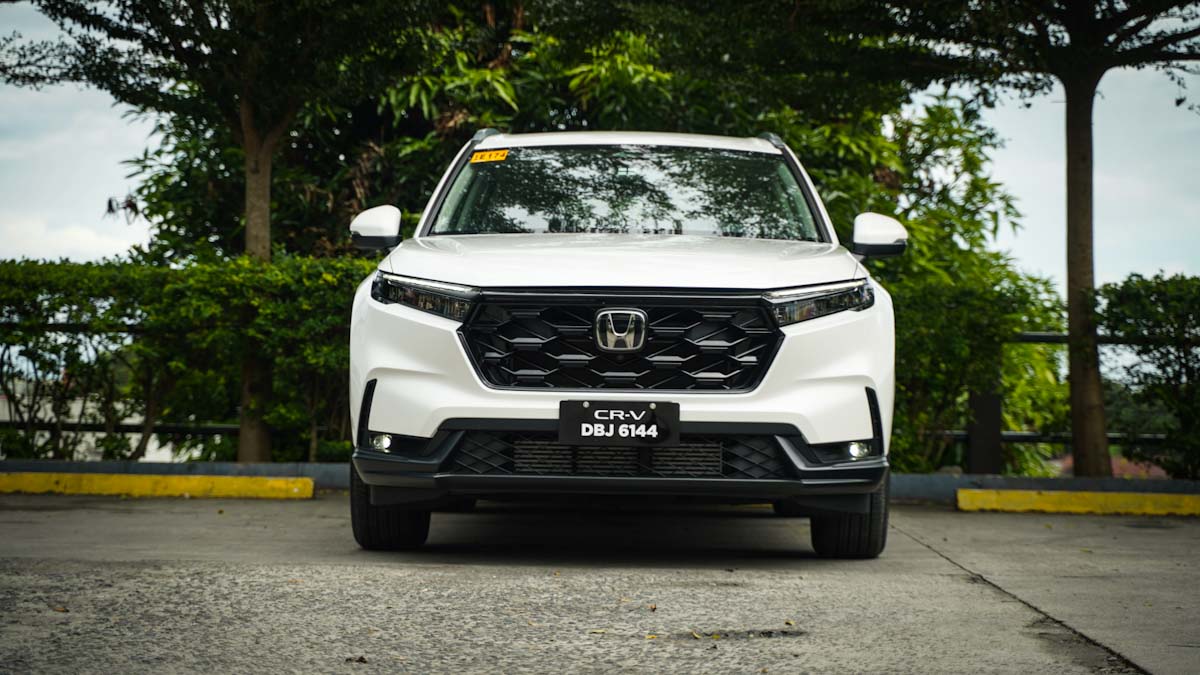
Honda has breathed life into the CR-V with its fresh new design. While the fifth-gen’s styling didn’t look that dated when compared to the newer crossovers in the market, it felt a bit old considering it’s been in the Philippines for six years before its replacement came out.
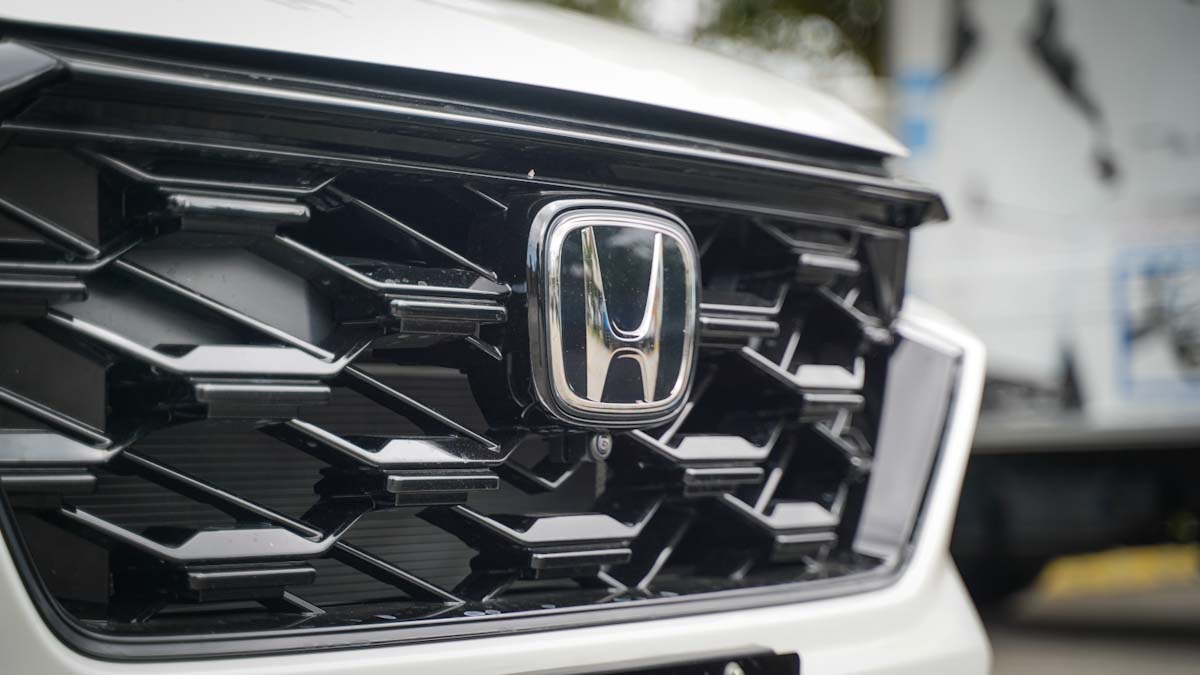
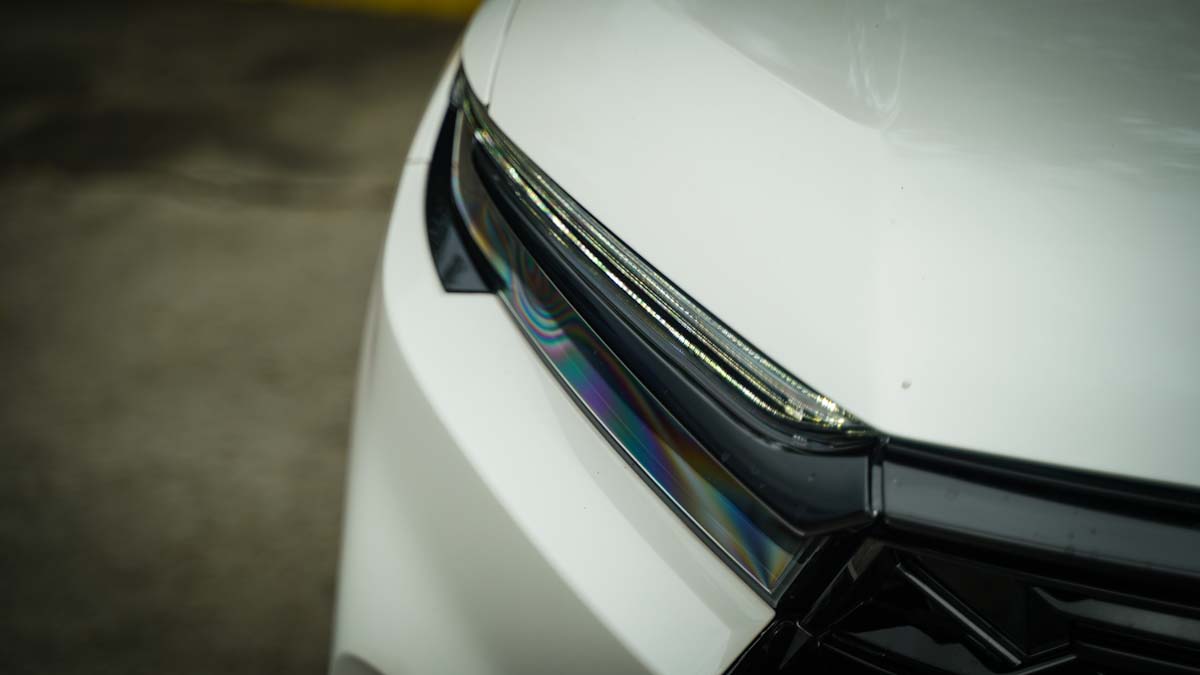
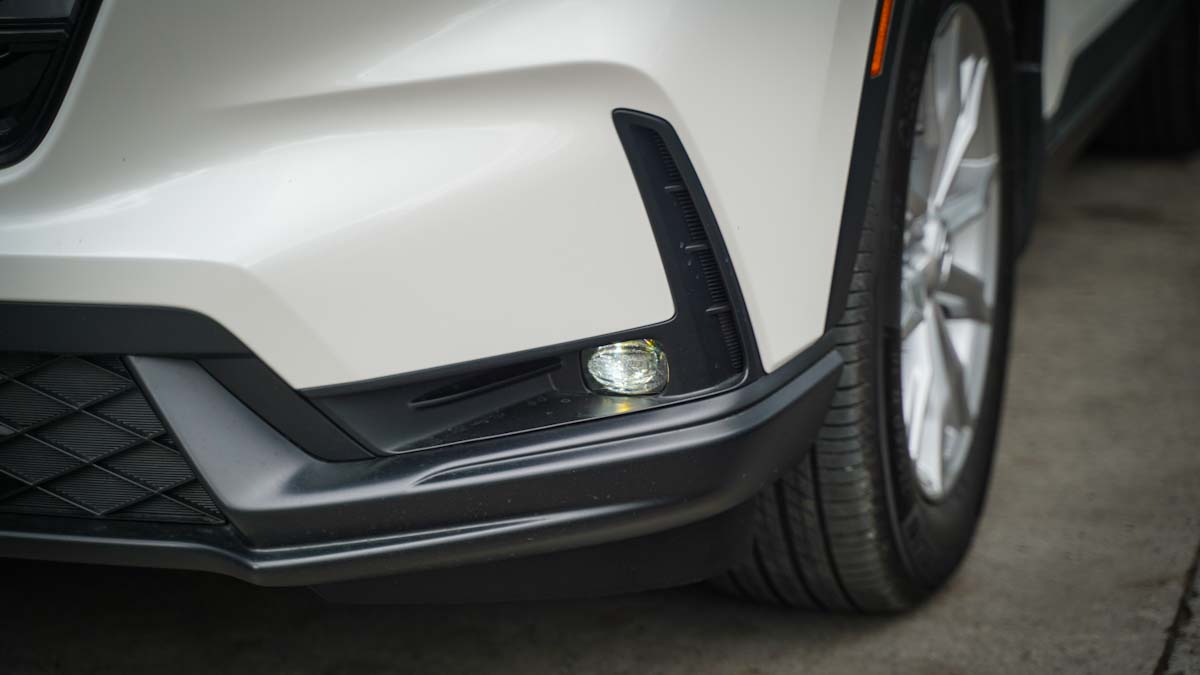
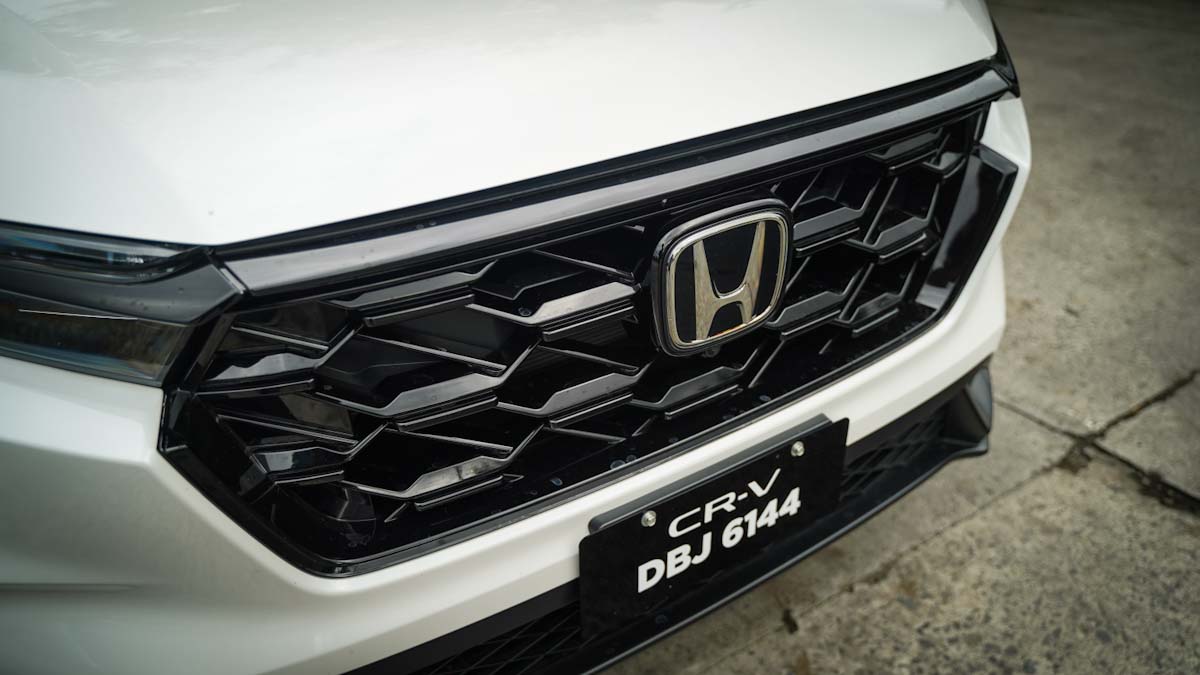
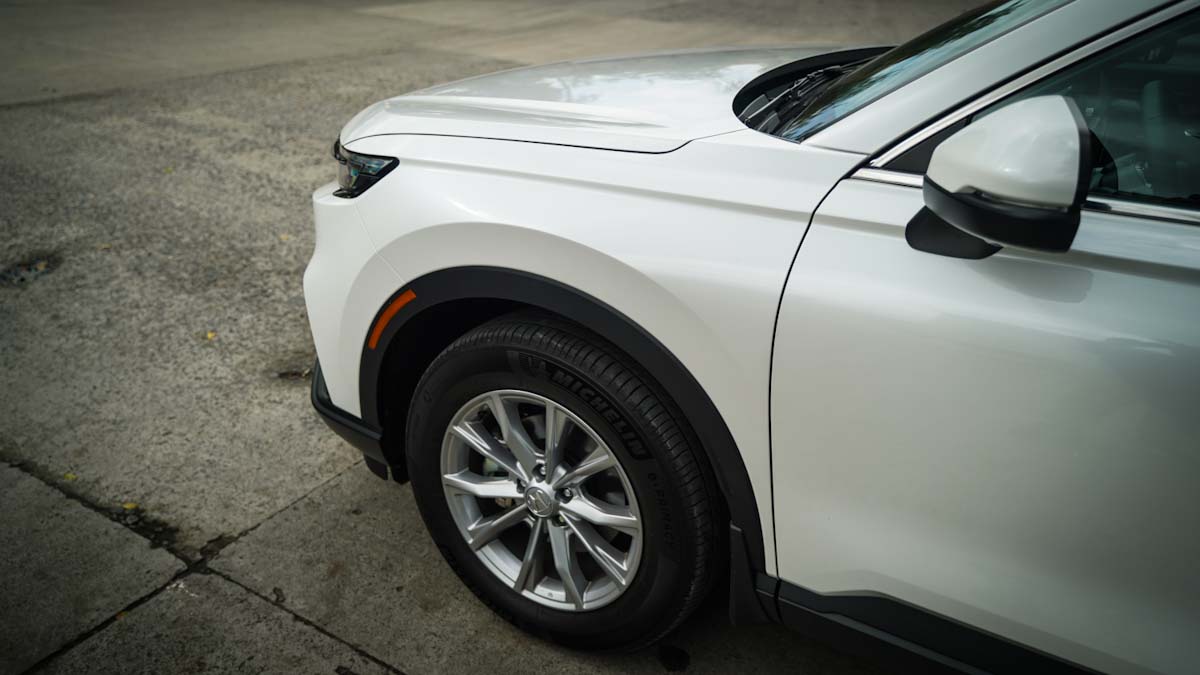
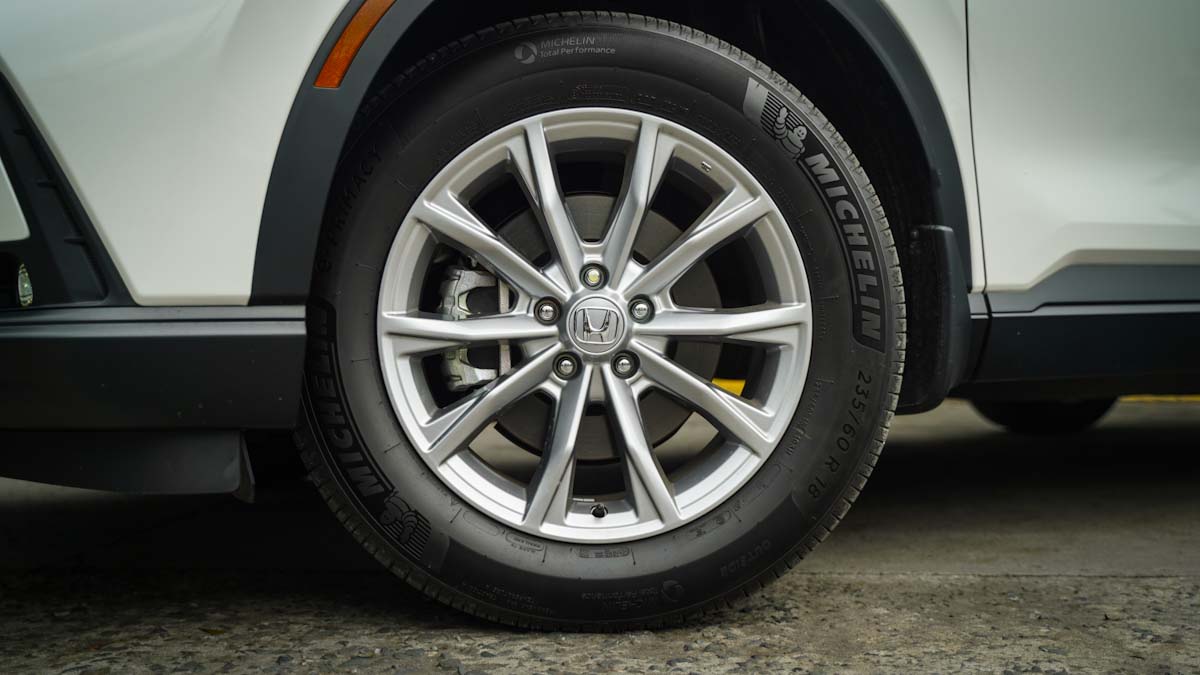
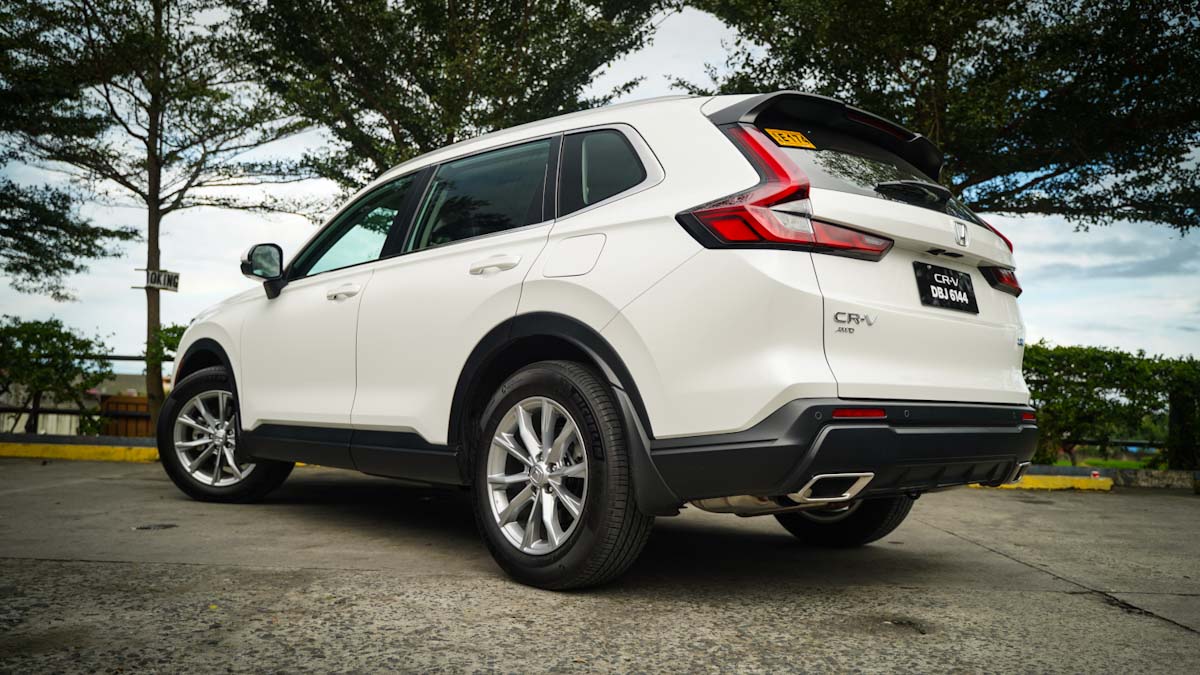
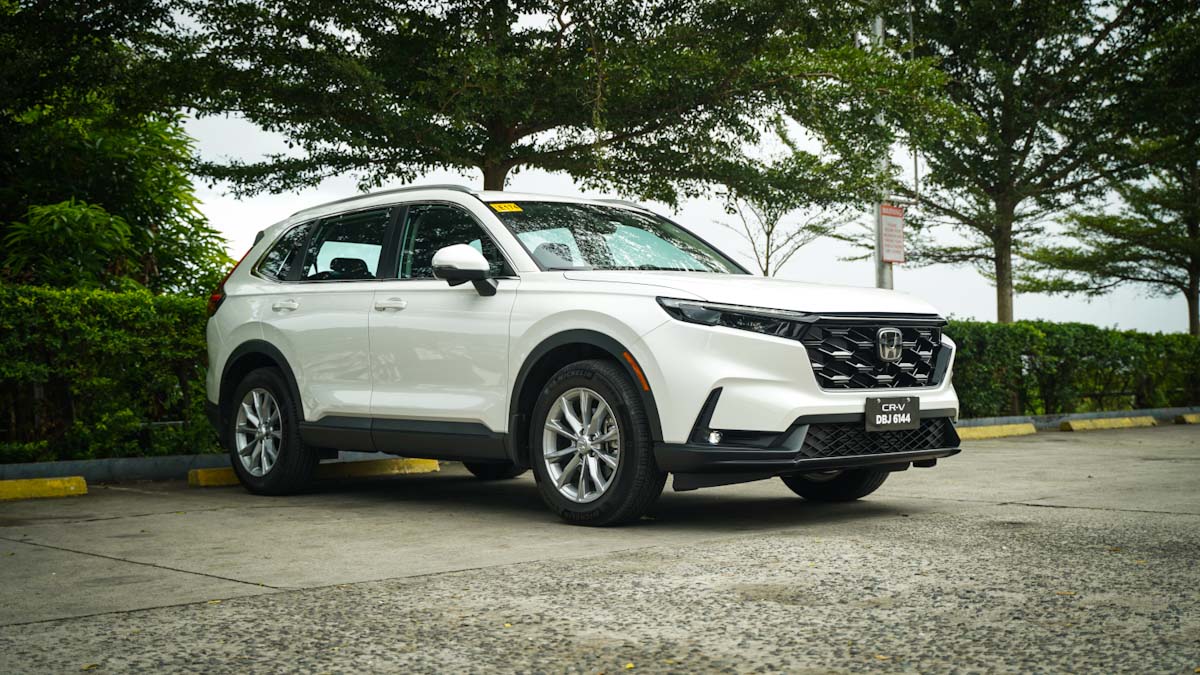
I like how Honda has been cutting down on all the chrome trim in its vehicles. In the CR-V, the shiny strips on the front fascia are gone, and in their place is a blacked-out grille with gloss-black bits that contrast well with the white finish on this VX variant I was driving. The swept-back headlamps make for a more aggressive-looking front clip, and the claddings underneath add a bit of ruggedness.
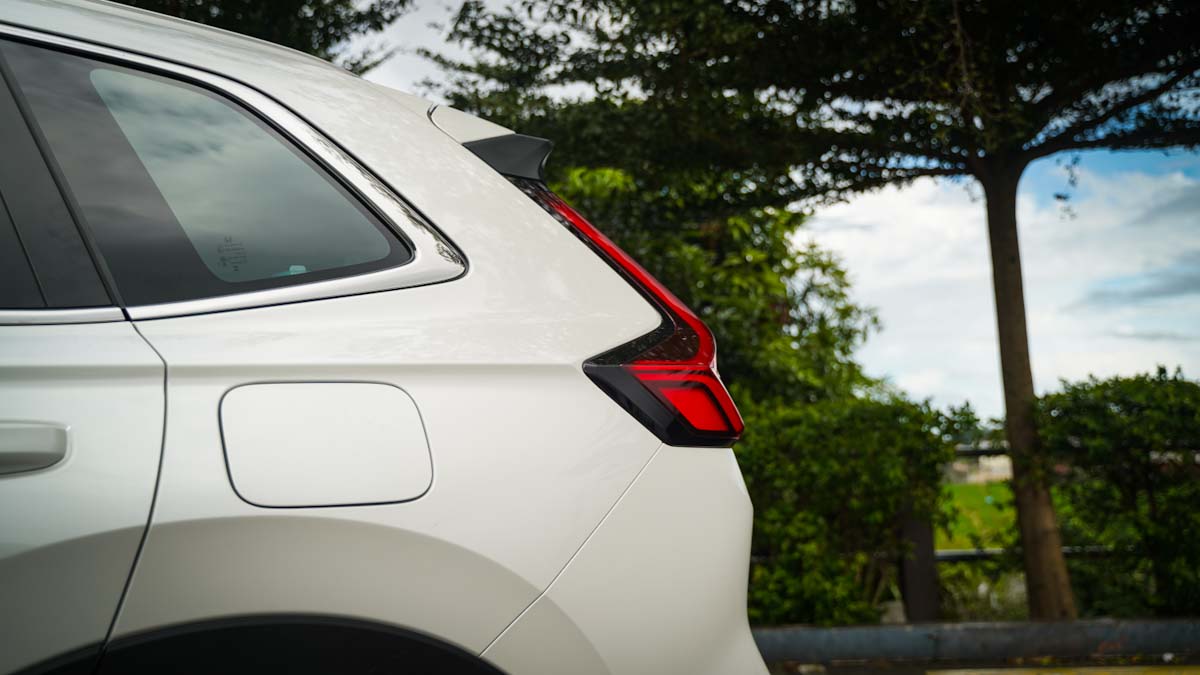
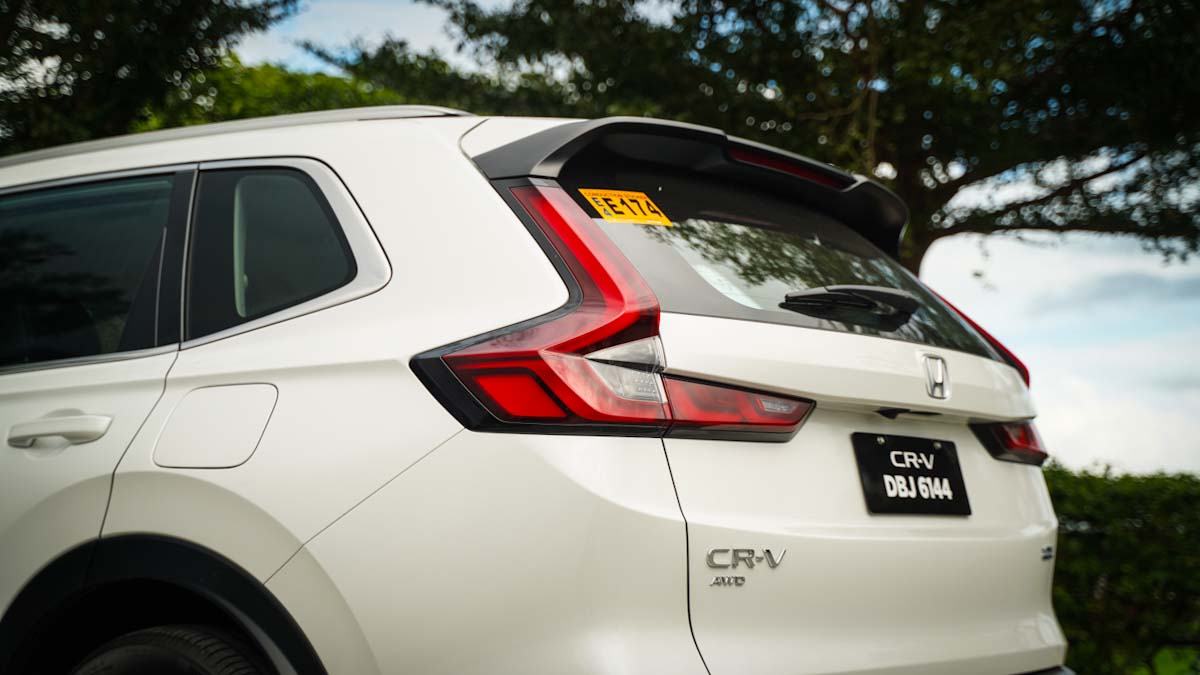
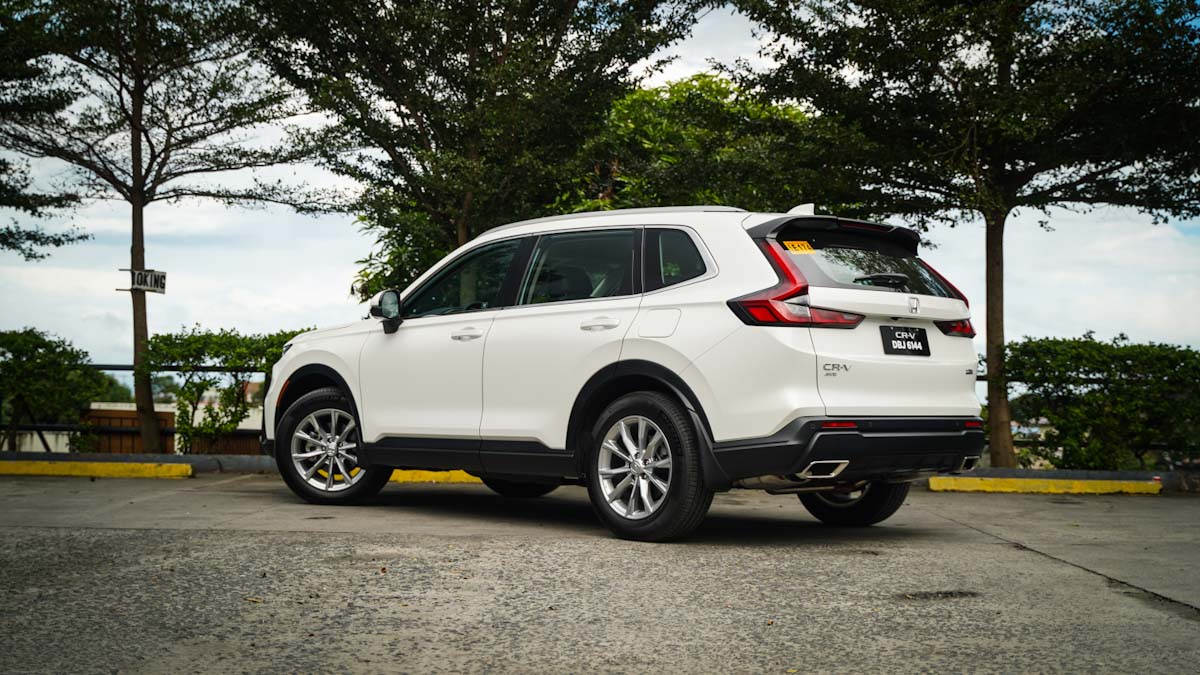
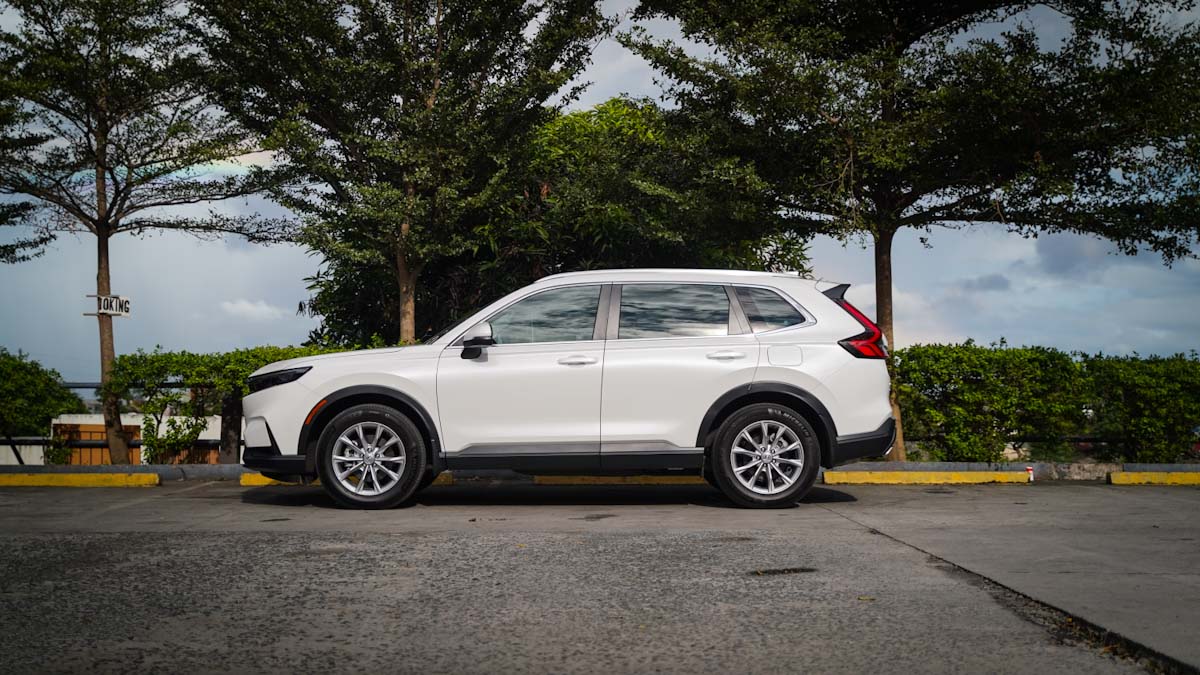
At the rear, Honda has also given the CR-V a no-chrome treatment. The liftgate looks much cleaner now. The shape of the taillight has been retained, but you now see more red than before. Frankly, I thought the design looked a bit vanilla in the photos, but it actually looks quite stylish in the metal.
Interior
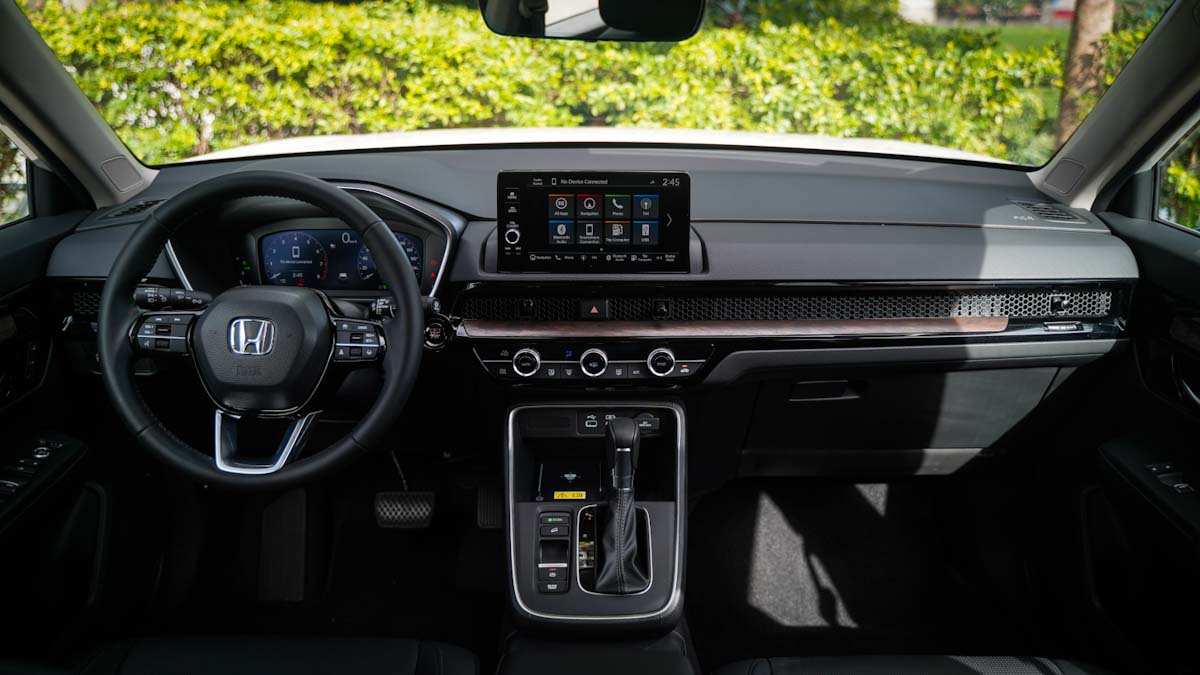
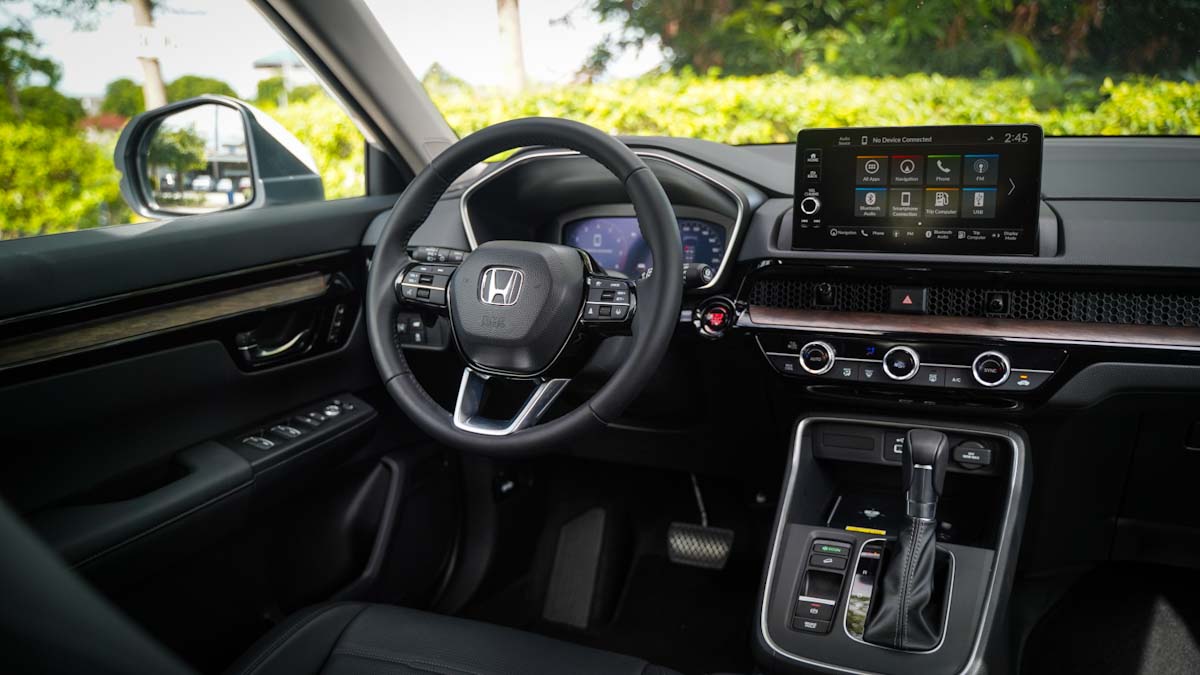
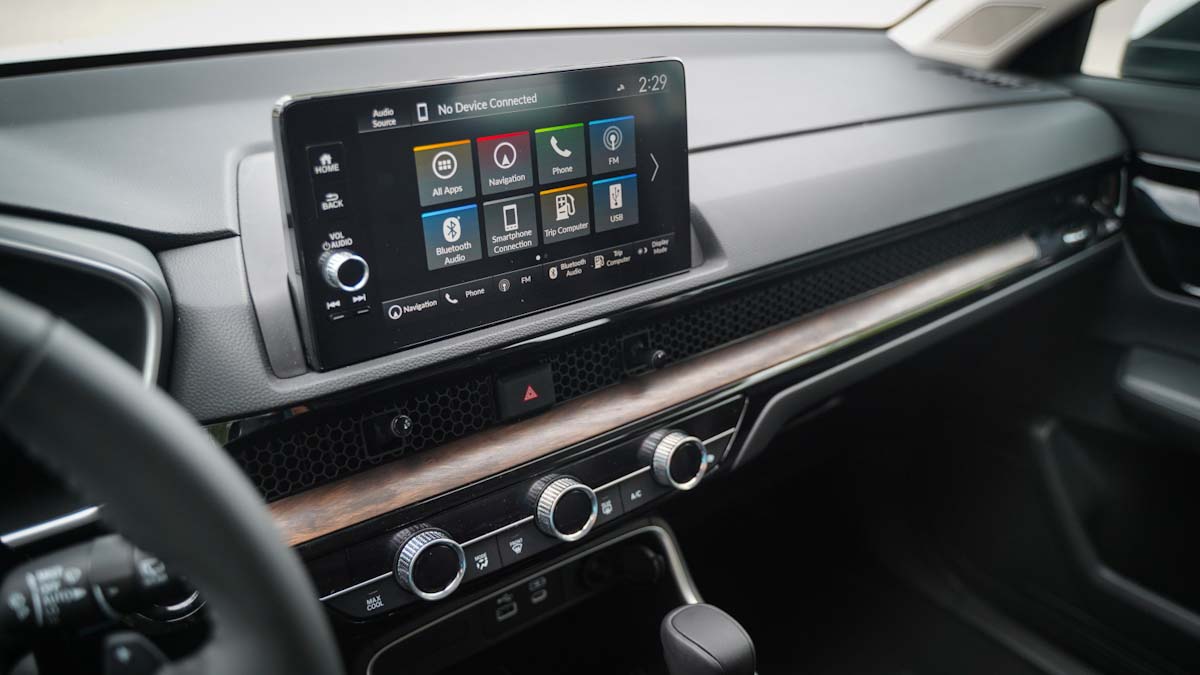
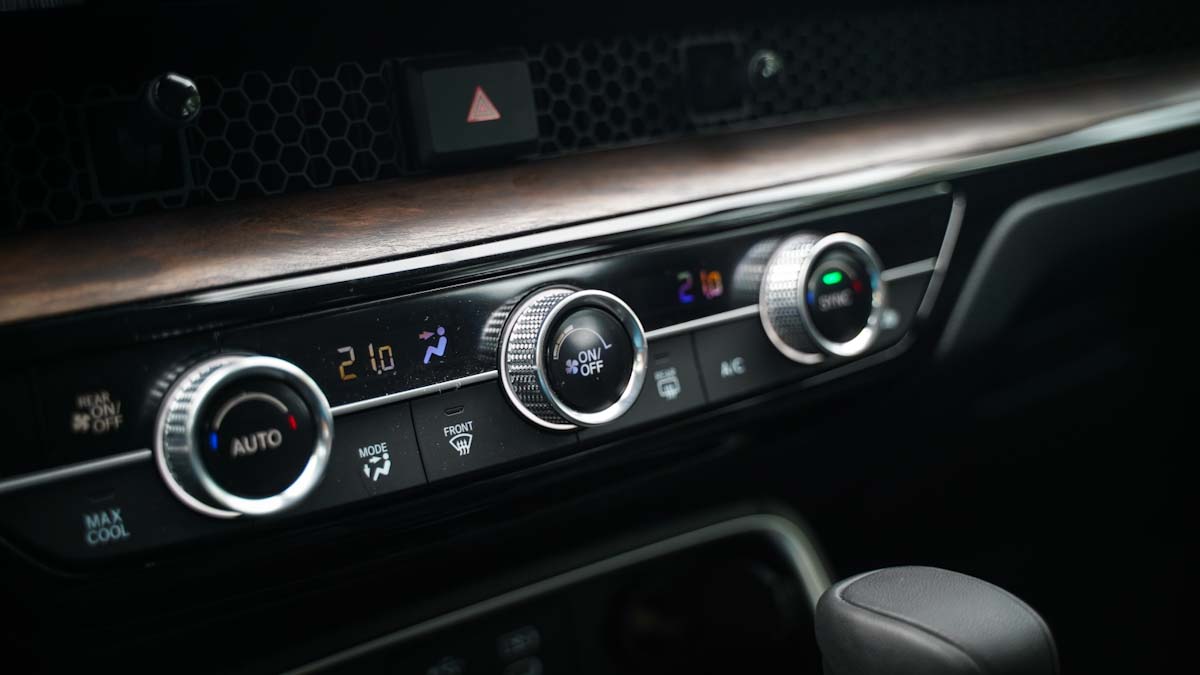
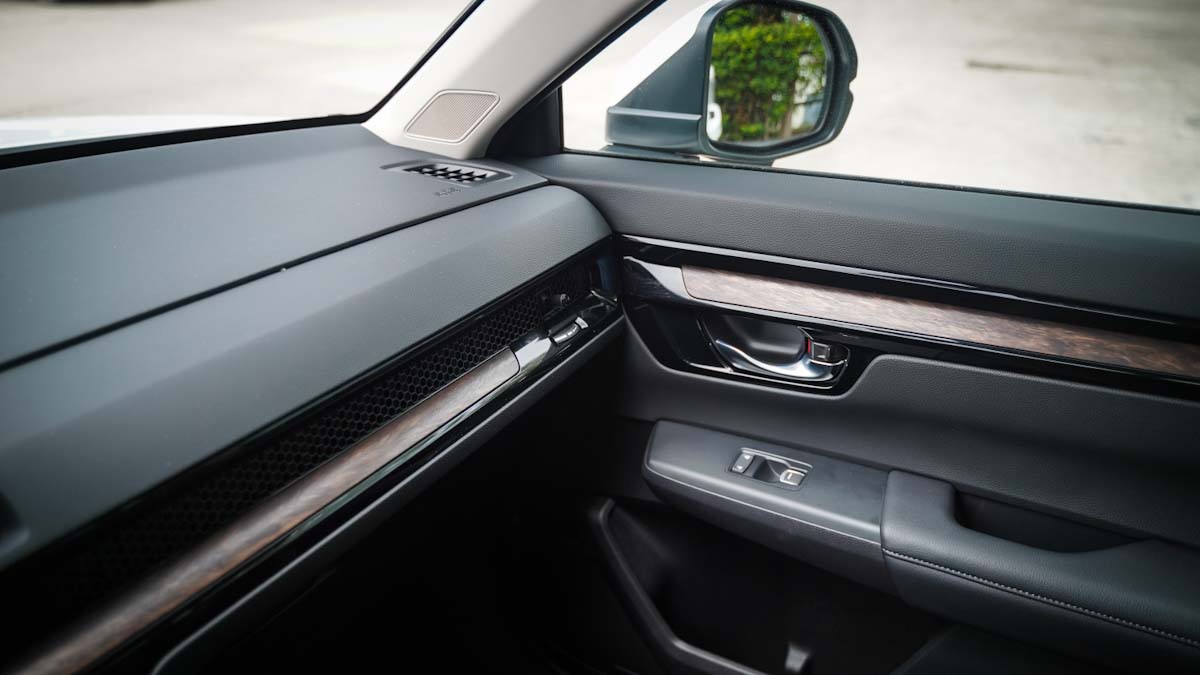
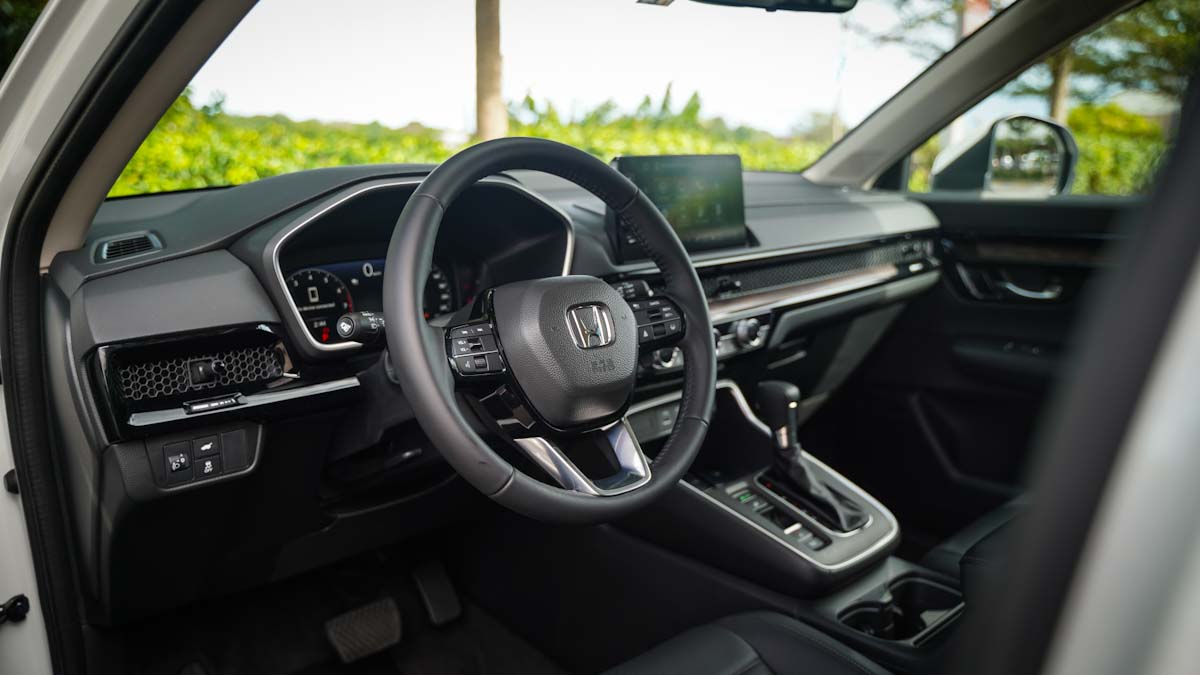
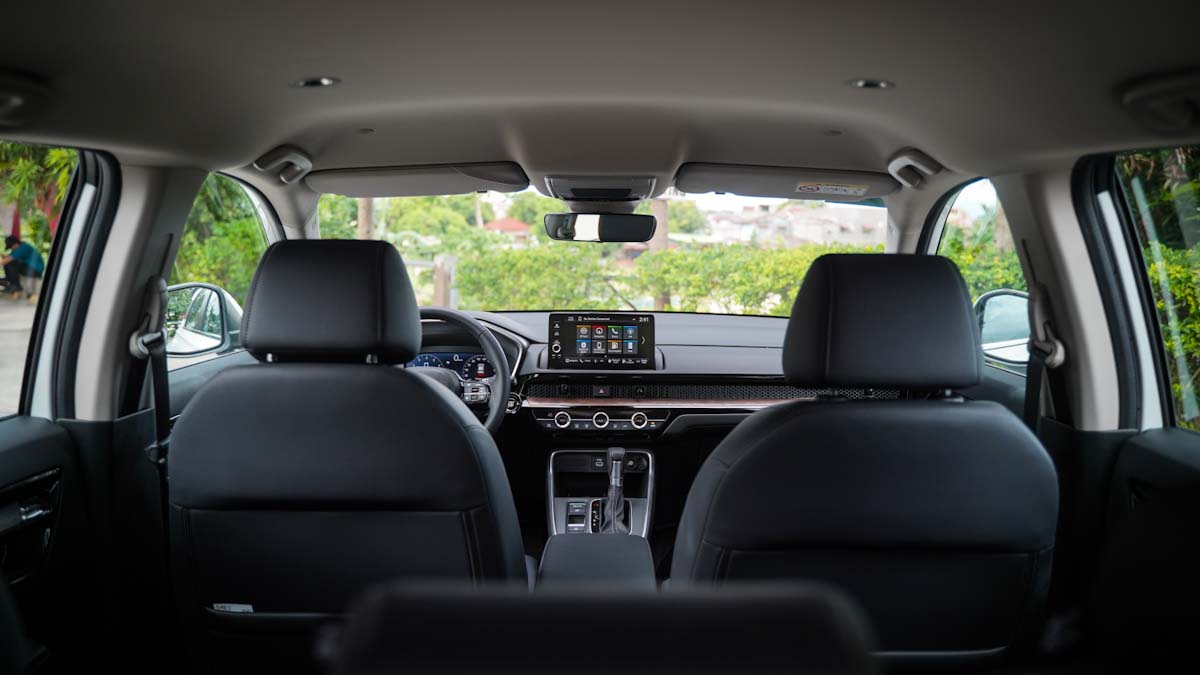
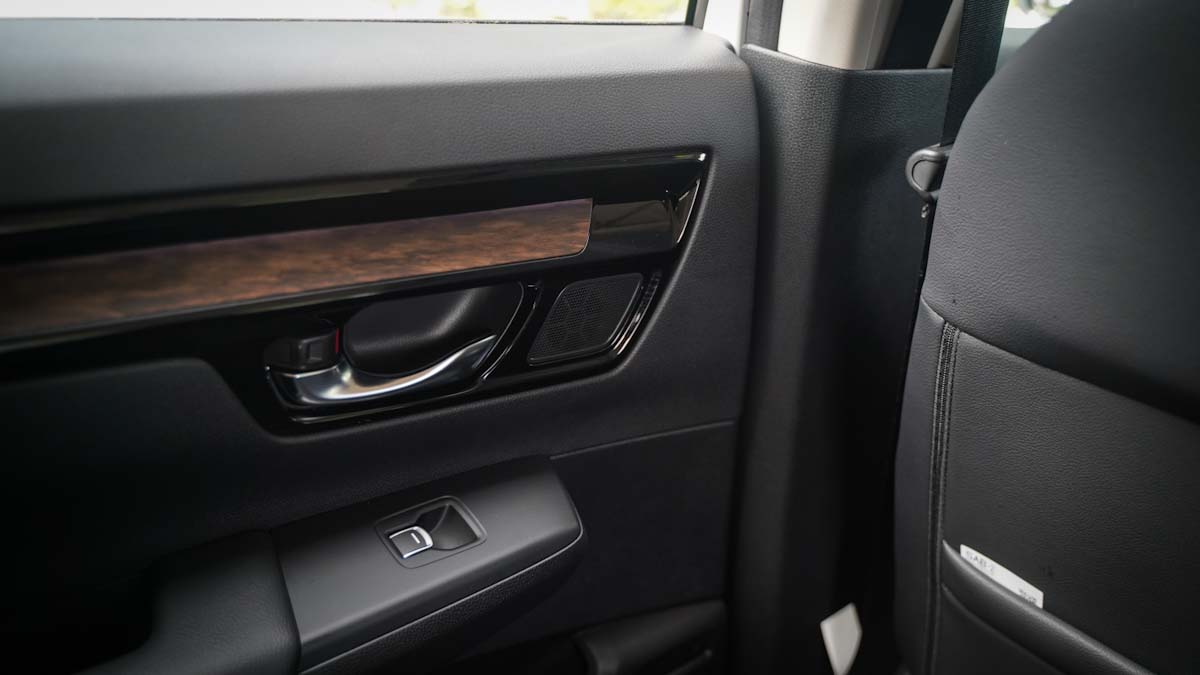
Solid. Solid and familiar. Those are the two words I’d use to describe the CR-V’s cabin. Familiar because it borrows a lot of its interior from the Civic, such as the entire dashboard including the grille-like trim and the A/C controls. The CR-V does get an added wood trim on the dash which I think looks really classy.
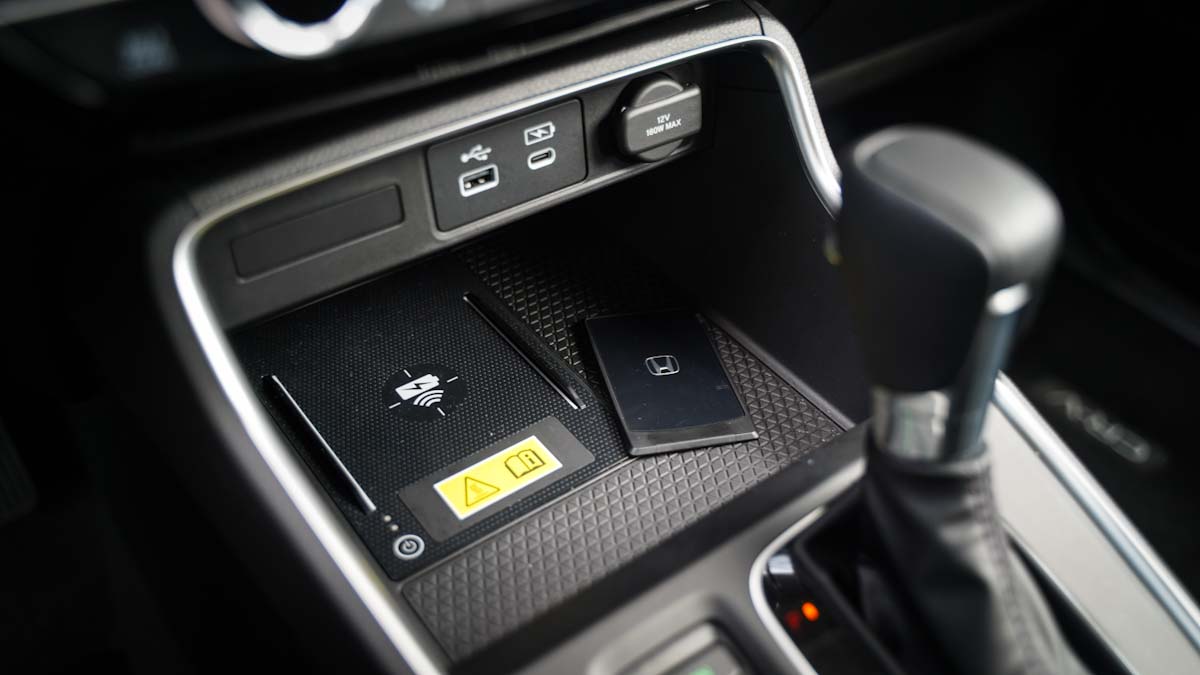
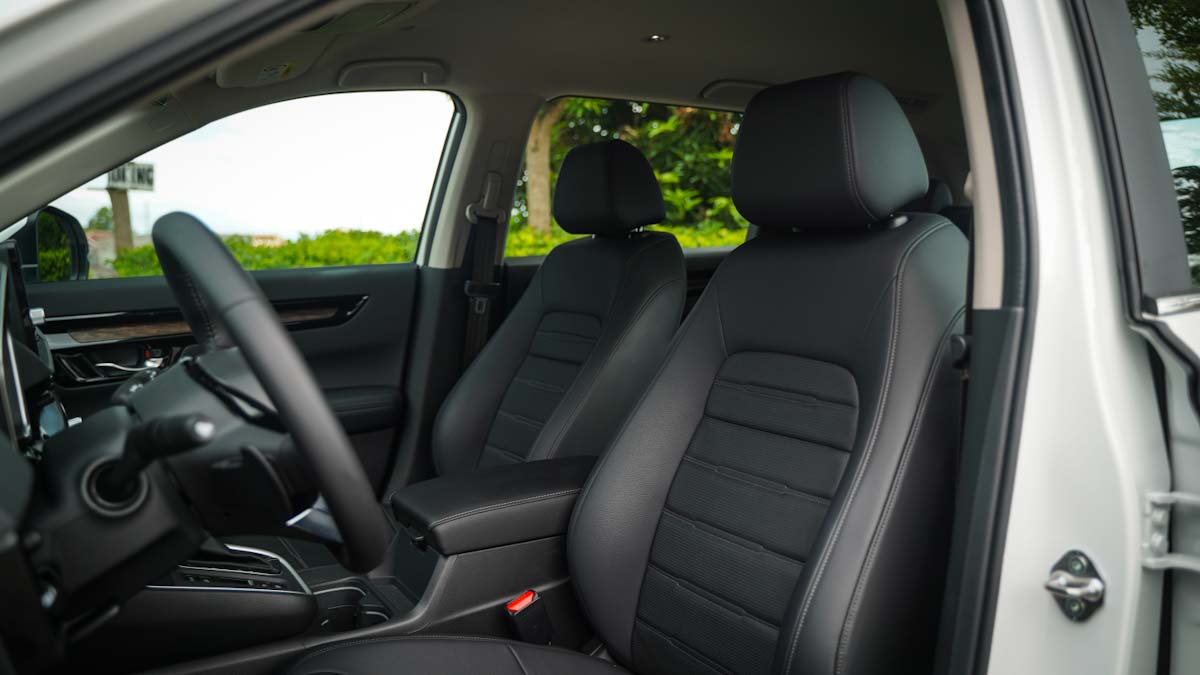
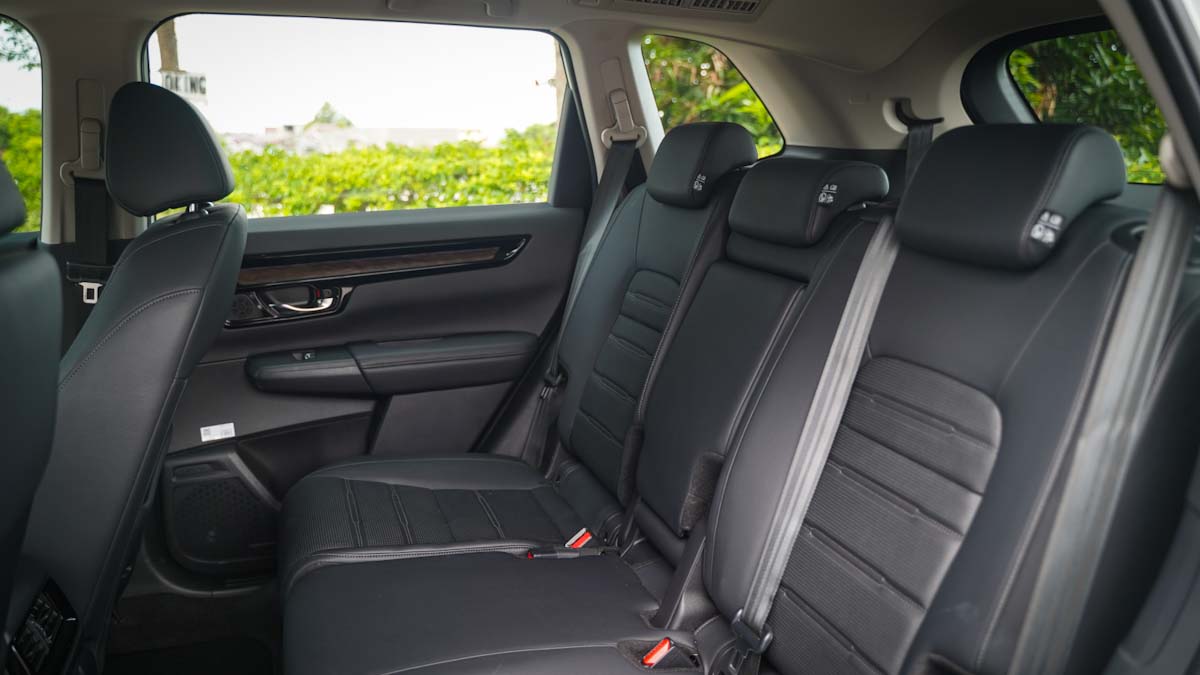
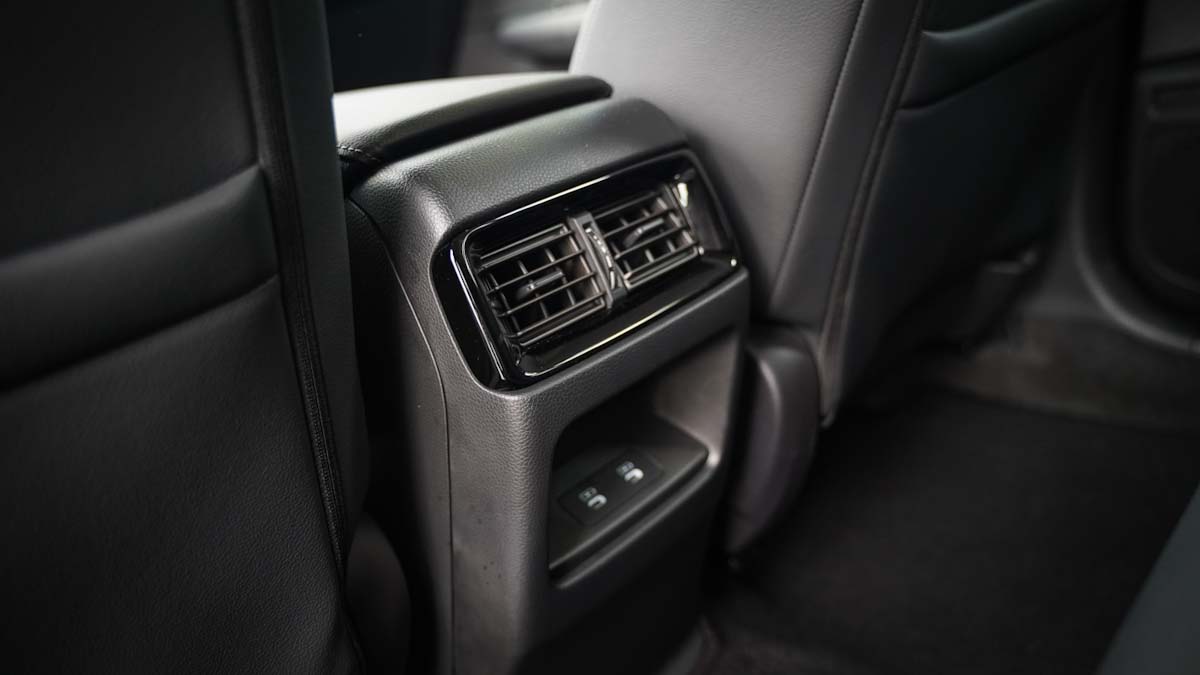
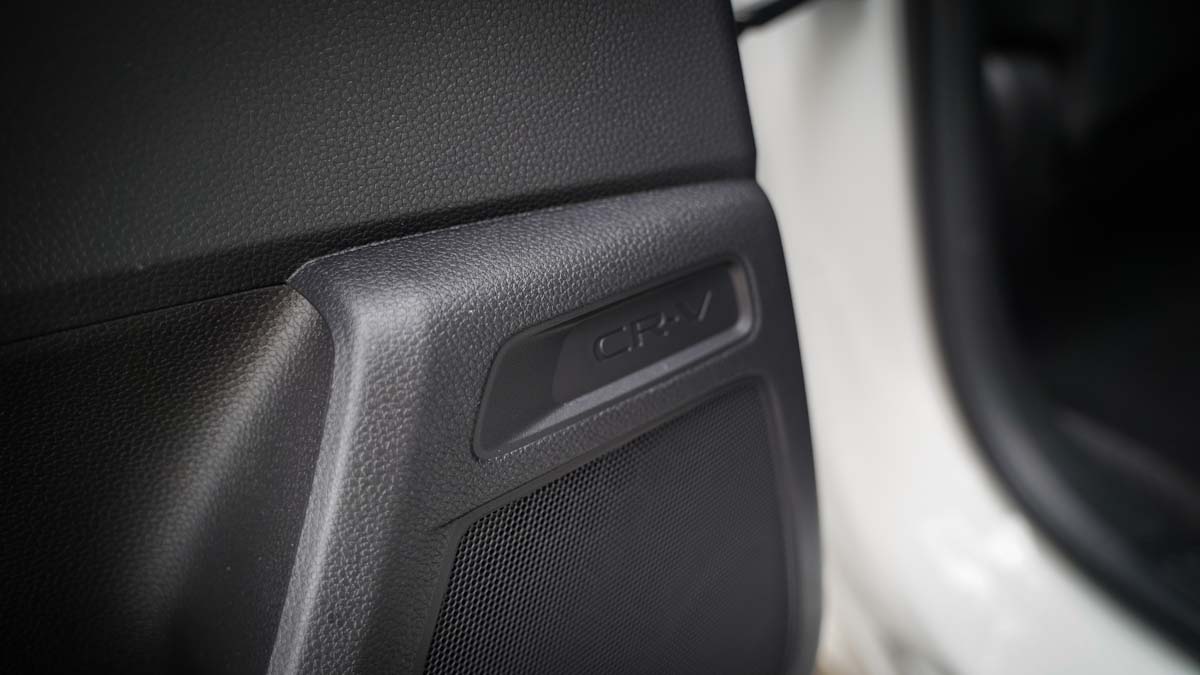
Solid because everything inside the CR-V feels like so. It looks clean and simple, not like some of the overstyled crossovers that have been entering our market these days. It has its share of hard plastics, but nothing in the vehicle feels cheap. The seats are soft and comfortable, and the leather on the center armrest and the door panels are nice to the touch. I also particularly like the very small tray behind the cup holders and the gearshift lever—it’s perfect for leaving the car key and some coins to use for parking. Very nifty.
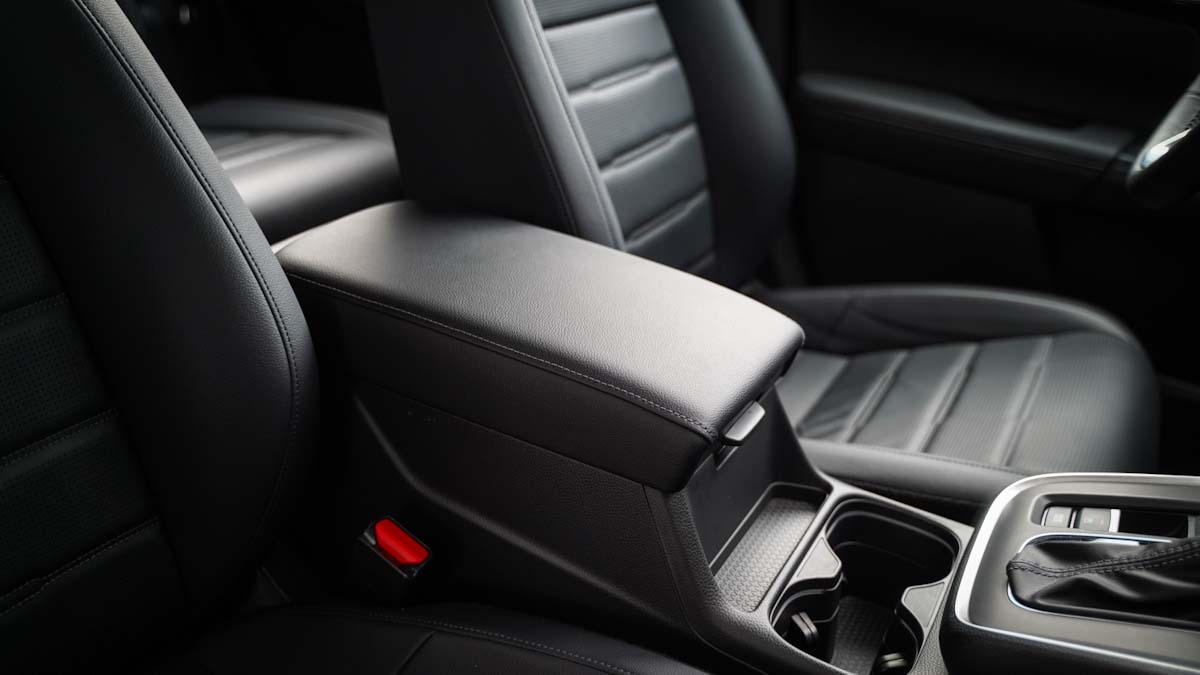
There’s an abundance of space here, too. Despite this being a seven-seater, there’s still some wiggle room for all passengers. There’s plenty of legroom in both the front and second rows, and the third row is manageable for average-sized Filipinos. With five people or fewer on board—which I assume will often be the case for most SUV and crossover owners, anyway—there’s even more space to go around, and you’ll also activate a lot of cargo space in the process. In summary, it’s excellent as a five-seater and okay as a seven-seater.
Engine performance
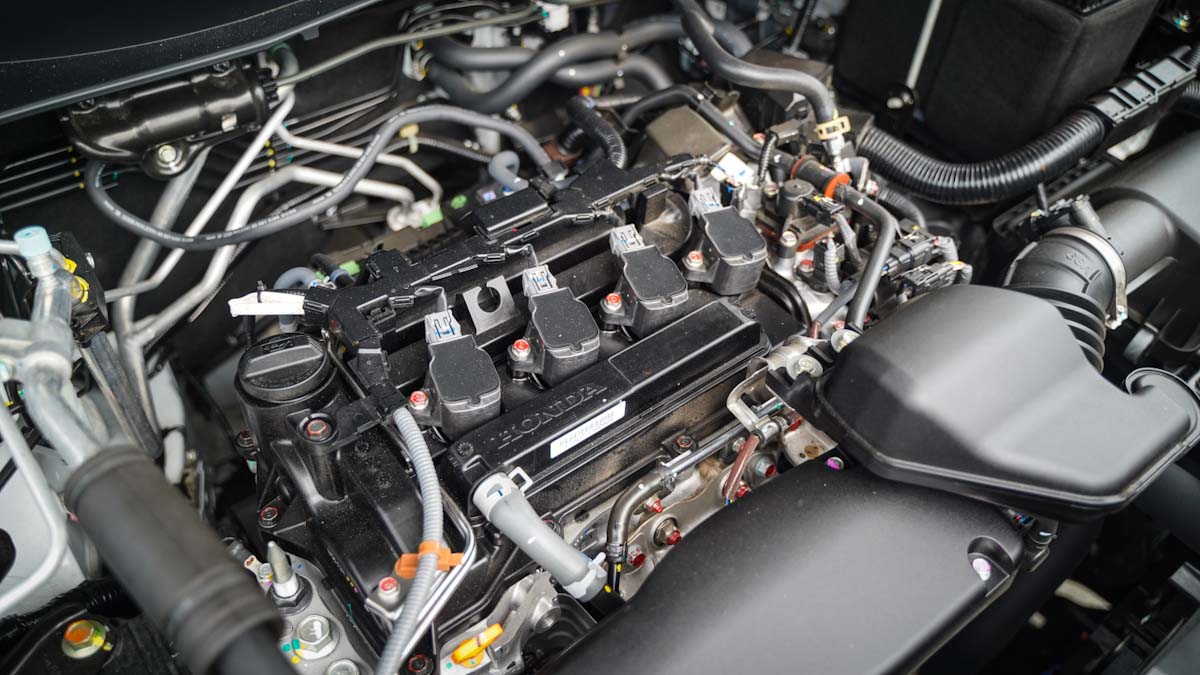
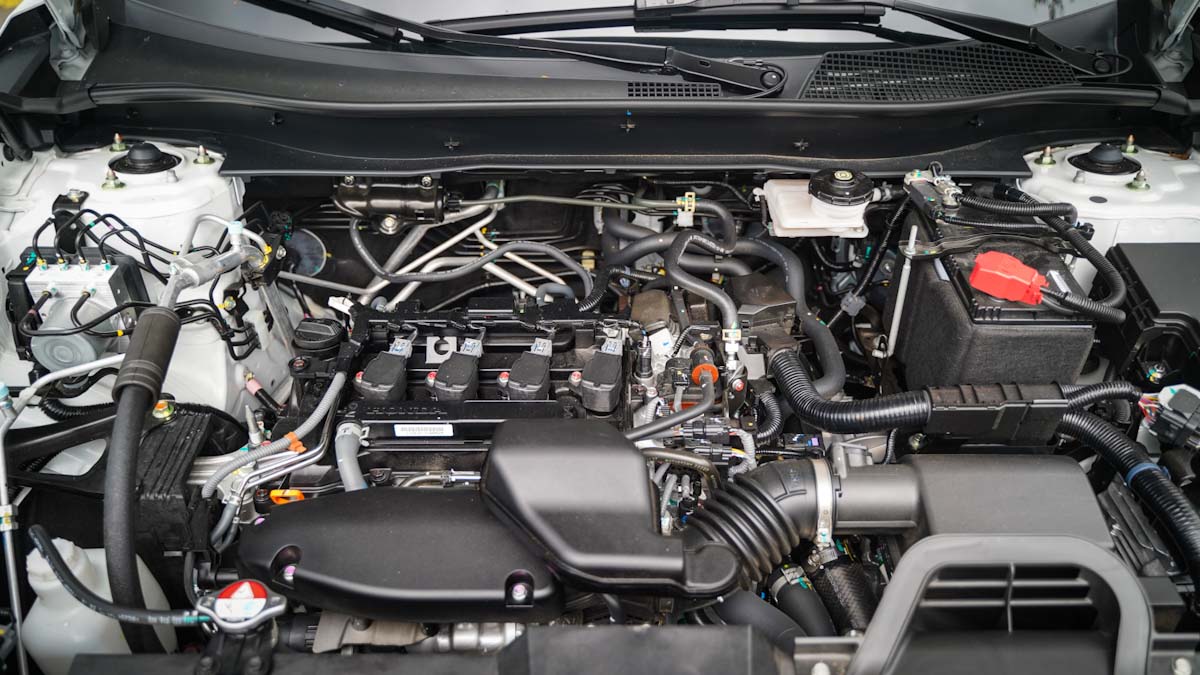
One of the biggest changes with the new CR-V is with its engine. Not just in the hybrid variant, no—the non-hybrid turbopetrols now have more power than ever. This 1.5-liter turbocharged gasoline engine produces 188hp and 240Nm of torque mated to a CVT. The VX variant also gets an all-wheel-drive system, so you’ll be forgiven if you thought the engine seemed a bit small for a seven-seat AWD crossover. I thought the same at first, too.
This powertrain has some oomph. Granted, I wasn’t able to fill the vehicle with seven passengers, but it having more than enough power to overtake at speed on the expressway with five people inside already tells me what I need to know: this thing pulls. It feels more powerful than a relatively measly 1.5-liter engine should, and you can probably thank the turbo for that. The vehicle cruises with ease on the highway, too, with revs not exceeding 3,000rpm when driving at a constant 90-100kph.
Now, I know there are still a lot of people looking for the diesel version. But that’s just because of gas prices, right? Well, I’ll be the one to tell you that you’ll be fine with this gas-powered CR-V. In mixed conditions with a combination of heavy traffic and highway cruising, I got a solid 11-12km/L. Solely on open roads, the CR-V can do about 18-19km/L when you’re cruising between 80-90kph. Not bad, huh?
OTHER HONDA REVIEWS:
Review: 2024 Honda Brio 1.2 RS CVT
Review: 2023 Honda HR-V V Turbo
Ride and handling
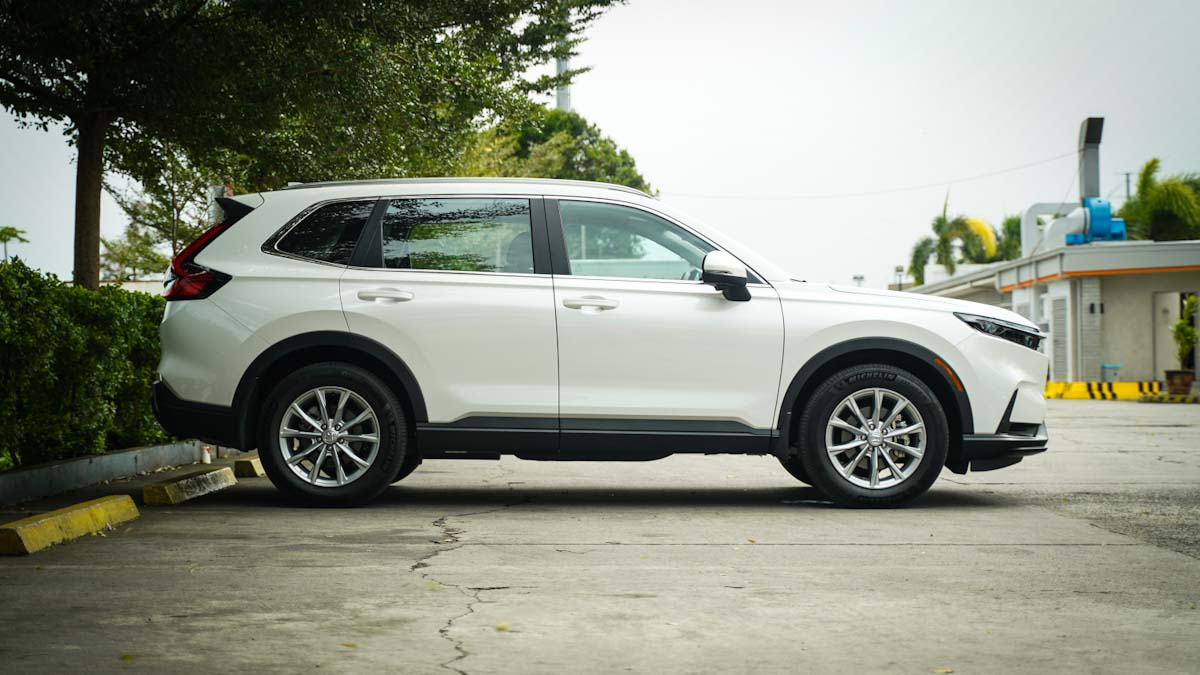
The CR-V still lives up to its name and is still as comfortable as ever. It eats up most road imperfections and suppresses noise from outside the cabin quite well. The ride is supple, and it’s a dream to cruise on long, open stretches of asphalt-covered highways with this one.
Unfortunately, that’s all where I was able to take the CR-V. I wasn’t able to take it across winding mountain roads to see how exactly the suspension and the all-wheel-drive would hold up. It’s a bummer, especially since I could easily tell that the CR-V handles pretty well through everyday driving. I would’ve loved to see how it would handle on more spirited drives. For next time, perhaps.
On the flip side, since I drove this a lot in the city, I can say that this CR-V would make for an ideal urban runabout. It’s grown in size, but it’s now also easier to maneuver thanks to its light steering. The slightly bigger footprint wouldn’t matter that much.
Extra features
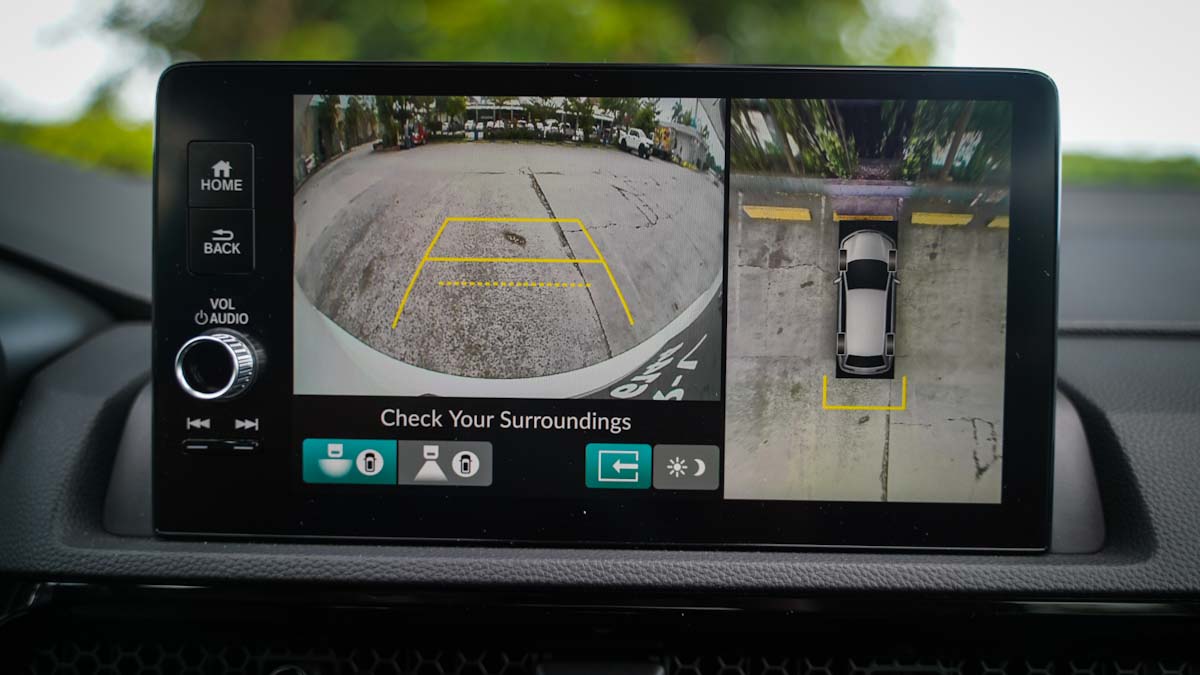
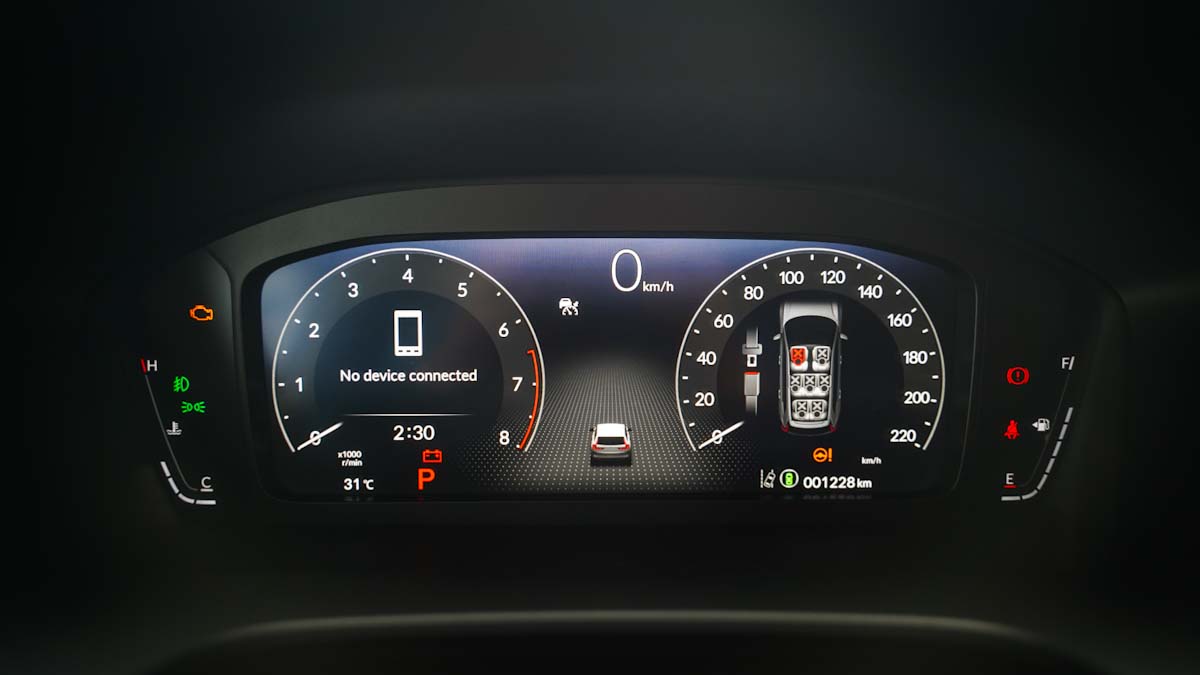
The previous-gen CR-V already had a lot going for it in the tech department, but Honda took it up a notch with this new model. It still comes with the patented Honda Sensing suite with helpful functions such as adaptive cruise control with low-speed follow and lead-car departure notification, which are what I think two of the most helpful features in the arsenal. There’s also autonomous emergency braking and lane-departure warning with lane-keep assist and road-departure mitigation at the ready.
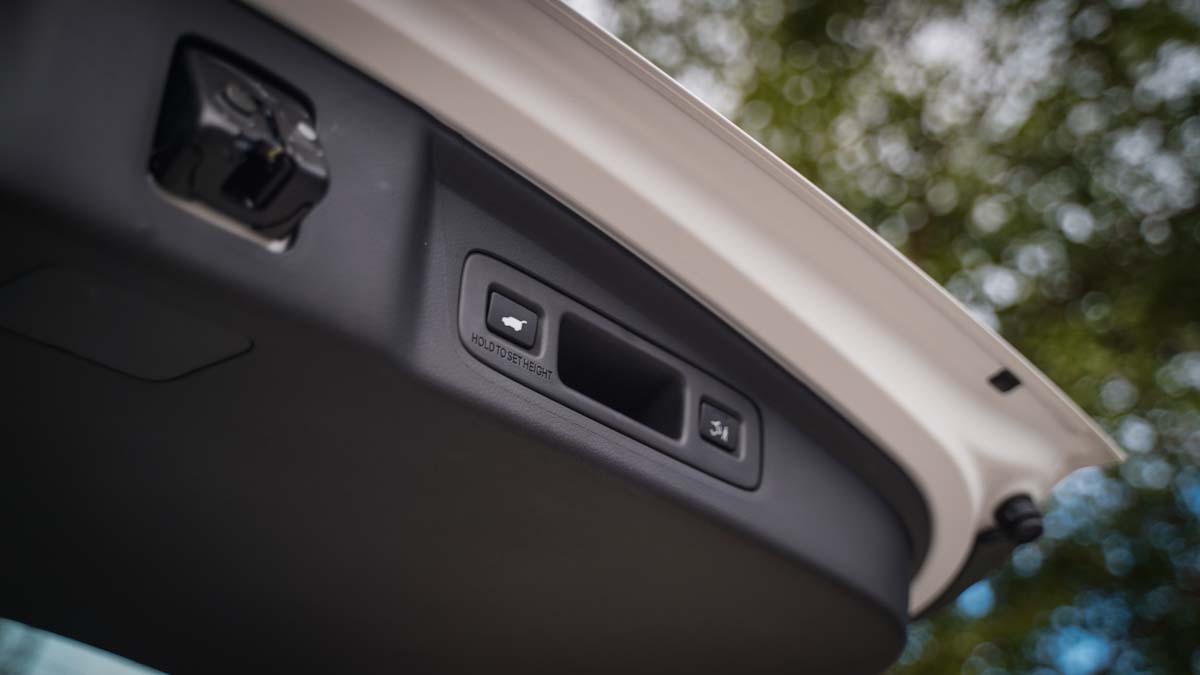
As with its smaller Civic sibling, the CR-V also gets a large infotainment system mounted high on the dash. This has Android Auto and wireless Apple CarPlay connectivity. Wireless charging is also available up front. Parking aids such as the 360-degree-view monitor as well as a power liftgate are also notable inclusions.
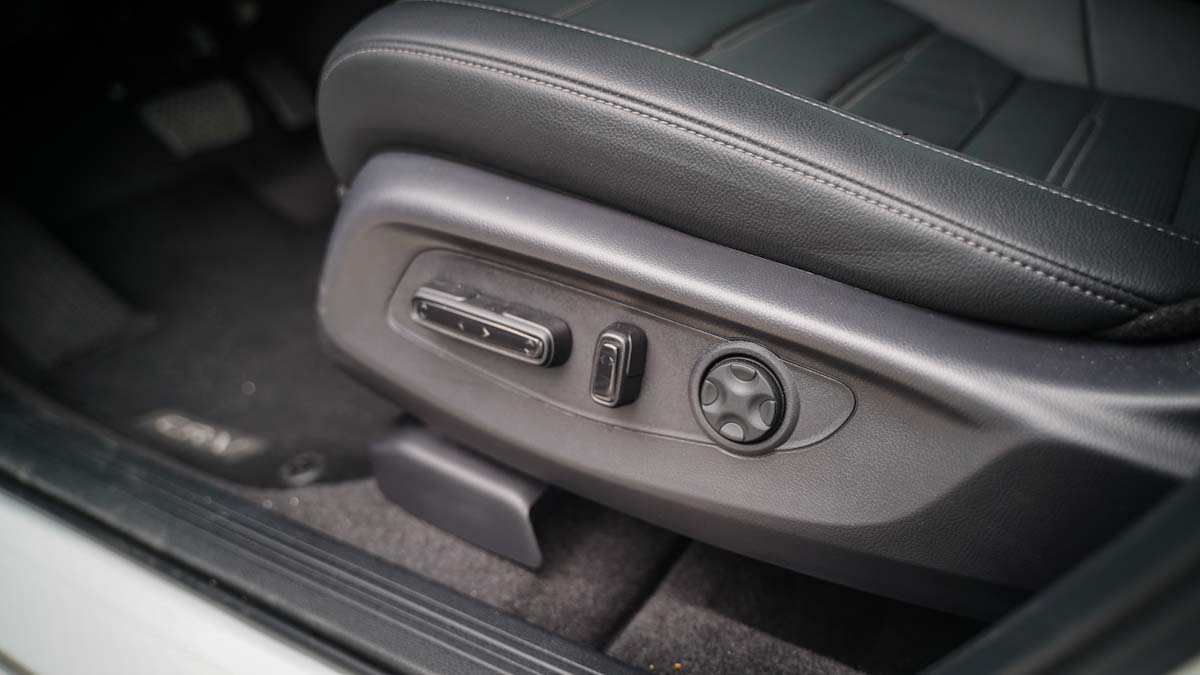
The CR-V also features power-adjustable seats with a memory function for the driver, which I should point out is very important. See, the driver’s seat slides back when you turn the vehicle off and moves forward when you turn it on, simply to make exit and entry easier. The problem here is that the seat resets to a default position rather than the last setting used, which I found odd. So even if you were the only person driving the vehicle, you’d have to readjust your seat each time you used the car. That’s where the memory function comes into play. Just a disclaimer, though: I didn’t find any setting anywhere that makes the seat return to its last position upon vehicle startup. So if any of you have found a workaround for this, please do tell us.
The CR-V also now gets a remote key card—like the one in the Type R—and Honda Connect features. Neither of these I used, unfortunately. The former because I honestly still don’t see the point, and the latter because that’s tailored for actual vehicle owners. That being said, I’m sure Honda Connect features will come in handy for CR-V customers, so I’ll just leave you with this article if you’re curious to learn more.
Verdict
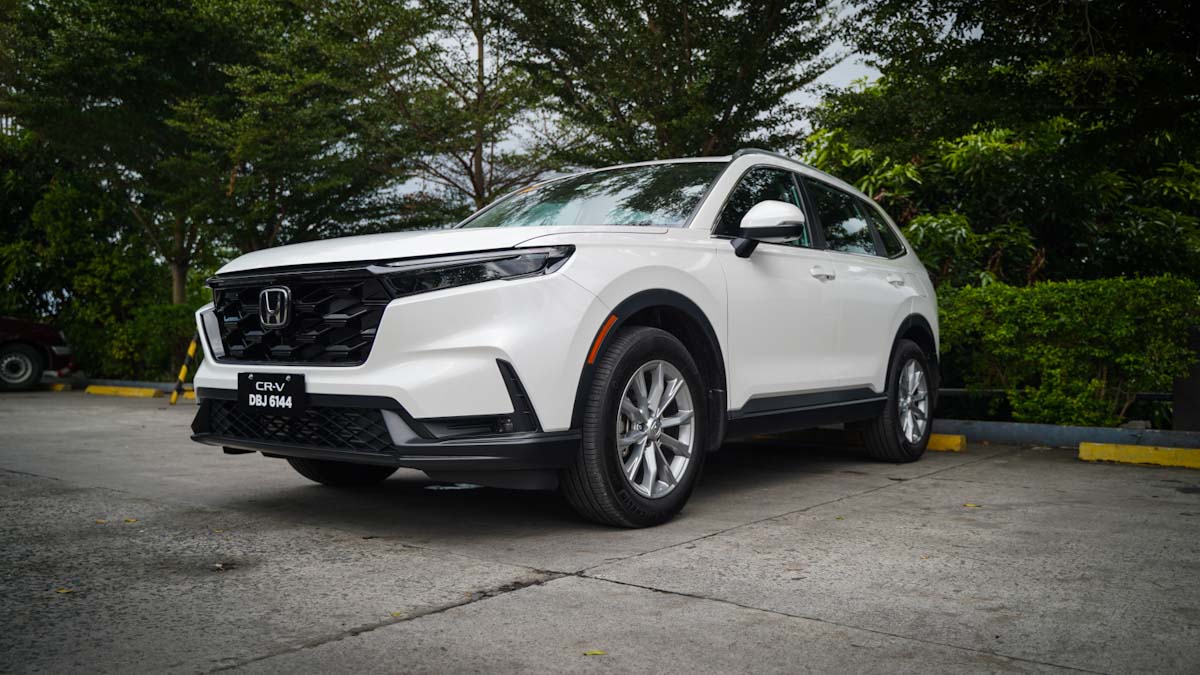
For decades, the CR-V has always been one of the most well-rounded packages you can find across the market. That remains to be the case to this day. This all-new CR-V takes all the good things in the old model and either keeps it or improves it while adding a few more helpful niceties in the process.
The only drawback here, really, is the price point. Sure, this model’s arguably better than all those that came before it, but it’s also become more expensive. The asking price for this mid-spec CR-V is a hefty P2.28 million, which is already in midsize SUV territory. I can see why eyebrows were raised the minute the announcement was made.
However, save for off-road capabilities, the CR-V has everything you’ll look for in a bigger SUV, so that price point can still be justified. Sure, there might be a little less space here in the Honda, but at least the ride is significantly more comfortable. That’s a compromise most customers will be willing to make.
SPECS: 2024 Honda CR-V VX Turbo CVT AWD
Price: P2,100,000 (updated in 2025)
Engine: 1.5-liter I4 turbo-gasoline hybrid
Power: 188hp
Torque: 24Nm
Transmission: Continuously valuable
Layout: AWD
Seating: 5
Score: 9/10
More photos of the 2024 Honda CR-V VX Turbo CVT AWD: