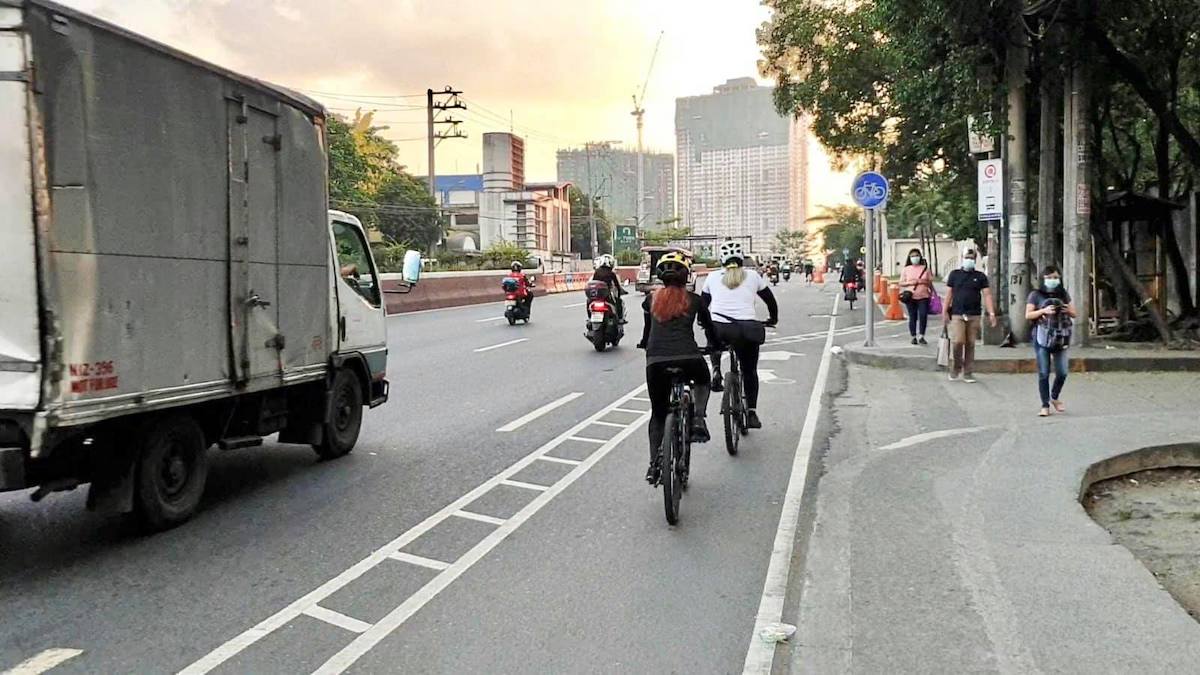
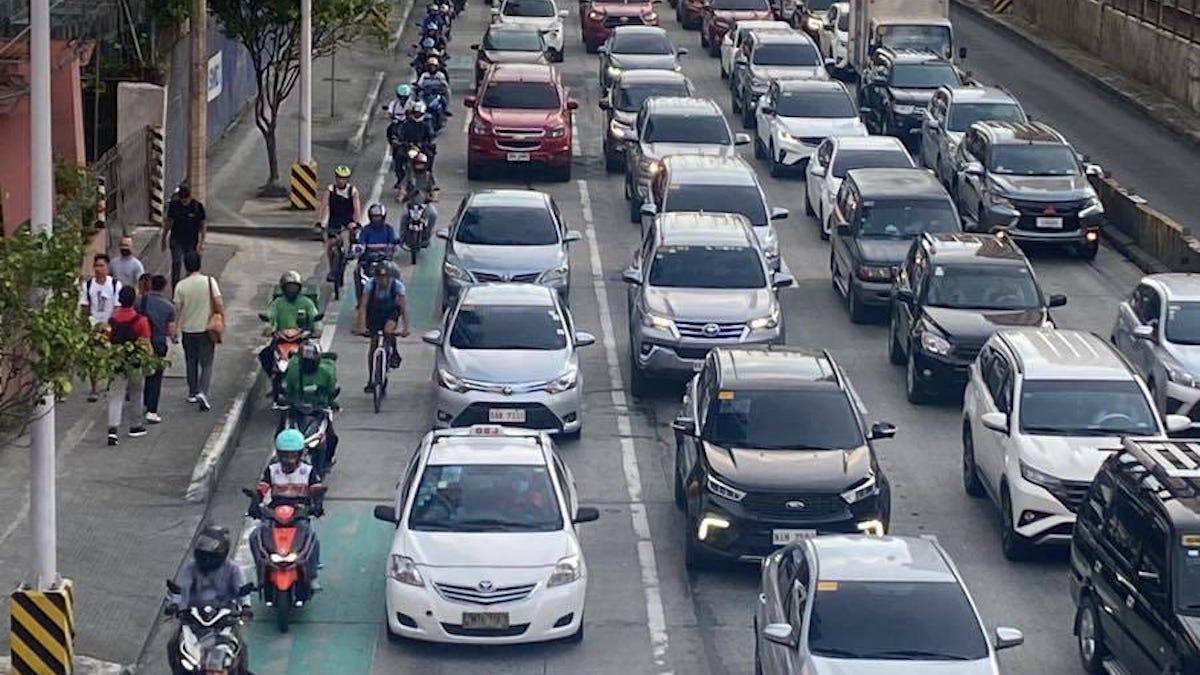
From squaring off with reckless drivers to unpredictable road conditions, the dangers that urban cyclists face in Metro Manila’s car-centric streets are all too real. Unfortunately, many cyclists are unsure how to respond when involved in a road incident.
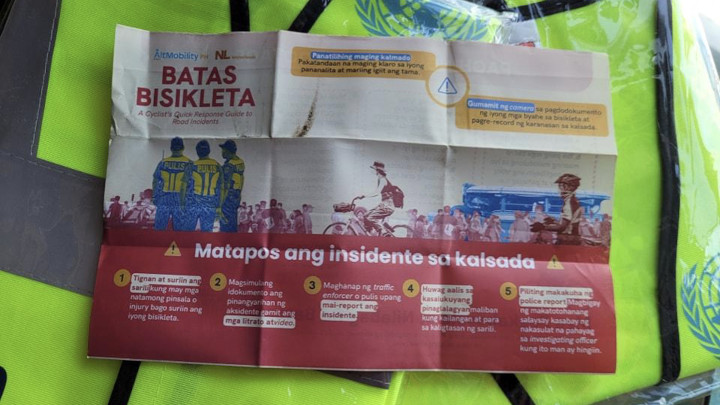
AltMobility, a local policy advocacy group promoting sustainable and inclusive transport, recently released a helpful pocket guide called Batas Bisikleta: A Cyclist’s Quick Response Guide to Road Incidents detailing cyclists’ rights on the road. This guide is being distributed for free through select bike shops around Metro Manila. It lists what cyclists should do immediately after a road incident, general tips, documentation tips, how to request CCTV footage, the common offenses and laws violated by motorists, and the importance of filing a blotter and police report.
OTHER STORIES YOU MIGHT HAVE MISSED:
How can cyclists beat the heat during hot weather rides?
Ford’s new tech will prevent motorists from ‘dooring’ cyclists and riders
The foldable pocket guide, which you can easily stash in a wallet or bike bag, is pretty handy for cyclists to have as a reference. It is available in both English and Filipino versions.
Here’s what you should do according to AltMobility’s Batas Bisikleta guide.
What should cyclists do immediately after a road incident?
According to Batas Bisikleta, cyclists involved in road incidents should try to remain calm and speak clearly, civilly, but assertively. They recommend having a camera ready to document rides and experiences on the road.
- Check yourself for injuries before checking your bike for damage.
- Start documenting the scene through photos and videos.
- Look for a traffic enforcer or policeman to report the incident.
- Do not feel obligated to remove yourself or the bike to ease traffic unless required for immediate safety.
- Insist on getting a police report of the incident. Give truthful narrations and/or written statements to the investigating officer.
How do you know who is at fault during a road incident and if you should settle?
Make a note of the following:
- If a motor vehicle was violating a traffic rule at the time of the incident, they are presumed negligent until proven otherwise.
- Police officers are trained to encourage settlement between parties, but do not feel obliged to settle. You have a right to file a claim for damages against any motorist for any injuries and/or damaged property.
- If authorities are dismissive or uncooperative, get their names, rank, and assignment for possible administrative action.
How should you document a road incident?
Follow these steps:
- Get the other party’s contact information. Take pictures of the driver’s license and/or their plate number/conduction sticker.
- Take videos and photos of private persons and police and law enforcement involved in the incident.
- Get the attention of witnesses who saw the incident. Ask if they’re willing to be contacted later on to give their statement of the incident.
- Ask for CCTV footage from MMDA Traffic Engineering Center, local government unit, or private establishments in the vicinity that may have cameras in the area.
According to the guide, the Data Privacy Act (RA 10173) gives citizens the right to request CCTV footage of “yourself, as your personal information” and “other people that will assist you in establishing your claim (like the face of the offender, their vehicle details, witness/es you intend to contact, and so on).
Those involved in road incidents should request CCTV footage from nearby sources as soon as possible, as each establishment may have its retention policies. While parties cannot be required to produce a court order before viewing or copying your CCTV footage, requesting parties may be asked to pay an administrative fee to acquire the footage.
OTHER STORIES YOU MIGHT HAVE MISSED:
LTO-NCR launches online system for driver’s license printing requests, inquiries
New fines for lack of tollway RFID and insufficient load deferred to October 1, 2024
What are some relevant offenses and laws regarding road incidents?
The guide compiles a list of specific sections in existing relevant laws that cyclists can use to aid their defense. This includes the Anti-Distracted Driving Act (RA 10913), the Safe Spaces Act (RA 11313), and the Revised Penal Code (Act No. 3815).
Batas Bisikleta recommends consulting with a lawyer whether to file any of the following actions. Each law has a time limit to file a case, ranging from at least two months (reckless imprudence) to 20 years (murder).
Offense |
Law violated |
| Using a mobile phone or any electronic device | Section 8, Anti-Distracted Driving Act |
| Catcalling, taunting, sexist remarks | Sections 4, 7, and/or 11, Safe Spaces Act |
| Lewd sexual actions (e.g. flashing) | Sections 4, 7, and/or 11, Safe Spaces Act |
| Stalking, touching, and/or molesting | Sections 4, 7, and/or 11, Safe Spaces Act |
| Grave threats | Article 282(2), Revised Penal Code (RPC) |
| Reckless imprudence resulting in damage to property | Article 365, RPC |
| Malicious mischief | Article 329, RPC |
| Reckless imprudence resulting in physical injuries/death | Article 365, RPC |
| Serious/less serious/slight physical injuries | Articles 263, 265, or 266 RPC |
| Murder, whether attempted, frustrated or consummated | Article 248(3), RPC |
Although it’s not referenced directly in the guide, another relevant law cyclists should be aware of is the Land Transportation and Traffic Code (RA 4136).
What’s a blotter/police report and why should you get one?
The police/barangay blotter report is a record of complaints, disputes, or incidents that police stations or barangay halls keep track of in their locality, typically written in a journal or logbook. This is an initial public record of your individual statements and observations that can be used as evidence in subsequent legal proceedings. If parties settle, the settlement may also be recorded in the blotter.
The Police Report is an official investigation report of a road incident conducted by a police investigator following the initial fact-finding of the investigating officer regarding the cause and/or fault in an incident. The report is based on:
- oral and written statements of the responding office
- the parties to the incident
- pictures and videos
- other evidence and relevant information
Police reports are required if you plan to file cases or process insurance claims
Where can you find the Batas Bisikleta pocket guide?
Physical copies of Batas Bisikleta: A Cyclist’s Quick Response Guide to Road Incidents are available from various partner bike and coffee shops in the metro:
Quezon City
- Bikeary Bicycle Lifestyle
- Built Cycles
- Exion Cycles PH
- Hackensack 1950s Hamburgers
- Krebs Cycles
- Magdamag Market Cafe
- Maginhawa Food Community
- Specialized Quezon City
Mandaluyong
- Nicer Cafe
Pasig
- 1C
- All Terra Cyclery
- Specialized Pasig
- Tambay Cycling Club
Makati
- Built Cycles
- Solid Ground Coffee House
- TryOn
Digital versions of the full guide are also downloadable as PDF copies from AltMobility’s website. The site contains other helpful resources including maps to public legal resources (Public Attorney’s Office, Integrated Bar of the Philippines) and partner law clinics that can assist cyclists.
Hopefully, these resources will help cyclists and the driving public be aware of their legal rights and know what to do in the future.